






The Ticket to the Lunar VIP Club
The formal invitation for the Indian Space Research Organisation (ISRO) to join NASA's Moon Base program isn't coming out of the blue. It’s the next logical step after India signed the Artemis Accords in 2023, the U.S.-led set of principles for peaceful
and cooperative space exploration. Think of the Accords as the foundational agreement for a new international coalition in space. The goal of the Artemis program is not just to perform short, Apollo-style visits, but to establish a permanent human presence on the Moon, starting with a base camp at the lunar south pole. By joining, India moves from being an independent space power to a key partner in the most ambitious lunar project of the 21st century, gaining a critical voice in how humanity operates on other worlds.
India's South Pole Expertise
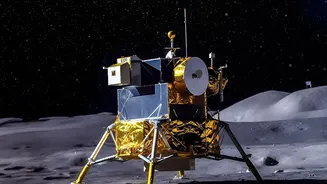
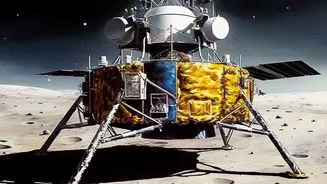
So why is NASA so keen on partnering with India? The answer lies at the Moon's south pole. In 2023, India's Chandrayaan-3 mission made it the fourth country in history to achieve a soft lunar landing and, crucially, the first and only nation to ever successfully land in the south pole region. This is the exact area where NASA plans to build its Artemis Base Camp, largely because the region's permanently shadowed craters are believed to hold vast quantities of water ice. That ice is a potential source of breathable air, drinkable water, and rocket fuel. India's proven ability to navigate and operate in this challenging, strategic terrain makes ISRO an invaluable partner, bringing unique, hard-won experience to the table.
A New Space Race Forms Two Blocs
This partnership is about more than just science and exploration; it’s a defining move in space-age geopolitics. The Artemis Accords represent a bloc of primarily democratic, Western-aligned nations building a shared future in space. This stands in direct contrast to the International Lunar Research Station (ILRS), a rival moon base project spearheaded by China and Russia. By accepting NASA's invitation, India, a country that has long maintained strategic autonomy and is a member of the BRICS group alongside China and Russia, is making a clear choice. It is aligning its formidable space program with the U.S.-led vision for lunar development, effectively picking a team in a new kind of great power competition that extends into the heavens.
What Each Nation Stands to Gain
For India, the benefits are immense. Partnering with NASA provides access to the agency’s deep-space network, decades of human spaceflight experience, and heavy-lift launch vehicles like the Space Launch System. It catapults India from a regional space leader to a central player in humanity's return to the Moon, fast-tracking its own ambitions to send astronauts into space. For the United States, the partnership is equally strategic. Collaborating with ISRO, known for its frugal innovation and technical prowess, helps distribute the monumental cost of a permanent moon base. More importantly, it brings a powerful and capable ally into the fold, strengthening the Artemis coalition and reinforcing American leadership in setting the rules for the next era of space exploration.