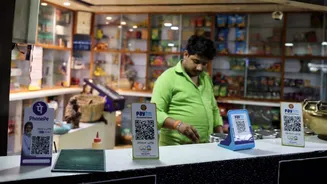








The Zero-Fee Revolution
Launched in 2016, UPI became a global benchmark for real-time payments. Its masterstroke was the government's decision in January 2020 to mandate a zero Merchant Discount Rate (MDR) for all UPI and RuPay debit card transactions. MDR is the fee merchants
pay to banks and payment service providers (PSPs) for processing a digital payment. By eliminating it, the government removed a major barrier for small businesses, from the neighbourhood kirana store to the street-side tea vendor, encouraging mass adoption. The strategy worked spectacularly. In July 2026 alone, UPI processed a staggering 23.6 billion transactions worth nearly ₹30 lakh crore, becoming the world's largest real-time payment system.
A Victim of Its Own Success?
While the zero-MDR policy drove unprecedented growth, it created a fundamental problem: no one was making money. Banks, fintech giants like PhonePe and Google Pay, and other PSPs that form the backbone of the UPI network incur significant costs for infrastructure, cybersecurity, and transaction processing. With no revenue from the transactions themselves, the entire ecosystem became dependent on government subsidies to stay afloat. However, industry players have consistently argued that these subsidies are insufficient and unpredictable, making the current model financially unsustainable in the long run. The concern is that without a viable business model, innovation could stagnate and the expansion of digital payment infrastructure, especially in rural areas, could slow down.
The MDR Debate Returns
In response to these sustainability concerns, the government is now reconsidering its stance. In August 2026, Parliament passed a bill amending the Payment and Settlement Systems Act, paving the way for the reintroduction of MDR on certain UPI transactions. This doesn't mean all UPI payments will suddenly become chargeable. The government has repeatedly clarified that person-to-person (P2P) transfers will remain free, and consumers will not be charged. The proposal focuses on levying a nominal fee on merchants for specific transactions, likely those above a certain value, such as ₹2,000.
Finding the Right Balance
The details are still being worked out by a committee led by the National Payments Corporation of India (NPCI). The proposed fee is expected to be a fraction of what is charged for credit or debit card transactions, with some reports suggesting a rate of around 0.3%. The plan is to target larger merchants who can afford the fee, while keeping transactions free for the vast majority of small businesses to protect the gains made in financial inclusion. The rationale is that a small, targeted fee could generate thousands of crores annually for the ecosystem, providing a stable revenue source to fund infrastructure and innovation without burdening the average user or small merchant.
What Does This Mean for You?
For the average consumer, not much will change in the short term. Sending money to friends and family will remain free. When you scan a QR code to pay at a shop, you will not see an extra charge on your bill. The government has stated that merchants will not be allowed to pass the MDR on to customers. However, the long-term impact is still unfolding. For merchants, particularly larger businesses, it means a new operational cost. The key question is whether this move will slow down the adoption of digital payments or if the fee will be low enough to be absorbed without significant disruption. The goal is to evolve the UPI model from being a government-subsidised public good to a self-sustaining digital utility.