



Cosmic Chemical Factories
For centuries, we have looked up at the stars and wondered if we are alone. While we haven't found aliens, astronomers are finding the next best thing: the chemical precursors to life itself. In the vast, cold clouds of gas and dust that float between
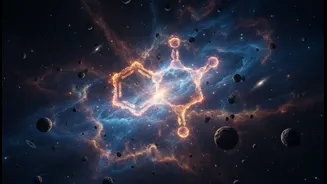
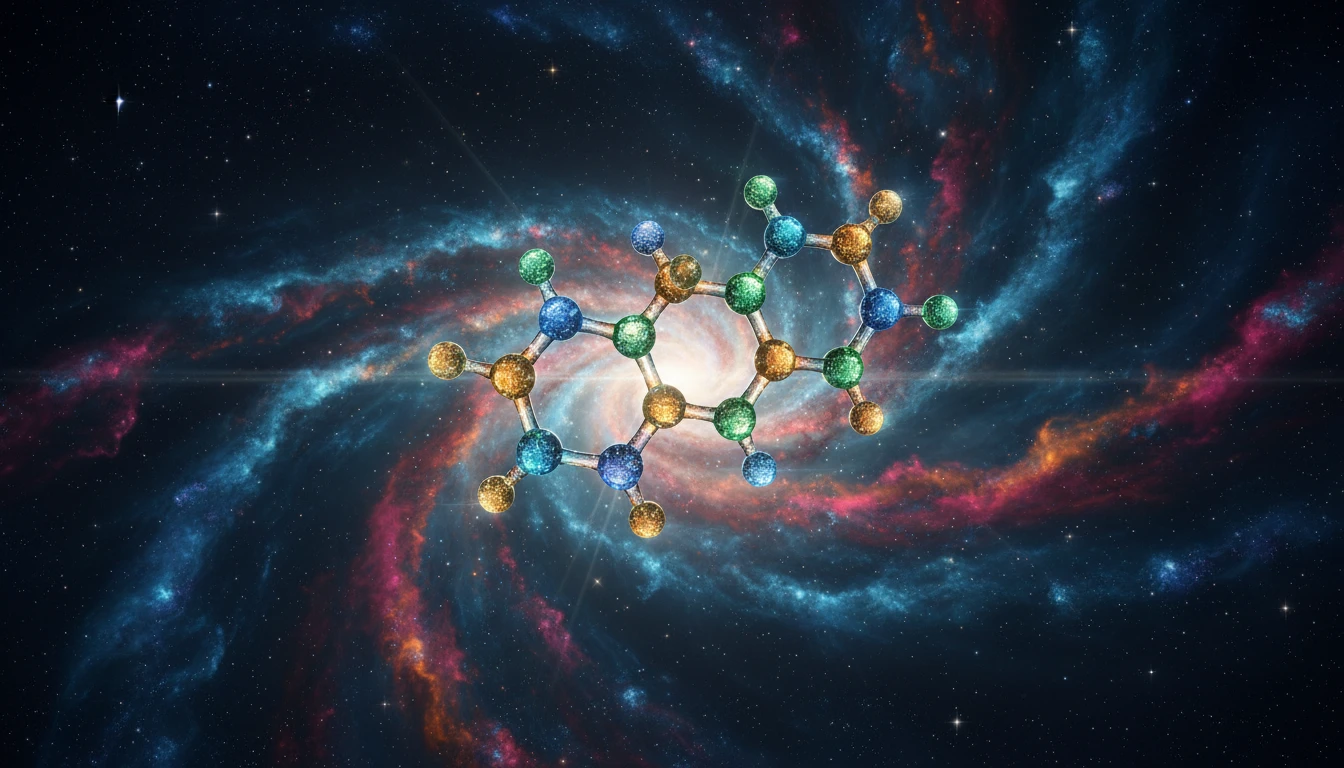
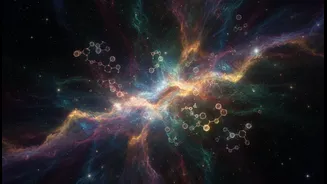
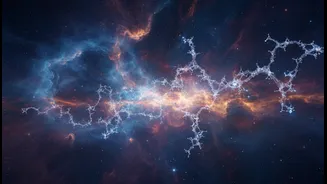
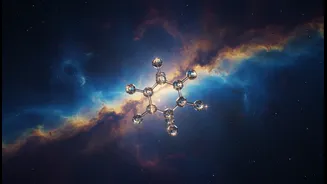
stars, scientists are detecting an ever-growing list of complex organic molecules. These are not just simple compounds, but intricate structures based on carbon, the fundamental element for life as we know it. Discoveries range from relatively simple molecules like methane and benzene to more complex ones like ethanol (alcohol) and even sugars. These molecular clouds, once thought to be desolate voids, are now seen as dynamic chemical factories, churning out the raw materials for future stars and planets.
A Sweet Discovery
One of the most exciting recent finds comes from a molecular cloud near the center of our Milky Way galaxy, about 27,000 light-years from Earth. An international team, using radio telescopes in Spain, detected the first-ever 'true sugar' in interstellar space: a molecule called erythrulose. While simpler sugar-like molecules had been found before, erythrulose is a proper four-carbon sugar, a class of compounds that forms the structural backbone of RNA and DNA. Previously, sugars had only been confirmed in meteorites that had landed on Earth. Finding them floating freely in space suggests these vital ingredients can form naturally before planets even exist, ready to be incorporated into new worlds.
The Power of New Tools
These breakthroughs are made possible by powerful new instruments that can peer into the universe with unprecedented detail. The James Webb Space Telescope (JWST), in particular, has been a game-changer. Its ability to see in infrared light allows it to cut through the thick dust that hides many of these cosmic nurseries from view. By analyzing the unique chemical 'fingerprints' in the light that passes through these clouds, JWST can identify specific molecules. In one recent study, it found an exceptional richness of organic molecules, including benzene and methane, deep within a dust-choked galaxy, in concentrations far higher than models had predicted. This suggests that even the harshest cosmic environments can be hotbeds of chemical activity.
From Stardust to Life
So, what does this all mean? The presence of these complex molecules in interstellar space is a huge piece of the puzzle of life's origins. It supports the theory known as panspermia, which suggests that the essential building blocks for life didn't have to form on a young Earth. Instead, they could have been created in space and delivered to our planet billions of years ago by comets and asteroids during a period of intense bombardment. Scientists estimate that millions of tonnes of the sugar erythrulose alone might have rained down on early Earth. This doesn't mean life itself came from space, but that the universe provided a 'starter kit' of crucial ingredients, making the emergence of life on Earth—and potentially elsewhere—much more likely. The conditions that spawned our planet may not be so unique after all.