





A Week of Widespread Failures
In mid-November, a rapid succession of technical failures rippled across critical US infrastructure, raising public concern. The issues began with Microsoft services, including Outlook and Teams, experiencing a significant outage. This was soon followed
by a major disruption at the Federal Aviation Administration (FAA) that led to a nationwide ground stop of departing flights for several hours. In the days that followed, customers of major banks like JPMorgan Chase reported transaction delays, United Airlines faced a system disruption, and even the National Security Agency's (NSA) classified internal network went offline. Apple also reported issues with several of its services, including iCloud and Apple Pay. This string of high-profile outages affecting unrelated sectors naturally fueled speculation about a potential coordinated cyberattack.
The Intelligence Community Weighs In
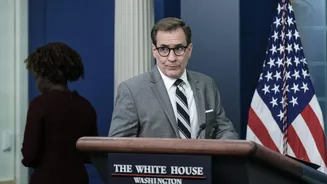
In response to the growing unease, top US national security officials testified before the House Homeland Security Committee to address the situation. Director of National Intelligence Jay Clayton, Homeland Security Secretary Markwayne Mullin, and FBI Deputy Director Christopher Raia all presented a unified front. Their assessment, after diligent review, was that the incidents were not the result of a coordinated or state-sponsored attack. 'Based on what we know today... these are separate service outages associated with maintenance and technical changes,' Clayton stated. Mullin added that he was '98% confident' the outages were not from foreign adversaries, while Raia confirmed the FBI had found 'no indication whatsoever' of malicious cyber activity.
If Not an Attack, Then What?
The official explanation points not to a single adversary, but to a confluence of unrelated, internal technical problems. Each disruption had its own distinct cause. The Microsoft outage was traced back to a latent bug in a networking gateway fix. The nationwide FAA ground stop was caused by telecommunications instability during routine equipment replacement by a contractor. Banking issues were attributed to a software bug in on-premise hardware, while the NSA's network failure was linked to patching a newly discovered software vulnerability. Apple's problems were similarly blamed on an internal software update. Essentially, the events were an unfortunate and alarming coincidence rather than a conspiracy.
A Glimpse into a Fragile Future
While the absence of a malicious attack is a relief, officials warn that such disruptions may become more common. Director of National Intelligence Jay Clayton explained that the country is in the middle of a major, and necessary, technology upgrade cycle. Decades-old digital infrastructure is being replaced to improve performance and defend against new threats, particularly those accelerated by artificial intelligence. This rapid pace of patching and upgrading complex, interconnected systems puts immense strain on them. 'We are going to have glitches, gaps, interruptions in service. That is going to happen,' Clayton told CNN. The pressure to quickly fix vulnerabilities that AI can now discover at an unprecedented speed means more systems are being taken offline for maintenance, increasing the chances of errors and unexpected downtime.