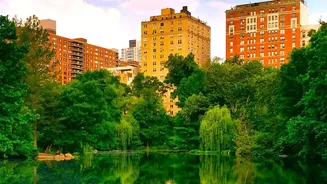






In the concrete heart of our bustling cities, it’s easy to forget that nature still finds a way. Urban lakes, often overlooked, are emerging as vital blue lifelines, offering serene escapes, recreational fun, and surprising ecological benefits.
An Escape for Body and Mind
Beyond
being just bodies of water, urban lakes are dynamic centres for community life and recreation. Cities like Bengaluru, with its famous Ulsoor Lake, offer everything from boating and kayaking to simple morning walks along tree-lined promenades. Families gather for picnics, fitness enthusiasts jog along dedicated tracks, and others simply find a quiet spot to read a book. In places like Bhopal, the Upper and Lower Lakes are integral to the city's identity, providing residents with accessible spaces to relax and de-stress from the urban grind. This access to free, open-air recreation is not just a luxury but a crucial component of public health, offering a no-cost way to stay active, connect with neighbours, and find a moment of peace. The presence of these 'blue spaces' has a demonstrated positive impact on mental well-being, reducing stress and providing a much-needed visual and mental break.
Surprising Hotspots for Urban Wildlife
You might not expect to find a vibrant ecosystem in the middle of a metropolis, but India's urban lakes are proving to be critical habitats for biodiversity. Mumbai's Powai Lake, for example, is home to a variety of fish, frogs, and even a small population of marsh crocodiles. It serves as a vital sanctuary for over 150 species of birds, including kingfishers, herons, and seasonal migratory birds that rely on it for feeding and nesting. Similarly, the restored Hauz Khas Lake in Delhi, despite pollution pressures, attracts numerous migratory species like the Northern Shoveler each winter. Citizen-led initiatives in Bengaluru have shown remarkable success; the Puttenahalli Lake in Yelahanka, now a bird conservation reserve, boasts 150 bird species and a dedicated butterfly park designed to attract pollinators. These lakes function as 'biodiversity islands' in otherwise heavily developed landscapes, proving that nature can thrive with a little help.
The Unseen Environmental Protectors
Urban lakes do more than just look pretty; they perform essential environmental services that make cities more resilient. They act as natural 'sponges', absorbing excess rainwater during heavy monsoons, which helps mitigate flooding in low-lying areas. This function is critical for coastal cities like Chennai, where the restoration of water bodies like Kadapakkam Lake is a key part of the city's flood management strategy. Furthermore, lakes help recharge groundwater, a vital service in cities facing water scarcity. They also play a role in regulating the local microclimate. By absorbing heat, large water bodies can help reduce the 'urban heat island effect', making surrounding neighbourhoods cooler and more pleasant. This natural cooling is an invaluable, low-cost benefit as cities grapple with rising temperatures.
A Shared Heritage in Need of Protection
Despite their immense value, many of India's urban lakes are under severe threat. Decades of neglect, encroachment for construction, and the dumping of untreated sewage and industrial waste have degraded these precious ecosystems. According to one report, a significant percentage of urban water bodies in India are heavily polluted. However, a growing movement of community-led restoration offers hope. In cities like Bengaluru, Chennai, and Delhi, citizen groups, often in partnership with local authorities and NGOs, are taking charge. Restoration projects involve desilting the lakebed, clearing encroachments, stopping sewage inflow, and planting native species along the banks to revive the natural habitat. The successful revival of lakes like Vellalur in Coimbatore and Neela Hauz in Delhi showcases that with community involvement and scientific planning, these dying water bodies can be brought back to life, restoring their ecological and social benefits for generations to come.