







What Exactly Is the Gaganyaan Mission?
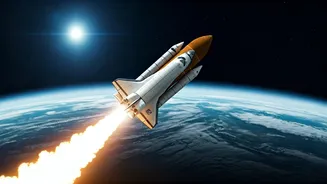
At its heart, Gaganyaan is ISRO's ambitious programme to demonstrate India's capability to send humans into space and bring them back safely. The primary goal is to launch a crew of three astronauts into a Low Earth Orbit, approximately 400 kilometres
above the Earth. They will circle the planet for about three days before splashing down in the Indian sea. If successful, India will join an exclusive club of nations — after Russia, the United States, and China — that have independent human spaceflight capabilities. This is not just about sending people to space; it's a statement of indigenous technological power, as every core component is being developed within the country.
The Anatomy of a Spaceflight
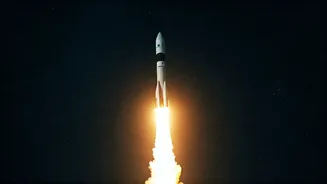
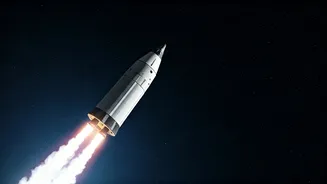
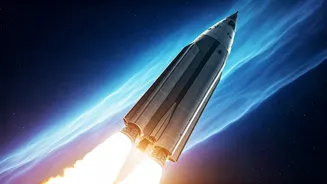
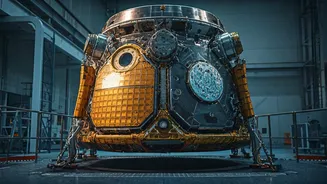
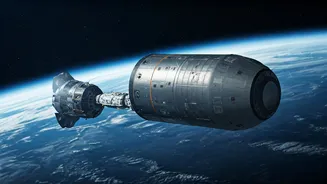
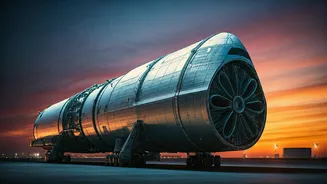
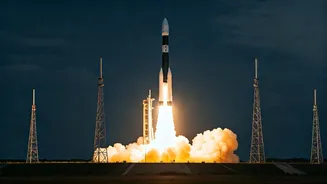
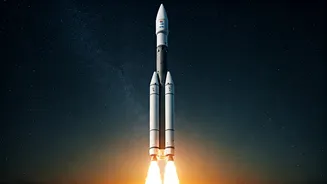
The mission relies on several key pieces of hardware. The workhorse is the LVM3 rocket, a reliable heavy-lift launcher that has been specially modified and human-rated for this mission, earning it the new name HLVM3. Atop this rocket sits the Orbital Module, which consists of two main parts. The Crew Module is the pressurised, habitable space where the astronauts will live, complete with life support systems to provide an Earth-like environment. The Service Module is an unpressurised section that provides propulsion, power, and other vital support systems while in orbit. This entire system is meticulously designed with astronaut safety as the absolute top priority.
Safety First: A Gauntlet of Tests
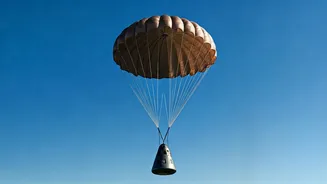
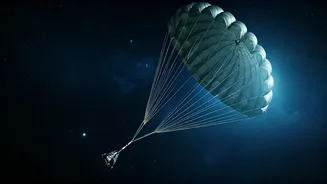
Before any astronaut boards the spacecraft, ISRO is conducting a rigorous series of tests to validate every system. Human safety is paramount, and nothing is left to chance. One of the most critical components is the Crew Escape System, designed to pull the crew module and its occupants to safety in case of an emergency during launch. This system has been tested through Pad Abort Tests (PAT) and other flight abort missions like the TV-D1. Another set of crucial trials are the Integrated Air Drop Tests (IADT), where a full-scale model of the crew module is dropped from an aircraft to test the complex sequence of parachutes needed to slow the capsule's descent for a safe splashdown.
Our Astronauts and a Robotic Companion
The human face of the mission consists of four distinguished Indian Air Force test pilots: Group Captains Prasanth Balakrishnan Nair, Ajit Krishnan, Angad Pratap, and Wing Commander Shubhanshu Shukla. They have undergone extensive training both in Russia and at ISRO's astronaut training facility in Bengaluru, covering everything from simulator exercises to survival techniques. But they won't be the first to fly. Preceding the crewed launch will be uncrewed test missions. One of these flights will carry Vyommitra, a sophisticated humanoid robot. Vyommitra, whose name means 'space friend', can mimic crew activities, monitor module parameters, and interact with the ground control, providing crucial data on how the life support systems perform before humans are on board.
Why This Mission Matters So Much
Gaganyaan is more than just a technological demonstration; it's a catalyst for national progress. The mission is expected to boost Indian industries, with a significant portion of the equipment sourced from the private sector. It will also create thousands of employment opportunities and inspire a new generation to pursue careers in science and technology. On a global scale, a successful Gaganyaan mission will elevate India's standing as a major space power, opening doors for greater international collaboration and strengthening its role in global space diplomacy. It lays the foundation for even more ambitious future projects, including a potential Indian space station.