
The Moon’s Hidden Havens
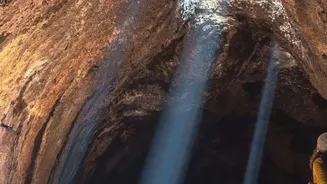
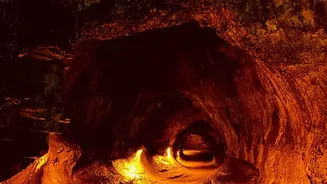
Billions of years ago, when the Moon was a hotbed of volcanic activity, rivers of molten rock carved their way across its surface. As the top layer of this lava cooled and solidified, the molten river beneath continued to flow, eventually draining away
to leave behind enormous, hollow tunnels. These formations, known as lava tubes or pyroducts, are not unique to Earth; orbital spacecraft like NASA's Lunar Reconnaissance Orbiter and India's Chandrayaan-1 have identified hundreds of pits on the lunar surface that are believed to be 'skylights'—collapsed sections of these ancient tubes. Some of these caverns are thought to be colossal, potentially stretching for kilometres with ceilings thick enough to be structurally sound. Their existence offers a tantalizing possibility: pre-fabricated, natural shelters for future lunar inhabitants.
A Shield Against the Stars
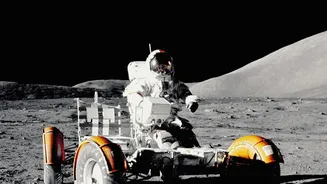
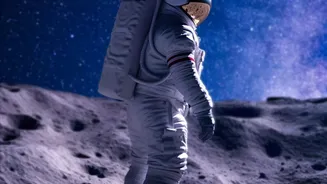
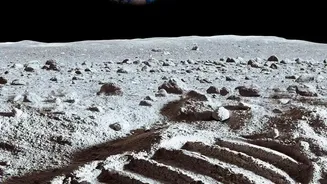
The lunar surface is an incredibly hostile environment. With no atmosphere to protect it, it’s constantly bombarded by two major threats: radiation and micrometeorites. The radiation comes from galactic cosmic rays (GCRs) from deep space and intense, sporadic solar particle events (SPEs) from our own Sun. This constant exposure is hazardous for humans, increasing the risk of cancer and other health issues. A thick layer of lunar rock, however, provides a powerful natural shield. Studies suggest that the roof of a lava tube, potentially tens of meters thick, could reduce the radiation dose to levels comparable to or even less than those experienced on Earth. These subterranean havens would also offer protection from the relentless rain of micrometeorites and the extreme temperature swings between the two-week-long lunar day and night.
Enter the Robotic Spelunkers
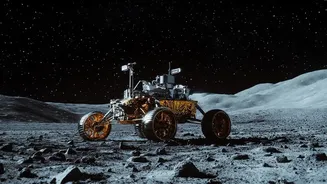
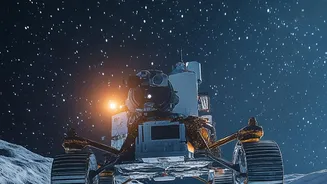
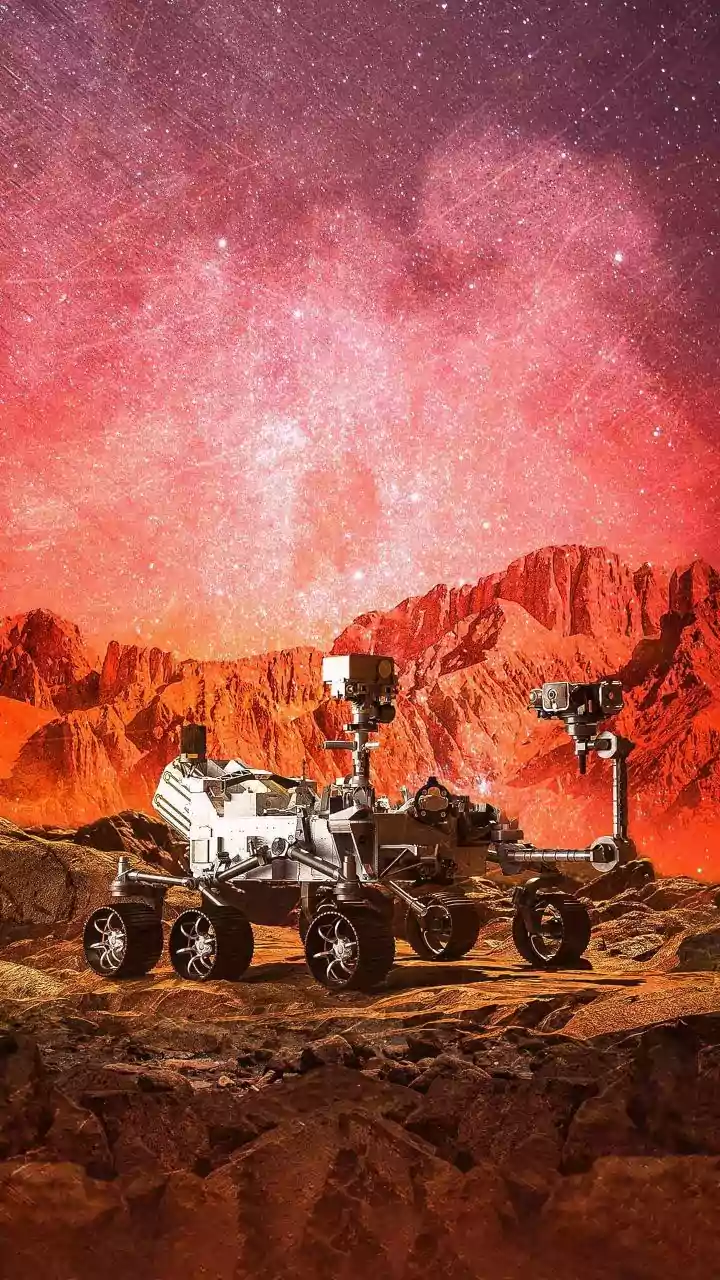
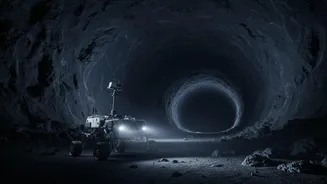
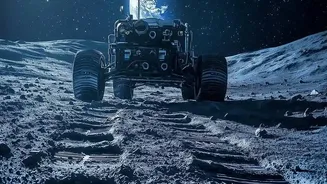
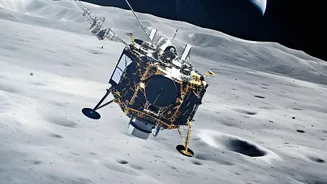
Before humans can set up home in these caves, we need to know what’s inside. That’s a job for robotic explorers. Space agencies and research groups are designing specialized rovers to tackle the challenge of exploring these dark, unknown environments. The European Space Agency (ESA) has explored concepts like DAEDALUS, a 46-cm spherical probe designed to be lowered into a pit to roll around and map the cave in 3D using lidar and cameras. Another mission concept combines a crane-like robot (RoboCrane) to lower the explorer into the pit. Other innovative ideas include a trio of cooperating robots tested in volcanic caves on Earth, where a larger rover acts as an anchor to rappel a smaller scout rover into the cavern. These robotic spelunkers are being designed to be autonomous, tough, and capable of navigating treacherous terrain to assess the tube's safety and resources.
Scouting for a New Home
The primary mission for these rovers is reconnaissance. They would be tasked with creating detailed 3D maps of the caverns, identifying their size, shape, and geological features. This would allow scientists to assess the structural integrity of the tubes to ensure they are safe for habitation and won't collapse. The rovers would also act as geologists, analyzing the rock composition and searching for valuable resources. A key target is water ice, which could potentially be trapped in the eternally cold, dark sections of the caves. Discovering accessible water ice would be a game-changer, providing drinking water, breathable air (by splitting it into hydrogen and oxygen), and a component for rocket fuel. These robotic scouts are the crucial first step in turning a promising theory into a practical plan for lunar settlement.
From Cave to Colony
Once a suitable lava tube has been scouted and deemed safe, it could become the foundation for a permanent lunar base. Rather than landing a heavy, pre-fabricated habitat on the surface, future missions could land lighter, inflatable modules. These structures could be deployed inside the protective confines of the cave, shielded from the harsh surface environment. With a stable temperature hovering around -20°C, the energy required for heating and cooling would be dramatically reduced compared to a surface dwelling. The rock walls would provide all the necessary radiation and impact shielding, allowing astronauts to live and work safely for extended periods. Power and communication systems would still need to connect to the surface, but the core habitat would be safely ensconced underground, transforming an ancient geological feature into a futuristic human outpost.