







The Information Gap
You’ve done everything right. Weeks before your flight, you called the airline to book wheelchair assistance. You carefully explained that you need help getting from the check-in counter to the gate, require an aisle seat with a movable armrest for an easier
transfer, and need someone waiting at your destination to help you deplane and get to your connecting flight. The airline assures you it’s all noted in your booking. Yet, when you arrive, the staff seem to have no record of your specific needs. This frustrating scenario is a common reality for many passengers with disabilities and reduced mobility. The problem often lies in a complex and fragmented communication chain. The information you provide to an airline's call centre must pass through multiple hands—from the booking system to the airline's ground staff, and often to a third-party company contracted by the airport to provide assistance services. At each handoff, there is a risk of details being lost, misinterpreted, or reduced to a generic code that doesn't capture the nuance of your requirements.
Lost in Translation: WCHR vs. WCHC
Part of the issue stems from the codes airlines use to classify passenger needs. The International Air Transport Association (IATA) has three main codes for wheelchair assistance: WCHR (for a passenger who can climb stairs but needs a wheelchair for long distances), WCHS (for a passenger who cannot climb stairs but can walk to their seat), and WCHC (for a passenger who is completely immobile and needs assistance into their seat). While these codes are meant to standardise requests, they often fail to capture critical details. For instance, a WCHC request doesn't automatically specify whether you need an aisle chair on board, or if your personal wheelchair has a battery that needs special handling. It doesn’t communicate that while you can stand briefly, you cannot walk more than a few steps. This is where detailed notes are crucial. Without them, assistance providers are left to guess, which can lead to delays, discomfort, and even dangerous situations, like being left stranded or being assigned a seat that you cannot physically get into.
Real-World Consequences of Poor Communication
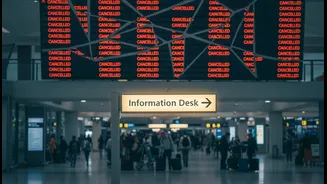
When communication breaks down, the consequences for the traveller can be severe. Passengers report being left at the gate without assistance for a tight connection, only to watch their next flight depart without them. Others have been provided with a standard wheelchair when they need a fully reclining one, or have been allocated a middle seat, making a transfer from the aisle chair impossible without immense difficulty and loss of dignity. In India, despite Directorate General of Civil Aviation (DGCA) regulations mandating free and comprehensive assistance, complaints persist. According to Ministry of Civil Aviation data, over 1,200 wheelchair-related complaints were filed in a single fiscal year, often citing late staff, or the pre-booked request simply missing from the system at the airport. These are not mere inconveniences; they can make travel an ordeal, deterring people with disabilities from flying altogether.
How to Be Your Own Best Advocate
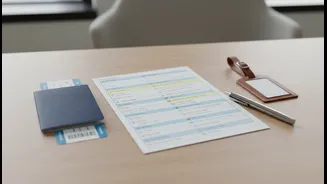
While the system needs fixing, there are proactive steps you can take to ensure your needs are met. First, book your assistance as far in advance as possible, ideally at least 48 hours before your flight, directly with the airline. After booking online, follow up with a phone call to the airline's special assistance desk to confirm the request and add specific notes. Use clear, simple language. For example: "I need a wheelchair from check-in to the aircraft seat. I cannot climb stairs. I need an aisle seat with a movable armrest." Get confirmation of the services in writing via email. On the day of travel, arrive at the airport earlier than you normally would and re-confirm your needs at the check-in desk. If you have a connecting flight, confirm with the cabin crew before landing that assistance has been arranged at your arrival airport. One of the most effective strategies is to carry a printed card with your specific requirements clearly listed, which you can hand to every staff member who assists you on your journey.
A Call for Smarter Systems
Ultimately, the responsibility for a seamless journey should not fall entirely on the passenger. Airlines and airports are increasingly exploring technological solutions to bridge the communication gap. Some airports are introducing apps that allow passengers to directly communicate their needs and track the location of their assistance provider in real-time. Integrating these requests more smoothly between airline booking platforms and the systems used by airport assistance providers is the next frontier. In India, the DGCA mandates that airlines must provide assistance from the departure terminal to the arrival terminal exit at no extra cost, and cannot deny carriage based on disability. By continuing to advocate for better technology and clearer standards, travellers can help push the industry towards a system where accurate notes are not a hope, but a guarantee.