



The Urban Renter's Dilemma
Renting in a major Indian city comes with a familiar set of challenges. Rapid urbanization means apartments are getting smaller, and finding a home that perfectly fits your needs and budget is a constant struggle. For the millions of young professionals
who migrate to cities for work and education, the rental experience can be defined by high deposit demands, unpredictable landlords, and a lack of standardisation. This transient reality makes investing in heavy, traditional furniture feel impractical. Who wants to haul a massive, solid-wood bed or a bulky, one-piece sofa up three flights of stairs, only to find it doesn’t fit the layout of your next apartment a year later? This is the core problem: the desire for a beautiful, comfortable home clashing with the reality of a life in motion.
Maximising Every Square Foot
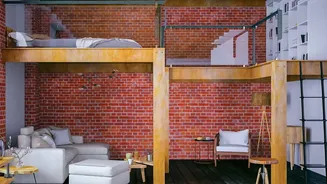
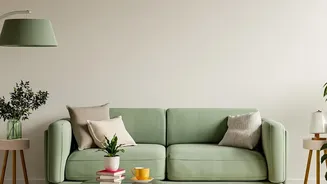
This is where foldable and modular furniture truly shines. In compact urban homes where every inch counts, these pieces are masters of multitasking and space efficiency. Think of a foldable dining table that hangs on the wall as a piece of art until guests arrive, or a modular sofa that can be reconfigured from a sprawling L-shape for movie nights into separate seating for a party. These designs are a direct response to shrinking apartment sizes in major cities. By allowing you to transform a space based on its function at any given moment—a living room by day, a guest room by night—this furniture helps you live larger in a smaller footprint, avoiding the cluttered feeling that often comes with trying to fit conventional furniture into a tight space.
Move-In, Move-Out, No Fuss
One of the biggest headaches for renters is the process of moving. Traditional furniture is not only heavy but also prone to damage during transport. Modular and foldable pieces are designed specifically for this challenge. Because they can be disassembled into smaller, lighter components, moving them becomes vastly simpler. A modular sofa breaks down into sections that one person can often carry, easily fitting through narrow doorways and tight stairwells. This portability significantly reduces the stress and cost associated with relocation. Instead of selling your furniture at a loss or abandoning it, your investment moves with you, ready to be reassembled and adapted to your new home.
A Style That Evolves with You
Your life isn't static, and your furniture shouldn't be either. The customisable nature of modular furniture is one of its most appealing features for a generation that values personalization. You can start with a small, two-seater sofa and add more sections as your income grows or if you move into a larger space. This scalability means your furniture can grow with your life, from a bachelor pad to a family home. The ability to swap out individual components also allows for stylistic updates without replacing the entire set. If a cushion gets damaged or you simply want a new colour scheme, you can often replace a single module or cover, making it both a financially and stylistically smart choice.
A Smarter, Sustainable Investment
In an era of increasing environmental awareness, foldable and modular furniture represents a more sustainable way to live. The traditional cycle of buying cheap furniture, using it for a short time, and then discarding it during a move contributes to significant waste. Because modular pieces are adaptable and built for longevity, they counter this 'throwaway culture'. You are less likely to replace furniture that can be reconfigured or repaired easily. This long-term usability makes it a sound financial investment. While the initial cost can sometimes be higher than mass-produced flat-pack furniture, the ability to adapt, move, and selectively upgrade your pieces over many years offers better value and reduces your environmental footprint. It aligns perfectly with a modern ethos of buying fewer, better things.