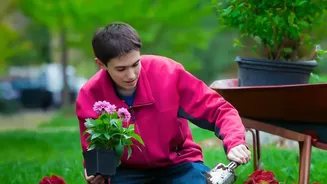








Watering the plants can feel like just another chore on your to-do list. But what if that routine task could become a source of daily calm and joy? By bringing simple mindfulness to your gardening, you can cultivate more than just plants.
1. Dissolve Daily Stress
In a world that
constantly demands our attention, gardening offers a peaceful escape. The simple act of focusing on a single task, like pulling weeds or watering, helps quiet the mind. Research shows that spending time in nature and engaging in gardening activities can lower levels of cortisol, the body's primary stress hormone. This allows you to step away from life's pressures and find a temporary sense of respite. Instead of rushing through it, approach your next gardening task by focusing on the physical sensations — the feel of the soil, the sound of the water. This grounding practice helps melt away tension.
2. Heighten Your Sensory Awareness
Mindful gardening is an invitation to engage all your senses. It encourages you to notice the world in a more detailed way. Pay attention to the vibrant green of a new leaf, the complex fragrance of a blooming flower, the rough texture of a terracotta pot, and the sound of birds or rustling leaves. This practice of deep observation pulls you firmly into the present moment, interrupting the cycle of worry about the past or future. Even weeding can become a mindful act when you focus on the physical metaphor of removing stressors from your life. By intentionally noticing these small details, you train your brain to be more present in all areas of life.
3. Cultivate a Sense of Purpose
Caring for a living thing, no matter how small, provides a unique sense of responsibility and accomplishment. Watching a seed sprout or a flower bloom as a result of your care is deeply rewarding and fosters a sense of purpose. This is especially powerful when facing feelings of being overwhelmed or unproductive. The plant's needs provide a simple, achievable focus: it wilts if you forget to water it and thrives with your consistent care. This relationship reminds you that your efforts matter and can create tangible, beautiful results, boosting self-esteem and providing a significant emotional lift.
4. Get Grounded with Gentle Movement
Gardening is a form of gentle, natural physical activity. The acts of bending, stretching, digging, and lifting keep your body moving, improving flexibility and strength without the strain of a formal workout. More than just exercise, the physical connection to the earth is grounding. Some studies suggest that direct contact with soil can even have mood-boosting effects by releasing serotonin in the brain. Whether you are tending a large garden or simply repotting a plant on a balcony, these movements connect your mind and body, helping to release physical tension and calm your nervous system.
5. Practice Patience and Acceptance
A garden operates on its own timeline, and it's the perfect teacher for patience. You cannot rush a seed to sprout or force a flower to bloom. Mindful gardening teaches you to observe and accept the natural, slow pace of growth and change. You learn to work with the seasons, to accept that some plants may not survive, and to appreciate the beauty in every stage of a plant's life, from a tiny bud to a spent bloom. This practice of non-judgmental observation helps build resilience and a greater acceptance of the uncontrollable aspects of life beyond the garden.