






Why Sitting Is the New Smoking
The phrase 'sitting is the new smoking' might sound dramatic, but it highlights a serious health reality. When you sit for extended periods, your body goes into a low-energy state. Your calorie-burning rate drops, circulation slows, and the electrical
activity in your leg muscles shuts down. This sedentary behaviour is linked to an increased risk of chronic conditions like heart disease, type 2 diabetes, and certain cancers. Even if you exercise regularly, long hours of uninterrupted sitting can still have negative effects. The key is not just to exercise more, but to sit less by incorporating brief, consistent movement throughout your entire day.
Mobilise Your Mid-Back with Seated Rotations
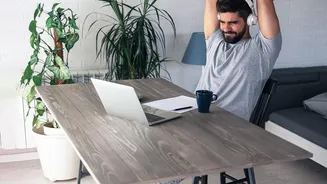
Your mid-back, or thoracic spine, is designed for rotation, but hours spent hunched over a keyboard can make it incredibly stiff. This stiffness can lead to compensation in your neck and lower back, causing pain in those areas. To counteract this, try a simple seated rotation. Sit tall in your chair with your feet flat on the floor. Cross your arms over your chest and gently twist your upper body to the right, keeping your hips still. Hold for a few seconds, then slowly return to the center and repeat on the left side. This simple move, done every hour or two, can help maintain spinal mobility and prevent stiffness from setting in.
Open Your Hips with a Figure-Four Stretch
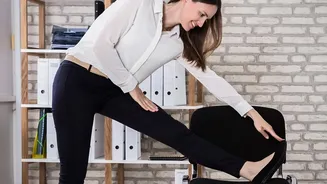
Sitting keeps your hip flexors in a constantly shortened position, leading to tightness that can pull on your pelvis and contribute to lower back pain. The seated figure-four stretch is an easy and discreet way to open the hips. While sitting at the edge of your chair, cross your right ankle over your left knee. Keeping your back straight, gently lean forward until you feel a comfortable stretch in your right hip and glute. Hold for 20-30 seconds, breathing deeply, and then switch sides. This helps release tension in the deep hip rotator muscles that become tight from sitting.
Activate Your Shoulders with Blade Squeezes
A forward_hunching posture weakens the muscles in your upper back. Shoulder blade squeezes, or scapular retractions, are a perfect antidote. While sitting or standing, simply squeeze your shoulder blades together as if you're trying to hold a pencil between them. Hold the squeeze for a few seconds and then release. This small movement activates the muscles that help pull your shoulders back and down, improving your posture and relieving tension across your upper back. You can do this anytime, even during a phone call or while reading an email.
Counteract 'Tech Neck' with Chin Tucks
Leaning forward to look at a screen causes a common postural issue known as 'tech neck', which strains the muscles and joints in your cervical spine. A chin tuck directly counteracts this forward head posture. Sit up straight and look forward. Gently draw your chin straight back, creating a 'double chin'. You should feel a gentle stretch at the back of your neck. Be careful not to tilt your head up or down. Hold for five seconds and repeat several times. This exercise helps to realign your head over your shoulders, reducing neck strain.
Stretch Your Wrists and Forearms
Hours of typing and using a mouse put repetitive strain on your wrists and forearms. To relieve this, extend one arm in front of you with the palm facing up. With your other hand, gently pull your fingers down toward the floor until you feel a stretch in your forearm. Hold for about 20 seconds. Then, reverse the stretch by extending your arm with your palm facing down and gently pulling your fingers back toward your body. Repeat on both sides to help prevent overuse injuries like carpal tunnel syndrome.
Build a Habit of Micro-Movements
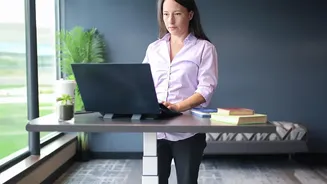
The most effective strategy is to make movement a frequent, non-negotiable part of your workday. Don't wait until you feel stiff. Set a timer to remind yourself to get up and move for a few minutes every 30 to 60 minutes. You don't need a complex routine. Simply standing up, walking to get a glass of water, or doing one of the simple stretches above is enough to make a difference. Consider 'walking meetings' for phone calls or stand up during internal discussions. The goal is to break the cycle of prolonged, uninterrupted sitting.