



A New Era of Celestial Teamwork
The Indo-US space relationship is entering its most ambitious phase yet. In recent years, a series of landmark agreements have transformed the partnership from a series of standalone projects into an enduring strategic framework. A pivotal moment came
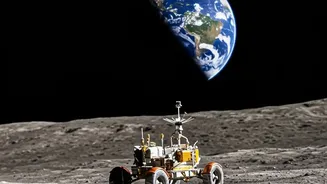
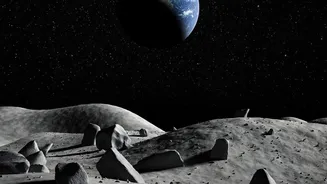
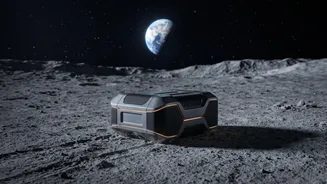
in 2023 when India signed the Artemis Accords, a US-led set of principles for peaceful and transparent lunar exploration. This move signalled a major shift, aligning India with a coalition of over 70 nations and paving the way for deeper collaboration. Building on this, the U.S.-India Initiative on Critical and Emerging Technology (iCET) has further solidified this bond, identifying space as a key pillar for cooperation in everything from human spaceflight to advanced technology. The most recent developments include a formal invitation from NASA for ISRO to participate in its ambitious Moon Base program, a planned permanent outpost near the lunar South Pole.
The Geopolitical Constellation
A significant driver of this deepening cooperation is the shared strategic concern over China's expanding ambitions in space. As the cosmos becomes an arena for geopolitical competition, both Washington and New Delhi see a strong partnership as a crucial counterbalance. This collaboration between the world's two largest democracies is viewed as a vital step in ensuring that the norms governing space exploration are based on openness, transparency, and peaceful use. The Artemis Accords, while non-binding, represent a framework for this shared vision, contrasting with the separate China and Russia-led International Lunar Research Station (ILRS) initiative. By working together, India and the US aim to shape the future rules of the road in space, ensuring a stable and cooperative environment rather than one defined by unilateral actions and strategic rivalry.
Key Missions on the Horizon
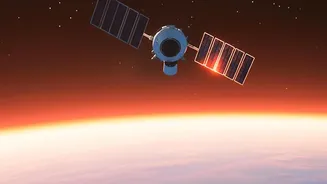
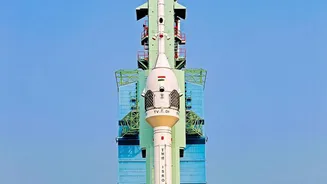
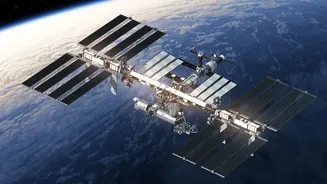
The partnership is not just about grand principles; it is built on tangible, groundbreaking projects. The NASA-ISRO Synthetic Aperture Radar (NISAR) mission, which launched successfully in July 2025, is a prime example. As the world's most expensive Earth-imaging satellite, NISAR uses dual-frequency radar to map changes on the Earth's surface with unprecedented detail, aiding in disaster management, climate monitoring, and agriculture. Looking forward, the cooperation is set to reach new heights. Plans are underway for a joint mission to the International Space Station (ISS), which will see an Indian astronaut train at NASA's Johnson Space Center. Furthermore, NASA's invitation for ISRO to join the lunar base project opens up possibilities for collaboration on robotics, life-support systems, and lunar science, building on India's own successful Chandrayaan missions.
The Commercial Frontier
Beyond government agencies, the expanding partnership is creating a vibrant ecosystem for private enterprise. Both governments are actively fostering connections between their commercial space sectors. Initiatives like the first-ever U.S. Trade Mission to India focused on commercial space, held in February 2026, brought together leading American companies and Indian startups to explore joint ventures and market opportunities. With India opening its space sector to private participation and streamlining foreign direct investment, the stage is set for a boom in collaboration. This commercial synergy is a key component of the iCET framework, aiming to build resilient supply chains and drive innovation in areas like satellite manufacturing, launch services, and space tourism. For India, it provides access to technology and global markets; for the US, it opens doors to India's cost-efficient innovation and growing talent pool.