





The Vision: A Data Center in the Stars
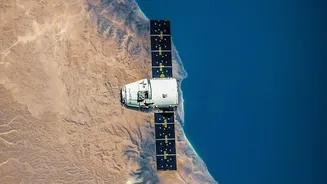
The core idea behind space computing is to launch data centers into orbit around Earth. Instead of vast, power-hungry warehouses on the ground, massive satellites equipped with servers, processors, and cooling systems would handle the immense computational
load required by modern AI. Musk has suggested that to achieve the scale of computing power needed for future 'superintelligence', nearly all of it will eventually need to be based in space. Proponents argue that space offers unique advantages: near-constant, unfiltered sunlight for solar power and the cold vacuum of space for cooling. This would theoretically bypass Earth's limitations, such as stress on power grids and massive water consumption for cooling terrestrial data centers.
Why Take Computing to Space?
The primary driver for this ambitious proposal is the insatiable energy demand of artificial intelligence. As AI models become more complex, their need for electricity is straining terrestrial power grids. In space, solar panels can generate significantly more power than on Earth because there is no atmospheric interference, and in certain orbits, they can be in continuous sunlight. Another key benefit is latency reduction for space-based systems. Satellites generating vast amounts of data, for Earth observation or communications, could process it on-orbit instead of transmitting it all back to Earth, saving time and bandwidth. This concept, known as edge computing, would make satellite networks more efficient and autonomous. Finally, physical isolation in space offers a potential security advantage for sensitive data.
The Astronomical Hurdles
Despite the theoretical benefits, the practical challenges are immense. The first is cost. According to a Google executive, building data centers in space is currently up to 100 times more expensive than building them on Earth. Second, while space is cold, its vacuum properties act like a thermos, making it difficult to dissipate the intense heat generated by computer chips. This requires massive, complex radiator panels. Then there is the issue of radiation. Electronics in space are constantly bombarded by high-energy particles that can corrupt data or destroy components. This necessitates 'radiation-hardening', a process of using specialized materials and designs that adds significant cost and complexity. Finally, maintenance is a major obstacle. If a component fails on an orbital data center, it cannot be easily repaired or replaced. This requires an unprecedented level of reliability for all hardware.
Connecting the Dots with Starlink and Starship
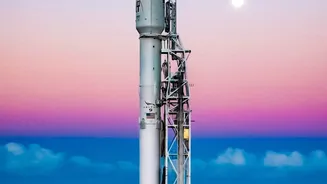
Musk's vision for space computing is deeply integrated with his other ventures. The plan relies on SpaceX's Starship, a fully reusable rocket designed to dramatically lower the cost of launching heavy payloads into orbit. Without this drastic reduction in launch costs, the entire economic model is unfeasible. The concept also builds upon the existing Starlink satellite internet constellation. Starlink's laser-based inter_satellite links provide a blueprint for the high_speed network that would connect orbital data centers. SpaceX has dubbed its space computing initiative 'Starmind' and has reportedly co_designed initial hardware with NVIDIA, aiming for a test launch in late 2027. The company has even filed for a constellation of up to one million satellites to serve as these orbital data centers, signaling the scale of its ambition.
While companies like Google have successfully tested AI processors in orbit, these are small_scale experiments, not massive data centers. Experts caution that despite the hype, the technology is in its infancy. The industrial scale required is staggering, and the environmental impact of potentially hourly rocket launches needed to build and maintain such a network is a serious concern. While Musk's companies are making progress on terrestrial data centers and have the advantage of vertical integration—building their own rockets, satellites, and potentially even chips—the dream of a cosmic cloud remains firmly in the proposal stage. The technical and economic chasm between today's capabilities and a future where AI lives among the stars is vast. For now, space computing is a fascinating glimpse into a possible future, but it is a future that is still many years, and countless launches, away.