






What Are Ultra-Thin Solar Sheets?
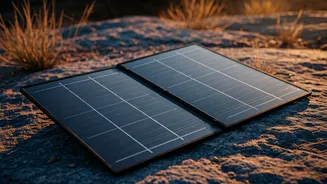
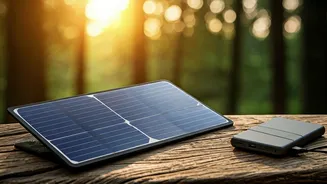
Imagine a solar panel you can fold up like a map and slide into your backpack. That’s the magic of ultra-thin, flexible solar sheets. Unlike the rigid, heavy panels you see on rooftops, these are designed for portability. They consist of lightweight,
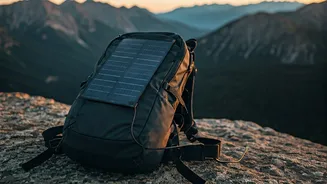
photovoltaic cells embedded in a durable, often weather-resistant fabric. When unfurled and exposed to sunlight, they generate a direct current (DC) that can charge your devices—like a smartphone, GPS unit, or camera—via built-in USB ports. They are engineered to be strapped onto a backpack, allowing you to charge your gear while you walk, turning your entire setup into a mobile power station.
The Real Weight-Saving Advantage
The headline's command to 'ditch powerbanks' comes from a very real pain point: weight. A high-capacity 20,000mAh power bank, which might give you four to five phone charges, typically weighs around 400-500 grams. For a week-long trek where you might need two, you’re already carrying nearly a kilogram of just batteries. A portable solar sheet setup, capable of generating power indefinitely, can weigh as little as 300 grams. The maths is compelling. For multi-day treks, especially in sunny regions like the Himalayas during peak season or the Western Ghats post-monsoon, the weight saved by replacing a heavy battery bank with a lightweight solar charger is significant. This means less strain on your back and more energy for the trail.
How to Use Them on the Trail
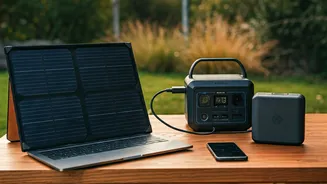
Using a solar sheet is refreshingly simple. Most models come with carabiner loops or grommets, making it easy to attach to the top or back of your rucksack. The key is to position the panel to receive maximum direct sunlight. As you trek, the panel silently works, converting sunlight into electricity. Most trekkers don’t charge their phones directly from the panel, as intermittent clouds can cause the charging to start and stop, which can be inefficient for some devices. Instead, the most effective strategy is to use the solar panel to charge a small, lightweight power bank (around 5,000-10,000mAh). You hike and charge the power bank all day, and then use that stored energy to safely charge your phone and other gadgets in your tent at night. This gives you a stable, reliable power source every evening.
A Reality Check: When to Still Pack a Power Bank
So, can you truly 'ditch' power banks altogether? The honest answer is: it depends. Solar technology is incredible, but it is entirely dependent on the sun. On a trek through misty, cloud-covered mountains or during the monsoon season, a solar panel will be significantly less effective, if not completely useless. Its output drops dramatically in overcast conditions. For this reason, many seasoned trekkers adopt a hybrid approach. They carry a solar sheet *and* a small-to-medium power bank. The solar sheet becomes the primary method for recharging, extending the life of the power bank far beyond its standalone capacity. Think of the solar panel not as a complete replacement, but as an infinite recharger for a smaller, more manageable battery. This strategy provides the best of both worlds: reduced weight and resilience against unpredictable weather.
What to Look for When Buying
Choosing the right solar sheet can feel technical, but focus on these four key features. First, Wattage: For backpacking, a panel between 10 to 25 watts is the sweet spot. Anything less might struggle to charge even a small power bank effectively. Second, Efficiency: This determines how well the panel converts sunlight into power. Look for high-efficiency cells, often labelled as monocrystalline. Third, Durability: Your gear will take a beating. Ensure the panel is water-resistant (look for IP ratings like IPX4 or higher) and built with sturdy fabric. Fourth, Portability: Check the folded size and weight. It should be compact and light enough that you barely notice it in your pack. Finally, check the output ports—most modern panels offer standard USB-A ports, and some have USB-C for faster charging.