




The Dawn of the Commercial Orbit
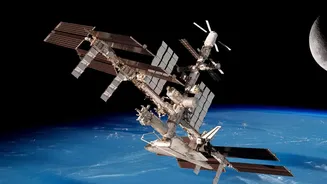
For over two decades, the International Space Station (ISS) has been humanity's lone outpost in low-Earth orbit. But the aging station is set to be deorbited around 2030. Rather than build a costly successor, NASA is turning to the private sector. Through
its Commercial LEO Destinations (CLD) program, the agency is fostering a new market by funding several companies to develop their own orbiting platforms. The vision is for NASA to become just one of many customers in a bustling orbital ecosystem, purchasing services for astronaut training and scientific research. This strategic shift aims to prevent a gap in American presence in orbit while simultaneously kickstarting a vibrant commercial economy 400 kilometres above the Earth.
The New Architects of Space
Several key players have emerged, each with a unique approach to building a home in the heavens. Axiom Space is taking an incremental route, planning to attach its first modules to the ISS starting as early as 2026 before separating to become a free-flying station. Another major contender is Orbital Reef, a joint venture by Blue Origin and Sierra Space, envisioned as a "mixed-use business park" in space for research, manufacturing, and tourism. The Starlab team, a partnership between Voyager Space and aerospace giant Airbus, is developing a single-launch station with a large metallic module designed for research. Finally, Vast aims to be first out of the gate with a standalone, single-module station called Haven-1, targeting a 2027 launch.
Innovative Designs for a New Era
These next-generation stations are a far cry from the cramped confines of early orbital habitats. They are being designed for greater comfort, efficiency, and flexibility. Sierra Space, for instance, is developing the Large Integrated Flexible Environment (LIFE) module for Orbital Reef. These inflatable habitats are launched in a compressed state and expand in orbit to the size of a three-story apartment, offering vastly more volume than traditional rigid modules. Axiom Space is focused on the astronaut experience, with interiors designed by a famous French designer and plans for the largest glass-walled observatory ever built for space, providing panoramic views of Earth. Starlab will feature a large, eight-meter-diameter structure containing three decks for crew habitation and a state-of-the-art laboratory.
More Than a Lab: A Business Park in the Sky
The business model for these stations extends far beyond government-funded science. Operators plan to cater to a diverse client base, including international space agencies, private corporations, and even wealthy tourists. The unique microgravity environment is ideal for advanced materials manufacturing, such as producing flawless fiber optics or growing perfect protein crystals for pharmaceutical development. Companies are also targeting in-space manufacturing, media production, and dedicated missions for sovereign nations without their own space programs. This diverse market is crucial, as NASA has made it clear that while it will be an anchor tenant, it does not believe a purely commercial business case currently exists without a broad customer base.
The Race Against Time
Despite the ambitious plans, significant hurdles remain. The timelines are aggressive, and space hardware development is notoriously prone to delays. Most of the proposed stations are still in development, with the first modules targeting launch dates in the late 2020s. Securing funding, passing rigorous safety certifications, and navigating the technical challenges of building and operating a permanent habitat in the harsh environment of space are all monumental tasks. The pressure is on to get these commercial outposts operational before the ISS takes its final fiery plunge into the Pacific Ocean, ensuring a continuous human presence in low-Earth orbit.