



A Planet Plays Hide-and-Seek
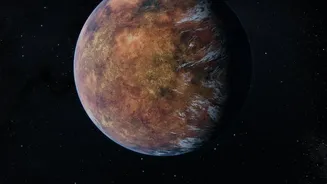
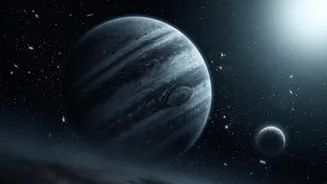
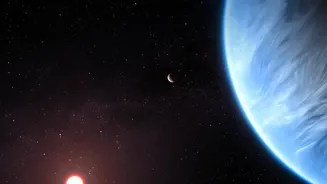
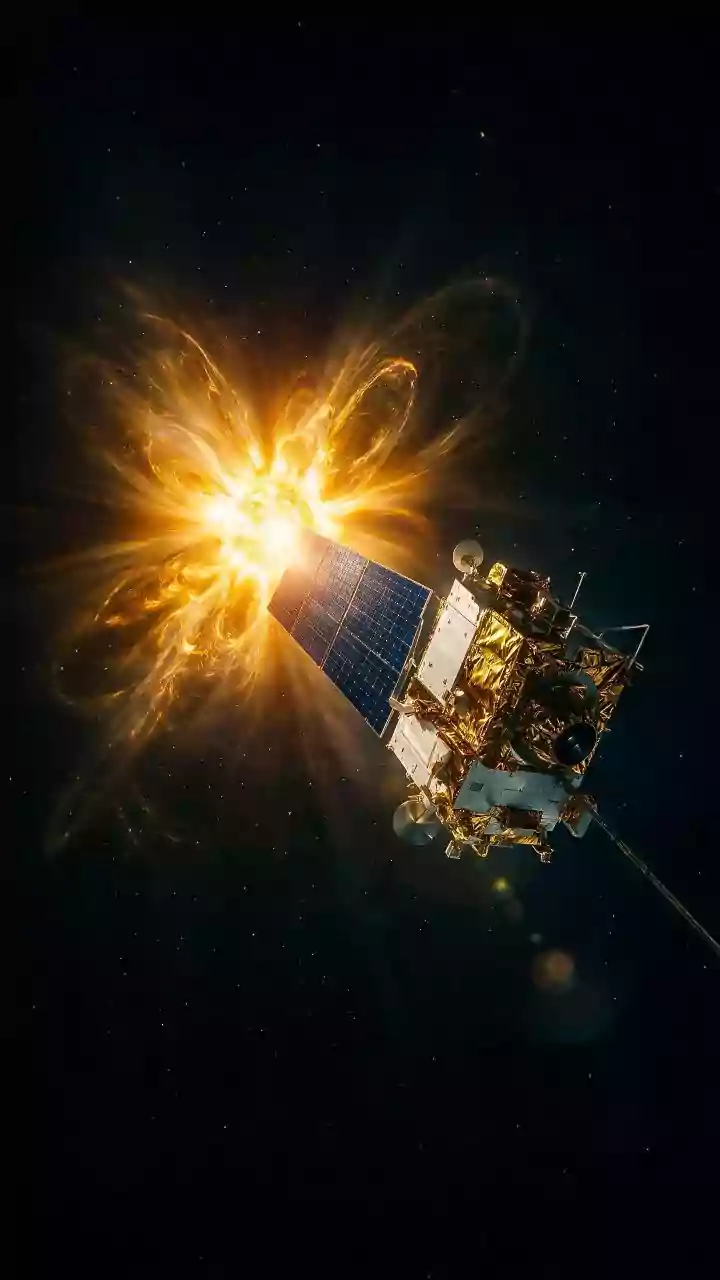
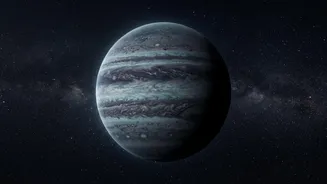
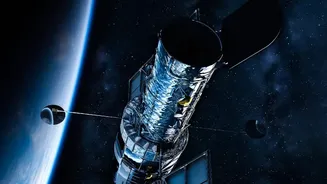
Imagine watching a planet for seven years, only for it to suddenly vanish. That's what happened with TOI-2535 b, a gas giant roughly the size of Jupiter. First spotted by NASA's Transiting Exoplanet Survey Satellite (TESS) in 2019, this 'hot Jupiter'
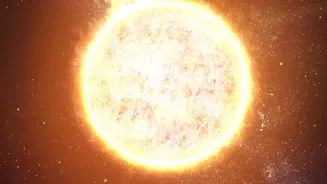
was regularly observed as it passed in front of its star, an event known as a transit. These transits, which cause a tiny dip in the star's brightness, are how TESS discovers distant worlds. But in early 2026, the transits of TOI-2535 b stopped completely, leaving astronomers with a celestial mystery. The planet hadn't been destroyed; its orbit had simply tilted out of our line of sight.
The Unseen Neighbor
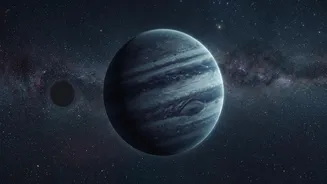
The culprit behind this cosmic disappearing act is believed to be an unseen planetary companion. Researchers, led by a team at UCLA, concluded that the gravitational pull from another large, nearby planet is making TOI-2535 b's orbit wobble like a top. This gravitational tug-of-war has caused the orbital planes of both planets to precess, or change orientation, over time. Over the seven years of observation, astronomers watched the planet's transit path shift from crossing the middle of its star to barely grazing the edge, before disappearing from view altogether. This is the first time a planet has been directly observed ceasing to transit around a single star due to such a rapid orbital tilt.
An Eight-Day Year and a Cosmic Wobble
TOI-2535 b is what's known as a 'hot Jupiter', a gas giant that orbits its star at an incredibly close distance. It completes a full orbit—its year—in just over eight days, more than ten times faster than Mercury orbits our Sun. This proximity to its star makes it blisteringly hot. Adding to its peculiarity, its transit times were highly erratic, sometimes arriving up to six hours earlier or later than expected. These significant timing variations, combined with the vanishing transits, were the key clues that pointed scientists toward the existence of a second, massive planet influencing its journey through space.
Rewriting the Rules of Planet Formation
The discovery offers valuable insights into how planetary systems form and evolve. Typically, hot Jupiters are not expected to have massive neighbors so close by. The existence of this influential companion suggests that TOI-2535 b likely formed through a relatively calm process, migrating slowly inward through the gas disk of its young solar system rather than being violently thrown into its current position. This 'gentler' formation path is less common but helps explain how two giant planets can exist in such a closely interacting, tilted configuration. The system challenges the idea that all planetary systems are flat and orderly, showing they can be dynamically twisted over time.