



The Sweet Spectacle of Summer
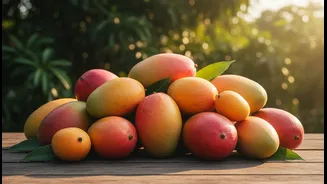
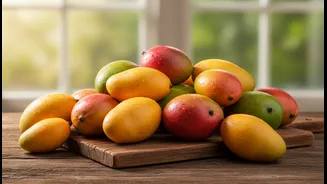
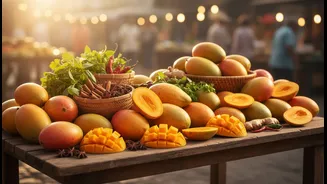
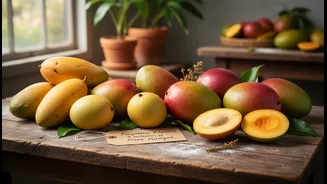
For a few glorious months, India is awash with the scent and flavour of mangoes. Cities like Delhi, Lucknow, and others across the country host bustling festivals, or 'melas', dedicated to this beloved fruit. These events are a sensory overload in the best
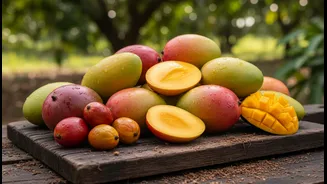
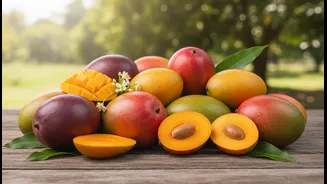
way possible, showcasing hundreds of varieties, from the famed Alphonso and Langra to rare, local specialities that few have heard of. They serve as a vital platform for farmers to connect directly with consumers, for artisans to sell mango-based products, and for a nation to collectively celebrate its rich agricultural heritage. For visitors, it's a chance to taste, buy, and marvel at the sheer breadth of India's mango legacy. But the bright lights of the festival tents cast a long shadow over a deeper, more worrying issue.
When the Tents Come Down
The problem isn't the festival itself, but what it represents: a brief, intense period of visibility for a resource that requires constant, year-round care. Once the crowds disperse and the season ends, the focus on mango diversity fades. The reality is that many of India's traditional mango varieties are vanishing. Commercial pressures heavily favour a handful of high-yield, long-shelf-life varieties that are suitable for large-scale distribution and export. This economic reality forces farmers to replace diverse, multi-variety orchards with monocultures of commercially dominant types. As a result, hundreds of heirloom varieties—each with a unique taste, texture, and cultural significance—are being pushed to the brink of extinction. These rare mangoes are often seen once a year at a festival, and then disappear from the market, and increasingly, from the orchards themselves.
The Year-Round Conservation Gap
So, what does year-round conservation actually entail? It's a continuous effort that goes far beyond a seasonal exhibition. It involves the on-farm preservation of genetic diversity by so-called 'custodian farmers' who maintain orchards with multiple traditional varieties. These farmers are the guardians of our mango heritage, often cultivating trees that are generations old. Conservation also means managing soil health, adapting to climate change impacts like erratic rainfall and heatwaves, and controlling pests and diseases, which all pose significant threats to mango cultivation. Furthermore, it requires institutional support, from creating nurseries for traditional saplings to documenting and registering farmers' varieties to protect their rights and create market value. Without these sustained efforts, mango festivals become less a celebration of diversity and more a museum of what we are about to lose.
A Farmer's Difficult Choice
For an individual farmer, the choice to grow heritage mangoes is a difficult one. Non-commercial varieties often have a lower yield, are more susceptible to damage during transport, and lack established market demand. While a multi-variety orchard can reduce risks from pests or weather and extend the harvest season, the economic pull of popular varieties is immense. Many farmers dump their unique mangoes in wholesale markets at very low prices because there isn't a dedicated channel to sell them. Organisations like the ICAR-Central Institute for Subtropical Horticulture have worked to educate farmers on marketing rare varieties, but it remains a systemic challenge. Custodian farmers who preserve this diversity do so more out of passion and tradition than economic incentive, a model that is becoming increasingly unsustainable in the face of modern agricultural economics.
A More Sustainable Celebration
For mango festivals to be more than just a fleeting showcase, they must evolve to become an integral part of the conservation solution. Experts suggest that these events can be powerful platforms for promoting and popularising lesser-known varieties, creating niche markets and driving consumer demand. Imagine festivals that don't just display fruit, but also connect consumers directly with custodian farmers, tell the stories behind heirloom varieties, and facilitate the sale of saplings for backyard planting. By creating real economic value for diversity, festivals can provide a tangible incentive for farmers to continue cultivating it. This requires a shift in thinking, from viewing festivals as a simple marketplace to seeing them as a dynamic tool for awareness, economic empowerment, and long-term biodiversity security.