

Zermatt: The Matterhorn's Magnetic Pull
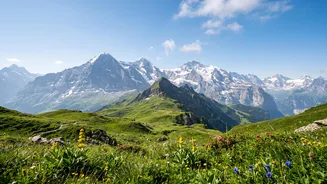
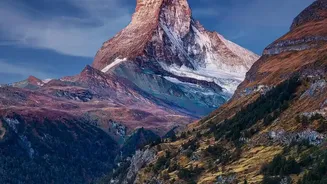
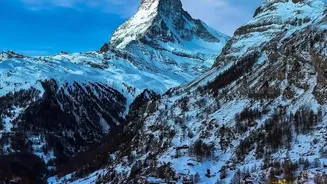
No peak is more synonymous with the Alps, or perhaps with Switzerland itself, than the Matterhorn. The car-free village of Zermatt, nestled at its base, is the gateway to this icon. It's crowded for one simple, powerful reason: everyone wants to see the mountain.
Zermatt receives nearly two million visitors a year, a staggering number for a town with only 6,000 residents. This influx is driven by the universal desire to witness the peak's dramatic, pyramid-like form. The village has become a bustling hub of hotels, restaurants, and shops, all catering to this singular focus. While the crowds can feel intense, they are also a testament to the mountain's enduring power to awe. The energy in Zermatt is a mix of high-society glamour and rugged adventurer spirit, as backpackers and mountaineers share the streets with luxury travellers. The context here is that Zermatt is not just a town; it's a base camp for a natural wonder. The crowds are part of the pilgrimage.
Jungfraujoch: The 'Top of Europe' Experience
The slogan 'Top of Europe' is a masterful piece of marketing for what is, essentially, Europe's highest railway station at 3,454 metres. The crowds here are not just visiting a place; they are buying an experience. The journey itself, a marvel of early 20th-century engineering that tunnels through the Eiger and Mönch mountains, is a massive part of the appeal. Once at the top, visitors are treated to a complex of attractions including an observatory, an Ice Palace carved into the glacier, and, most importantly, a staggering view of the Aletsch Glacier, the longest in the Alps. This combination of accessible, high-altitude adventure for non-alpinists is the recipe for its immense popularity and the resulting queues. It's a highly structured, commercialised encounter with the high Alps, but it delivers a perspective that was once reserved for only the most daring mountaineers. The crowds are a function of its incredible accessibility.
Lucerne: The Fairytale City and its Chapel Bridge
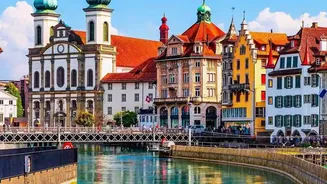
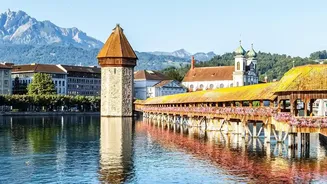
Lucerne feels like the Switzerland of storybooks, and its centrepiece is the Kapellbrücke, or Chapel Bridge. This covered wooden footbridge, originally built in the 14th century, is one of the most photographed landmarks in the country. It's crowded because it is the living, breathing heart of a perfectly preserved medieval cityscape. Thousands of people cross it daily. The bridge, with its interior paintings and adjacent Water Tower, is more than just a path across the River Reuss; it is an icon of Swiss heritage. Its near-destruction by fire in 1993 and subsequent swift reconstruction only added to its legend. The crowds on and around the bridge are there to soak in this historical ambience. The popularity of Lucerne, particularly in the summer, is driven by its sheer beauty and walkability, which concentrates visitors in its compact and impossibly charming old town.
Interlaken: The Adventure Capital
Situated between two stunning turquoise lakes, Thun and Brienz, Interlaken has branded itself as the 'Adventure Capital of Europe'. It's less about a single viewpoint and more about a concentration of adrenaline. Paragliding, skydiving, canyoning, and whitewater rafting are all readily available, drawing a younger, more thrill-seeking crowd. The town itself serves as a convenient and buzzing hub to access the immense outdoor playground of the Bernese Oberland. Its popularity has been amplified by social media, becoming a bucket-list destination for study abroad students and adventure travellers. The crowds in Interlaken are not looking for quiet contemplation; they are there for action. The context is that Interlaken is a service town for adventure, and its energy is defined by the constant flow of people heading out to jump off, paddle through, or hike over the spectacular surrounding landscape.
The Lauterbrunnen Valley: 72 Waterfalls and an Instagram Boom
The Lauterbrunnen Valley is almost comically beautiful. It's a deep, U-shaped valley with sheer cliffs from which 72 waterfalls cascade, the most famous being the Staubbach Falls which dusts the valley floor with its spray. The problem, if you can call it that, is that its fame has exploded in the age of social media. The valley has become a 'bottleneck' of Swiss tourism, where visitors flock to replicate iconic photographs. The crowds here are a direct result of its visual perfection. The sight of the quintessential village church against a backdrop of the falls and cliffs is an irresistible image. The pressure is particularly intense from day-trippers who pour into the small area, creating congestion. To understand Lauterbrunnen's crowds is to understand the power of a single, perfect photograph to move thousands of people to stand in the exact same spot. It's a case study in modern tourism, where the image sometimes precedes the experience.