




The New Blueprint for a Space Power
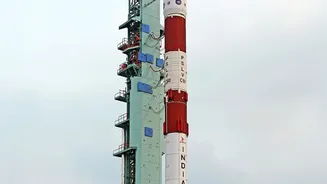
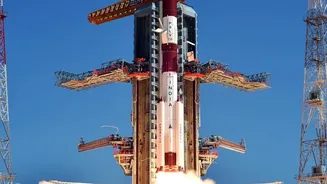
For decades, the Indian Space Research Organisation (ISRO) has been the cornerstone of India's space ambitions, earning a global reputation for reliable and economical access to space. Now, the focus is shifting from being a launch provider to becoming
a comprehensive space power. This evolution is not just about bigger rockets or more distant missions; it's about integrating sophisticated technologies that will enable unprecedented capabilities. Artificial intelligence (AI), quantum technology, and next-generation satellite systems are the three pillars of this transformation. These technologies are poised to enhance everything from mission autonomy and data analysis to secure communications and national security, cementing India’s position as a hub for space innovation.
AI: The Intelligent Co-Pilot
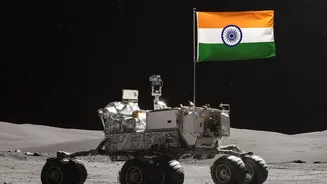
Artificial Intelligence is rapidly moving from a buzzword to a fundamental tool in India's space endeavours. Its applications are vast, ranging from designing mission trajectories and monitoring the health of launch vehicles to automating spacecraft operations. A prime example was the Chandrayaan-3 mission, where AI algorithms helped the Pragyan rover navigate the lunar surface and avoid obstacles. Beyond navigation, AI is crucial for sifting through the enormous volumes of data sent back by satellites, helping scientists detect celestial objects, monitor climate patterns, and manage resources on Earth more effectively. Indian startups are also leveraging AI; Digantara, for instance, has developed an AI-powered surveillance network to track objects and debris in Low Earth Orbit, enhancing space situational awareness.
Quantum: The Unhackable Frontier
Quantum technology represents a leap into a new paradigm of computing and communications, with profound implications for space security. ISRO is actively developing quantum communication, which uses the principles of quantum mechanics to create theoretically unhackable communication channels. In 2021, ISRO successfully demonstrated free-space quantum communication over a distance of 300 meters, a critical first step. The ultimate goal is to establish Satellite Based Quantum Communication (SBQC), which would secure data links between satellites and ground stations, protecting sensitive military and civilian information. This technology is not just for defence; it will also be crucial for securing financial networks and critical infrastructure that rely on satellite communications. India's National Quantum Mission is aligned with these goals, aiming to build a quantum-secured communication network and eventually, a quantum satellite.
Satellites: Smarter, Smaller, and More Connected
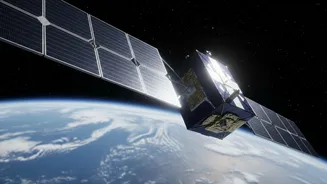
The nature of satellite technology itself is undergoing a major transformation. India is moving towards smarter systems that can process data on-board using AI, enabling faster decision-making without waiting to transmit raw data to the ground. There is also a growing ecosystem of private companies building advanced satellite constellations. Startups like GalaxEye are developing innovative satellites like 'Drishti', which combines optical and Synthetic Aperture Radar (SAR) imaging to see through clouds and at night. This push is supported by the Indian National Space Promotion and Authorisation Centre (IN-SPACe), an agency created to promote and facilitate private sector participation in the space industry. This synergy between ISRO and private players is accelerating the development of everything from high-throughput communication satellites to constellations of small Earth observation satellites.