




A Landmark Investment in Touch
On October 21, 2026, robotics firm Eka announced a staggering $150 million Series A funding round, co-led by prominent venture capital firms Andreessen Horowitz and F-Prime. This investment catapulted the two-year-old startup to a valuation of $1.45 billion.
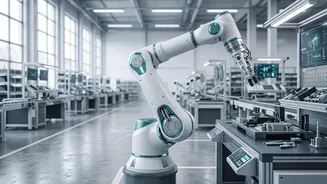
The news is significant not just for its size—a massive figure for an early-stage company—but for the problem it aims to solve. While robotic arms are common in factories, they are often clumsy, pre-programmed for repetitive motions, and lack the finesse of a human hand. Eka is tackling this dexterity gap head-on, betting that the future of automation lies in a robot's ability to 'feel' its way through a task.
The Vision-Force-Action Model
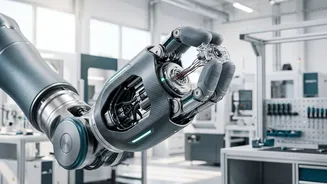
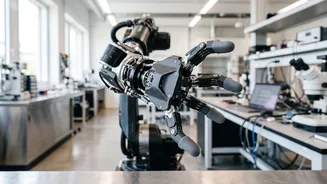
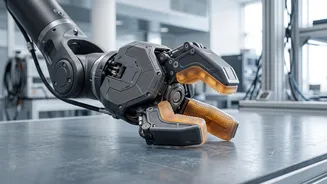
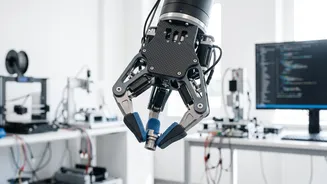
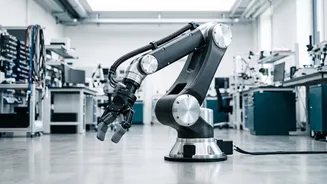
Eka's core innovation is what it calls the Vision-Force-Action (VFA) model. For years, robots have relied primarily on vision, using cameras to identify objects. Eka enhances this by integrating advanced force sensors into its custom-designed robotic grippers. This allows the robot to sense physical interaction—the pressure of a grip, the resistance of a part that doesn’t fit, or the subtle slip of an object. According to co-founder Pulkit Agrawal, a professor at MIT, this sense of touch is crucial for solving the 'last millimeter problem' where precise, delicate manipulation is required. Instead of just seeing an object, the robot can feel it, allowing for real-time adjustments that are impossible with vision alone.
Learning in Simulation, Performing in Reality
Rather than teaching robots by having them physically mimic human actions, which can be slow and inefficient, Eka uses a different approach. The company trains its AI models in advanced physics simulators. This allows them to generate thousands of hours of trial-and-error experience in just minutes, teaching the robot an 'intuition' for physics. The learned skills are then transferred to the physical robots. In demonstrations, Eka's system has achieved remarkable results, picking and placing objects at a rate of 1,500 per hour with over 95% accuracy—more than double the average human speed of about 600 picks per hour.
Real Work for Smarter Robots
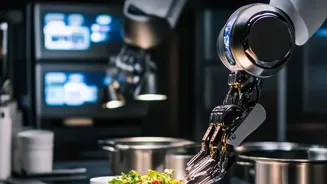
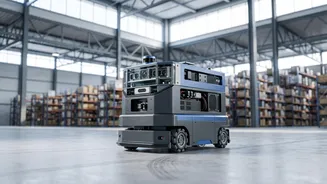
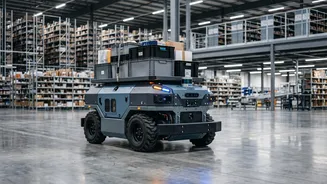
The potential applications for this technology are vast and could transform industries that still rely heavily on manual labour. The company is initially targeting commercial pilots in manufacturing, warehousing, and food processing. Think of a robot that can gently pick and pack delicate fruits, assemble complex electronics with varying components, or handle wiring tasks that require high precision. These are jobs that have traditionally been difficult to automate because they require adaptability and a delicate touch. By creating robots that can handle variability, Eka aims to unlock a new wave of automation in logistics, assembly, and beyond.
What This Means for India's Tech Scene
While Eka Robotics is based in the US, its mission resonates with a growing trend in India. Indian robotics startups are seeing a significant surge in funding, with investment in the first half of 2026 nearly doubling compared to the previous year. Investors are increasingly confident in backing companies focused on deep-tech engineering and artificial intelligence. The push for advanced manufacturing under initiatives like 'Make in India' creates a massive domestic market for sophisticated automation. While India's robotics sector still lags behind the US and China in total funding, the rise of complex, AI-driven solutions like Eka's signals a global shift. The success of such ventures could inspire and accelerate the development of a new generation of high-tech manufacturing and logistics solutions within India, leveraging the nation's deep talent pool in software and engineering.