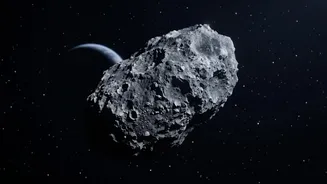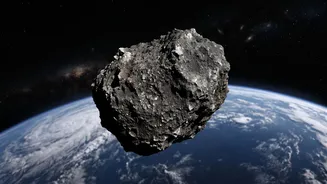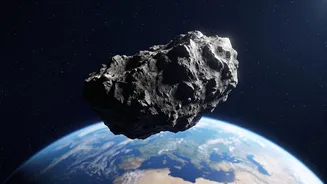






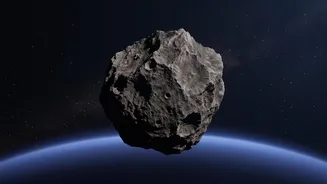
In the vastness of space, there is a rock just 11 metres across, spinning so fast that its day lasts a little over five minutes. This cosmic spinning top, known as 1998 KY26, is now the focus of intense new research using advanced thermal modelling.
A Tiny Target with Big Questions
Discovered
in 1998, 1998 KY26 is a near-Earth asteroid that has fascinated astronomers. Initial estimates suggested it was about 30 metres wide with a rotation period of 10.7 minutes, already incredibly fast. However, more recent observations in 2024 have dramatically revised these figures: the asteroid is actually much smaller, at around 11 metres in diameter, and spins twice as fast, completing a rotation in just 5.35 minutes. Its rapid spin is so extreme that if it were a loose pile of rubble, it would fly apart. This suggests it is likely a single, solid piece of rock, known as a monolithic body, held together by its own internal strength. Understanding its true nature is vital, not just for science, but for an ambitious upcoming space mission.
Reading an Asteroid's Temperature
Studying such a small, distant object is a huge challenge. This is where thermal modelling comes in. Scientists can't see the surface details directly, so instead they study the heat it radiates into space. By measuring the infrared light coming from the asteroid, they can create a computer model of how its temperature changes as it rotates and is warmed by the sun. This model reveals a key property called 'thermal inertia'—essentially, how well the surface material stores and releases heat. A sandy beach, for example, has low thermal inertia and cools quickly at night, while a solid rock has high thermal inertia and stays warm longer. By analysing these heat signatures, researchers can deduce whether the surface is covered in fine dust or is bare rock.
Is It a 'Dark Comet' in Disguise?
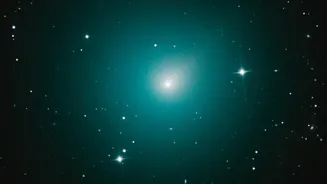
One of the most intriguing puzzles about 1998 KY26 was a slight, unexplained acceleration in its orbit. Some scientists proposed it might be a 'dark comet'—an object that looks like an asteroid but is venting small, invisible jets of gas from buried ice, giving it a tiny push. The new thermal modelling has put this theory to the test. Researchers at the Georgia Institute of Technology calculated that the asteroid is too warm for water ice to survive for long. Their models show that even in its coldest regions, the temperature is well above the point where ice would quickly turn to gas and disappear. While this doesn't completely rule out other volatile substances, it makes the dark comet theory for its odd movement much less likely.
Preparing for a Daring Rendezvous
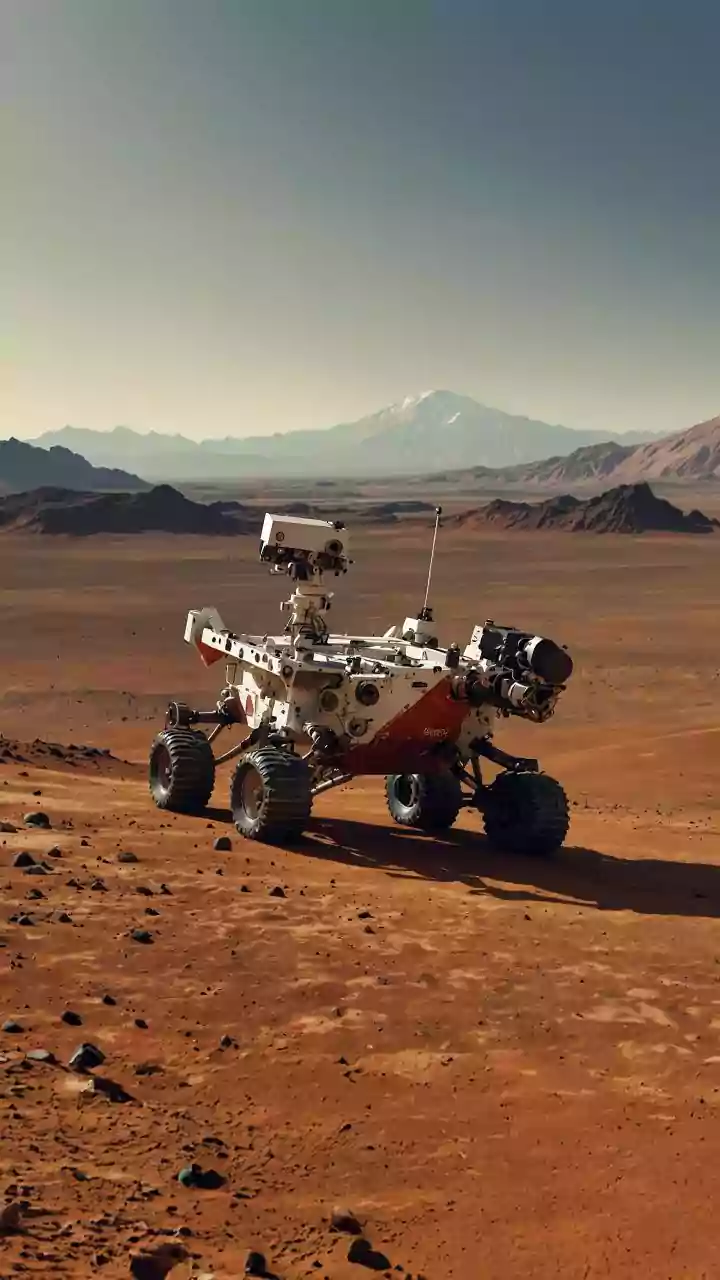
This research is not just academic; it has critical real_world applications. Japan's Hayabusa2 spacecraft, famous for returning samples from the asteroid Ryugu, is now on an extended mission to visit 1998 KY26. The planned rendezvous in July 2031 will make it the smallest asteroid ever to be visited by a probe. The new findings that the asteroid is smaller and spins faster make the mission even more challenging. Understanding its thermal properties, composition, and structure beforehand is crucial for mission planners at the Japan Aerospace Exploration Agency (JAXA) to safely navigate, orbit, and possibly even touch down on this tiny, fast_moving target.