



The Coolest Experiment in Orbit
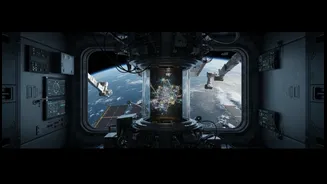
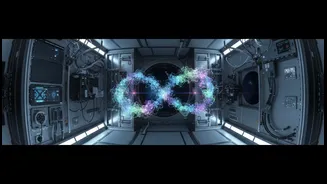
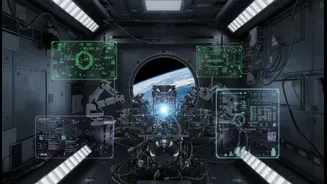
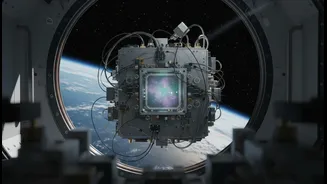
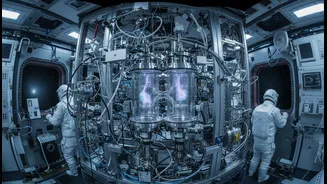
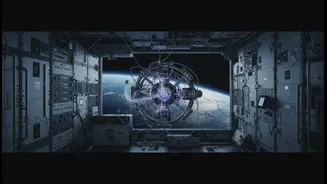
Aboard the International Space Station (ISS), 400 kilometres above Earth, sits one of the most unique laboratories in the known universe: the Cold Atom Lab (CAL). Since its installation in 2018, this compact facility has been exploring the strange realm
of quantum physics by cooling atoms to temperatures just a fraction of a degree above absolute zero—the coldest temperature possible. At these extremes, atoms slow down from hyperactive hummingbirds to a snail's pace, allowing scientists to observe their bizarre quantum behaviours in ways impossible on Earth, where gravity quickly ends such experiments. The lab, which is controlled remotely from NASA's Jet Propulsion Laboratory, is a hub for multiple research teams aiming to unlock the fundamental nature of matter.
A Major Quantum Upgrade
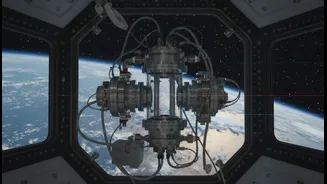
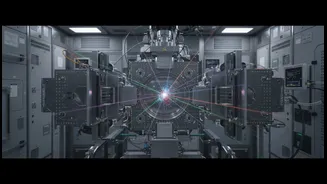
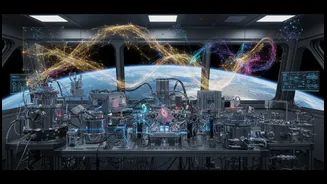
In the first half of 2026, the Cold Atom Lab received its fourth and most significant upgrade since it began operations. New hardware, launched to the ISS in April and installed by astronauts, has supercharged the facility's capabilities. Key improvements include a redesigned magnetic trap to better contain and manipulate clouds of atoms, along with improved atom sources and more sensitive measurement tools. According to NASA, these enhancements allow scientists to create larger and more complex quantum gas clouds, giving them unprecedented control. The new setup is already making state-of-the-art measurements, pushing the boundaries of what can be achieved in the microgravity environment.
Creating the Fifth State of Matter
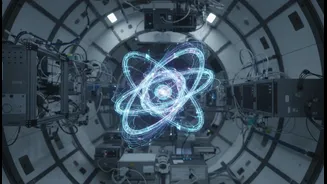
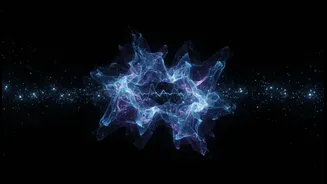
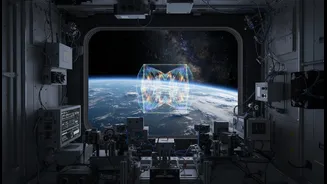
The primary goal of cooling atoms of elements like rubidium and potassium to such frigid temperatures is to create a Bose-Einstein condensate (BEC), often called the fifth state of matter. Predicted by Albert Einstein and Satyendra Nath Bose in the 1920s, a BEC forms when a group of atoms gets so cold that they lose their individual identities and begin to behave as a single, collective quantum wave. This allows scientists to see quantum phenomena, which are usually confined to the microscopic world, on a much larger scale. The microgravity of space is the perfect place to study BECs because they can expand and exist for much longer periods than in ground-based labs, giving researchers more time to investigate their properties.
Navigating by Atom Waves
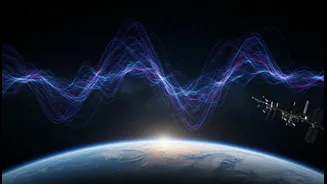
So, how does this ultracold matter relate to navigating a spacecraft to Mars? The answer lies in a technology called atom interferometry. Because atoms in a BEC behave like waves, they are incredibly sensitive to external forces like gravity and acceleration. By splitting a BEC into two clouds, letting them travel along different paths, and then recombining them, scientists can measure tiny shifts in their wave patterns. These shifts reveal precise information about the spacecraft's movement—its acceleration, rotation, and the gravitational pull of nearby planets. This data can be used to build an ultra-precise inertial navigation system, one that doesn't need to communicate with Earth or rely on GPS signals, which are unavailable in deep space.
The Future of Autonomous Exploration
The upgraded Cold Atom Lab is a critical step toward maturing these quantum instruments for future missions. While the technology is still in the experimental stage, it could one day enable spacecraft and even astronauts on the Moon or Mars to navigate autonomously with incredible accuracy. This would reduce reliance on Earth-based tracking, making deep space exploration safer and more efficient. Beyond navigation, these quantum sensors have the potential to create high-precision maps of Earth's gravity field to monitor resources like underground water, or even help probe cosmic mysteries like dark matter. The work being done on the ISS today is building the foundation for a new generation of powerful tools that will change how we explore the universe.