
A New Space Race
The dream of working in India's space sector is no longer limited to a single government-led pathway. A strategic pivot to commercialize space activities has unlocked a new era of private enterprise. Historic policy reforms, starting around June 2020,
have deliberately opened the doors for startups and private companies to participate in activities once exclusively handled by the Indian Space Research Organisation (ISRO). This isn't about replacing ISRO; it's about augmenting it. The goal is to create a vibrant ecosystem where ISRO focuses on advanced research and development, while private players drive manufacturing, launch services, and satellite applications. This shift is rapidly turning India's space economy into one of the world's most dynamic, with projections aiming to significantly increase its share of the global market.
The Architects of Change: NSIL and IN-SPACe
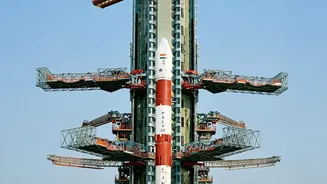
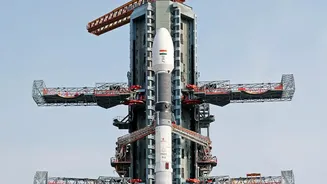
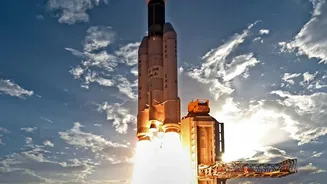
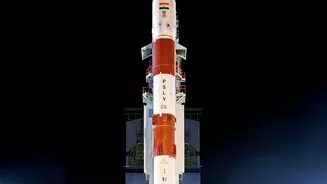
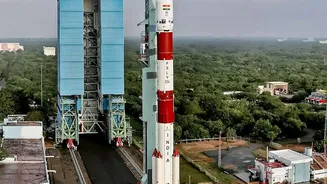
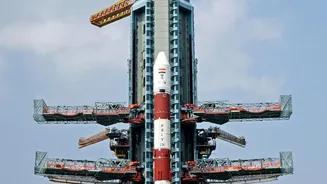
Two key organizations are orchestrating this transformation. NewSpace India Limited (NSIL), established in 2019, acts as ISRO's primary commercial arm. Its mission is to transition the Indian space sector from a supply-driven model to a demand-driven one. NSIL handles the production of launch vehicles like the PSLV and LVM3 through industry consortiums, manages commercial satellite launches for global clients like OneWeb, and builds satellites to meet market demand. Working in tandem is the Indian National Space Promotion and Authorisation Centre (IN-SPACe). Created in 2020, IN-SPACe serves as a single-window agency to promote, authorize, and supervise the activities of private space companies. It facilitates access to ISRO's facilities and technologies, essentially acting as a bridge between the government agency and the burgeoning private sector.
The Startup Explosion
The policy changes have ignited a startup boom. From just a handful a few years ago, India now boasts over 450 space-tech startups. These companies are not just peripheral suppliers; they are building core technologies. Firms like Skyroot Aerospace and Agnikul Cosmos are developing their own launch vehicles, with Skyroot achieving India's first private orbital rocket launch. Others, like Pixxel, are deploying constellations of earth observation satellites, while companies such as Dhruva Space focus on satellite platforms and ground services. This entrepreneurial energy is attracting significant investment and creating a competitive, innovation-driven environment that is fundamentally changing the structure of India's space industry. The sector has already created tens of thousands of jobs, and this number is set to multiply.
Beyond Rocket Science: The New Job Frontiers
The expansion of the space economy is creating a diverse range of jobs that go far beyond traditional aerospace engineering. While rocket scientists and satellite engineers remain crucial, the private sector's focus on applications has opened doors for new specializations. There is a growing demand for data scientists and geospatial analysts who can interpret the vast amounts of data beamed down from satellites for use in agriculture, climate monitoring, urban planning, and insurance. Software engineers are needed to develop the ground systems and applications that control satellites and process their data. Furthermore, as space becomes a commercial domain, roles in space law, policy, finance, project management, and business development are becoming increasingly vital. This diversification means a career in the space industry is now accessible to a much wider pool of talent.
Skilling Up for the Final Frontier
This new landscape demands a new set of skills. Core competencies in physics, mathematics, and aerospace engineering are still foundational. However, the industry now places a premium on skills in AI and machine learning, robotics, embedded systems, and data analytics. Expertise in radio frequency (RF) engineering, cybersecurity for space systems, and materials science is also highly sought after. To meet this demand, government bodies and educational institutions are launching specialized skill development courses. For aspiring professionals, building hands-on experience through university projects, internships, and online courses in remote sensing and GIS is becoming just as important as formal academic qualifications. The message is clear: the future of India's space careers will be defined by interdisciplinary skills and a commercial mindset.