





A Sudden, Unprecedented Brightening
In late 2019, the galaxy SDSS1335+0728, located about 300 million light-years away in the Virgo constellation, did something completely unexpected. After decades of being unremarkable, its core suddenly began to shine brighter than ever before. This wasn't
a fleeting flash; the galaxy has continued to brighten over the last four-plus years. Astronomers using data from facilities like the European Southern Observatory's Very Large Telescope (VLT) found that the galaxy's brightness surged across multiple wavelengths. It became four times brighter in the ultraviolet, doubled its mid-infrared output, and in February 2024, it even began emitting X-rays. This sustained and multi-faceted change is unlike typical cosmic events like supernova explosions or even tidal disruption events (TDEs), where a star is torn apart by a black hole. Those events usually fade within a few hundred days, but SDSS1335+0728's light show is still going strong.
What Does a 'Waking' Black Hole Mean?
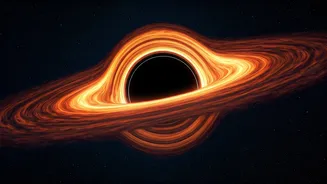
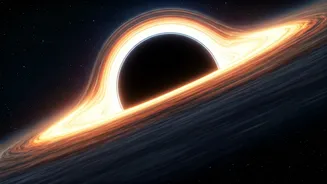
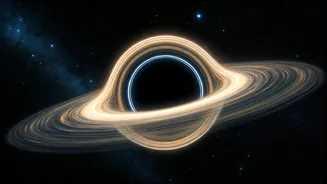
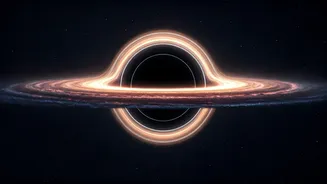
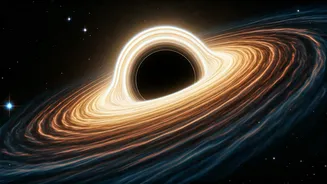
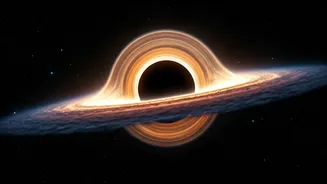
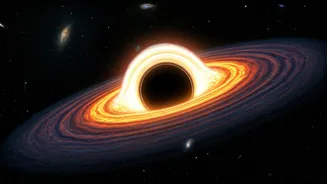
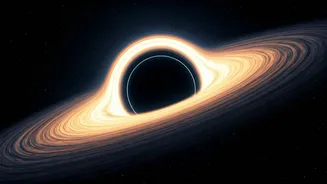
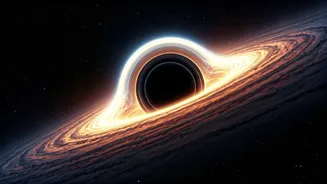
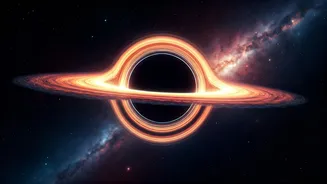
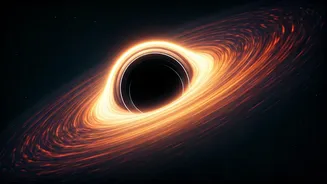
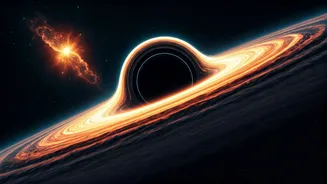
At the heart of most large galaxies, including our own Milky Way, lies a supermassive black hole—an object with a mass over one hundred thousand times that of our sun. These cosmic behemoths are usually 'dormant' or 'sleeping'. This doesn't mean they're literally asleep, but rather that there is no nearby material for them to consume. A black hole itself is invisible because its gravity is so strong that not even light can escape. However, when gas, dust, or an unlucky star gets too close, it gets pulled into a swirling, superheated vortex called an accretion disk before it falls in. The intense friction and energy in this disk release enormous amounts of radiation, causing the galaxy's center to light up spectacularly. When this happens, the galaxy is said to have an 'active galactic nucleus' (AGN). In essence, the 'awakening' is the black hole starting to feast.
A First-of-its-Kind Observation
While astronomers have seen galaxies switch from inactive to active states before, this is the first time they've been able to watch the process of activation happen in real time. "Imagine you've been observing a distant galaxy for years, and it always seemed calm and inactive," explained lead author of the study, Paula Sánchez Sáez. "Suddenly, its core starts showing dramatic changes in brightness, unlike any typical events we've seen before." This provides an unprecedented opportunity to understand how these giant engines at the center of galaxies turn on and influence their surroundings. Researchers believe that the most plausible explanation for the dramatic brightening of SDSS1335+0728 is that its central black hole, estimated to be about one million times the mass of our sun, has just begun actively consuming material around it.
Ruling Out Other Cosmic Events
Scientists had to consider other possibilities for the galaxy's sudden new glow. One candidate was an exceptionally long and slow tidal disruption event. However, the characteristics of this brightening don't quite match. TDEs tend to follow a specific pattern of fading, which isn't happening here; the galaxy continues to get brighter. The prolonged and increasing luminosity points more directly toward the birth of a new active galactic nucleus. While the team acknowledges that more follow-up observations are needed to definitively rule out a very unusual TDE, the evidence is mounting that we are witnessing the birth of an AGN. This event, nicknamed 'Ansky', allows astronomers to study the formation of the accretion disk and the initial stages of a black hole's active phase, something that was previously only understood through theory.
What Happens Next?
Astronomers around the world will continue to monitor SDSS1335+0728 closely across all wavelengths, from radio to X-rays. These observations will help confirm if this is indeed a black hole awakening and provide invaluable data on how these transitions occur. The discovery raises fascinating questions. What triggered the event? Was it a natural process within the galaxy or the result of a past merger? It also makes one wonder about the supermassive black hole at the center of our own galaxy, Sagittarius A. While Sgr A is currently dormant, scientists say a similar awakening could potentially happen here, though it's unclear how likely that would be. For now, this distant galaxy serves as a unique natural laboratory, offering a front-row seat to one of the most powerful and transformative processes in the entire universe.