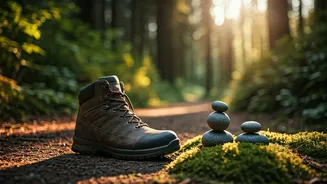










More Than Just Exercise
We all know that a brisk walk is good for the heart, lungs, and waistline. It’s one of the most accessible forms of exercise available. But its benefits extend far beyond the physical. Walking stimulates blood flow to the brain, which can improve mood,
reduce stress, and boost creativity. When you step outside for a walk, you’re not just moving your body; you’re giving your mind a chance to reset. The simple, rhythmic motion of putting one foot in front of the other has a naturally calming effect. The problem is, we often fill this time with distractions—podcasts, phone calls, or a mind racing through a to-do list. The key to unlocking deeper benefits is to subtract these distractions, not add more.
The Power of Silence
The next step is simple yet profound: leave your headphones at home. By intentionally choosing silence, you transform a routine walk into an opportunity for observation. Instead of consuming content, you start noticing the world around you and, more importantly, the world within. This isn't about forcing your mind to be empty; it’s about creating the space to hear its natural hum without the usual external noise. At first, this silence might feel uncomfortable. Your brain, accustomed to constant stimulation, may try to fill the void with anxious thoughts or mental replays of the day. This is normal. The goal is not to fight these thoughts, but to simply let them be, like clouds passing in the sky. The silence allows you to become an observer of your own mind.
Walking as a Form of Meditation
This is where walking meets meditation. For many, the idea of sitting cross-legged and still for 20 minutes is daunting. The mind rebels, the body aches, and frustration sets in. Walking meditation offers a powerful alternative. It’s an active, engaged form of mindfulness that uses the physical sensation of movement as an anchor for your attention. The practice has roots in various contemplative traditions, but its modern application is wonderfully simple. By focusing on the feeling of your feet on the ground, the rhythm of your breath, and the sights and sounds around you, you bring your awareness fully into the present moment. This combination of movement and mindfulness is a potent antidote to the mental clutter that defines modern life.
Your Step-by-Step Guide
Ready to try it? Here’s a simple way to begin. 1. **Choose Your Path:** Find a safe and relatively quiet place to walk, like a park, a quiet neighbourhood street, or a nature trail. A 15- to 20-minute walk is a great starting point. 2. **Set Your Pace:** Begin walking at a comfortable, brisk pace. The goal is to get your body moving, but not so fast that you can't pay attention to your surroundings. 3. **Anchor Your Attention:** Bring your focus to the physical sensations of walking. Notice the feeling of your feet making contact with the ground—heel, ball, toe. Feel the swing of your arms and the rhythm of your breath. This is your anchor. 4. **Engage Your Senses:** Gently expand your awareness outwards. What do you see? The colour of the leaves, the shape of the clouds. What do you hear? The birds, the distant traffic, the sound of your own footsteps. What do you feel? The breeze on your skin, the warmth of the sun. 5. **Handle Distractions Gently:** Your mind will wander. It will drift to work, to worries, to what’s for dinner. When this happens, don’t get frustrated. Simply notice that your mind has wandered, and then gently guide your attention back to your anchor—the feeling of your feet on the ground. Every time you do this, you are strengthening your mindfulness muscle.