




A Window into the Past
In the heart of India’s Core Monsoon Zone, a new study is making waves by looking at something incredibly small to understand a very large phenomenon. Scientists from the Birbal Sahni Institute of Palaeosciences (BSIP) in Lucknow have analyzed ancient
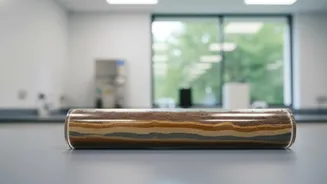
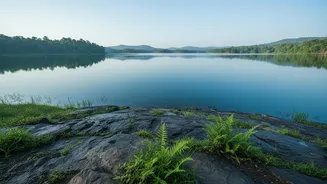
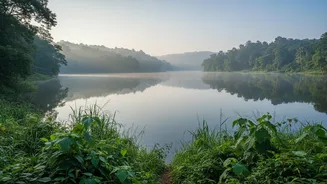
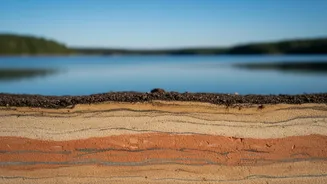
pollen grains from the mud of Raja Rani Lake in Chhattisgarh's Korba district. Their goal: to reconstruct the history of the Indian Summer Monsoon over the last 2,500 years. This region is critical because it receives the vast majority of India's annual rainfall, making its climate history a vital piece of the puzzle for understanding long-term weather patterns across the country. By drilling into the lakebed and extracting sediment cores, researchers have unearthed a natural archive of environmental history, layer by layer.
How Pollen Tells a Rainfall Story
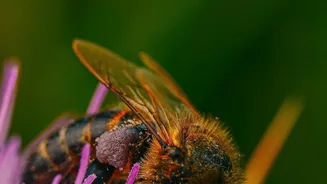
It might seem strange that tiny specks of pollen, famous for causing allergies, can tell us about ancient weather. But this scientific field, known as palynology, is a powerful tool for peering into the past. Every plant produces pollen with a unique shape, and these grains have a tough outer wall that allows them to be preserved for millennia in oxygen-poor environments like the bottom of a lake. As sediment slowly builds up over centuries, it traps the pollen from plants that grew nearby. By identifying the types and quantities of pollen in different layers, scientists can reconstruct what the local vegetation was like. Since we know what climatic conditions different plants need to thrive—some prefer wet, humid weather while others are suited for dry spells—the plant life acts as a proxy for the climate. A high concentration of pollen from moisture-loving forest trees points to a period of strong monsoons, while a prevalence of pollen from grasses and herbs suggests drier times.
Chhattisgarh's Medieval Super-Monsoon
So, what did the pollen from Raja Rani Lake reveal? The study uncovered a period of unusually strong and sustained monsoon rainfall in central India roughly between 1060 and 1725 CE. This timeframe coincides with a global climate phase known as the Medieval Climate Anomaly. During these centuries, the pollen record shows a clear dominance of dense, mixed tropical deciduous forests, signaling a warm and very humid climate. This finding suggests that the monsoon during this era was significantly more intense than what has been previously estimated or recorded in modern times. Scientists believe this intensified monsoon was driven by a combination of global factors, including La Niña-like conditions in the Pacific Ocean, which are typically linked to stronger rains in India.
Beyond the Limits of Weather Stations
This is where the real value of palaeoclimatology—the study of past climates—becomes clear. Modern, instrument-based weather records, like those from weather stations, are incredibly detailed but also very short, often covering only the last 100 to 150 years. This provides a mere snapshot of our climate's behaviour. Studies like this one in Chhattisgarh offer a much longer-term perspective, revealing natural cycles of drought and heavy rain that span centuries or even millennia. Discovering a period of super-monsoons in the medieval era provides a crucial baseline for natural climate variability. It shows what the monsoon system is capable of, well beyond what has been observed in the age of modern meteorology. Understanding these past extremes is vital for accurately modeling future climate scenarios.
Planning for a More Resilient Future
This research isn't just an academic exercise; it has practical implications for Chhattisgarh and all of India. As a state heavily reliant on agriculture, understanding the long-term behaviour of the monsoon is critical for water security, crop planning, and disaster preparedness. By knowing the natural range of monsoon intensity—from extended droughts to periods of intense, sustained rainfall—policymakers and communities can develop more robust strategies for managing water resources. This historical data helps contextualize current climate trends and strengthens our ability to project how the monsoon might behave in a warming world. The tiny pollen grains pulled from the bottom of a lake are providing invaluable foresight, helping to build a more resilient future in the face of climatic uncertainty.