









From Medical Device to Wellness Gadget
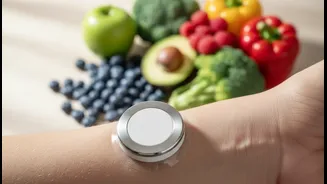
A continuous glucose monitor, or CGM, is a small wearable device that tracks your glucose (sugar) levels in real-time. Traditionally, they have been a game-changer for people with diabetes, offering a way to monitor blood sugar continuously without constant
finger pricks. The device uses a tiny sensor inserted just under the skin, usually on the arm, which measures glucose in the fluid between your cells. This data is then sent to a smartphone app, providing a constant stream of information. Now, companies like Ultrahuman and Levels are marketing these devices to a new audience: healthy individuals who want to 'biohack' their way to better health by gaining a deeper understanding of their bodies.
The Quest for Stable Energy and Focus
One of the primary drivers for non-diabetic users is the desire to eliminate energy slumps and brain fog. We've all felt that post-lunch dip in productivity. The thinking behind using a CGM is to directly see how food, stress, and sleep affect your glucose levels. Proponents claim that by keeping glucose levels stable and avoiding sharp spikes and crashes, they can maintain consistent energy, improve mood, and enhance mental clarity throughout the day. The real-time feedback loop is powerful; you eat a meal and immediately see its metabolic impact, encouraging you to make different choices next time.
Personalised Nutrition in Real-Time
The wellness world is moving away from one-size-fits-all diets, and CGMs are seen as the ultimate tool for personalization. A food that causes a significant glucose spike in one person might have a minimal effect on another. By wearing a CGM, users can conduct personal experiments to see how their body uniquely responds to different carbohydrates, meal combinations, and even exercise timings. This allows them to tailor their diet not based on generic advice, but on their own biological data, potentially helping with goals like weight management by keeping the body out of fat-storage mode, which can be triggered by excess insulin from glucose spikes.
A Window into Metabolic Health
Beyond daily energy levels, many users see CGMs as a proactive tool for long-term health. The term 'metabolic health' refers to how well your body processes energy, and poor metabolic health is linked to a higher risk of chronic conditions like type 2 diabetes and cardiovascular disease. For healthy individuals, a CGM can provide early warnings about insulin resistance, a condition where cells don't respond well to insulin. By identifying and mitigating large, frequent glucose spikes, users hope to improve their metabolic fitness and potentially reduce their risk of these diseases down the line.
The Science vs. The Hype
While the logic is appealing, the scientific community is cautious. Much of the evidence for the benefits of CGM use in healthy people is anecdotal. Some experts argue there isn't enough long-term data to prove it's an effective tool for this group. Furthermore, some studies suggest that commercial CGMs may not be perfectly accurate for people without diabetes, potentially overestimating glucose levels and leading to unnecessary dietary restrictions. The normal fluctuations in a healthy person's glucose might be misinterpreted as problematic, causing undue stress. Critics point out that these devices were designed and validated for a clinical population, and their utility as a wellness tool for the general public is still under-researched.
The Downsides and The Doubters
Beyond the scientific debate, there are practical concerns. CGMs can be expensive, with costs often not covered by insurance for non-diabetic use. There's also the risk of developing 'data anxiety' or an unhealthy fixation on food and numbers, which could border on disordered eating. Some doctors express concern that without proper medical guidance, users might misinterpret the data, leading to flawed conclusions about their health. A spike after a certain meal isn't always a bad thing, and context is crucial. A short-term experiment can be insightful, but constant monitoring may be unnecessary and even psychologically taxing for a healthy person.