







The Humidity Hijack
The main culprit behind your monsoon hair woes is, unsurprisingly, humidity. Hair is primarily made of a protein called keratin. These protein strands are held together by bonds, including weaker hydrogen bonds. When the air is saturated with moisture,
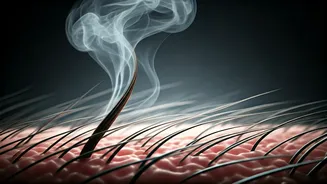
as it is during the rains, your hair acts like a sponge. It absorbs this excess moisture from the atmosphere, a process known as being 'hygroscopic'. This influx of water molecules forms new, weaker hydrogen bonds, causing the hair shaft to swell and the cuticle (the outer protective layer) to lift. The result? Your smooth, organised hair strands become uneven and frizzy. This swollen, porous state not only creates frizz but also gives hair a heavy, weighed-down feeling that many people mistake for being dirty or greasy.
Pollution's Sticky Situation
Humidity doesn't just affect the structure of your hair; it also changes how your hair interacts with the environment. The damp air of the monsoon is thick with more than just water. It’s also laden with airborne pollutants like dust, smoke, and grime. High humidity makes these tiny particles stickier. As you go about your day, your damp, slightly swollen hair becomes a magnet for this environmental gunk. The pollutants cling to the hair shaft, creating a gritty, unclean film. This is why your hair might not just feel limp, but literally feel dirty to the touch, even if you’ve washed it recently. It’s a physical layer of dirt that accumulates much faster than it would in dry weather.
Your Scalp on Overdrive
Your scalp also reacts to the change in weather. The constant dampness and warmth create an ideal environment for microbial growth. This can lead to an overgrowth of the Malassezia globosa fungus, a naturally occurring microbe on the scalp that is a common cause of dandruff. You might notice more flaking, itching, and inflammation. Furthermore, your scalp’s sebaceous glands can go into overdrive, producing more sebum (natural oil) in response to the humid conditions. This excess oil travels down the hair shaft, combining with the sweat and environmental pollutants, leading to that all-too-familiar greasy, flat look at the roots. The scalp feels oily, and the hair looks it.
How to Fight Back: A Monsoon Hair Plan
Managing monsoon hair isn't about fighting a losing battle; it's about adjusting your strategy. Start by switching to a clarifying shampoo once a week to remove product build-up, excess oil, and pollutants. For regular washes, a gentle, sulphate-free shampoo will clean your hair without stripping it of its natural oils. Don’t skip the conditioner, but apply it only from the mid-lengths to the ends, avoiding the scalp. Look for lightweight, hydrating formulas rather than heavy, creamy ones. A final rinse with cool water can help seal the hair cuticle, reducing frizz and adding shine.
Drying and Styling for Victory
One of the biggest mistakes you can make during the rains is leaving your hair to air-dry completely. This prolongs the time your hair is damp and susceptible to absorbing more humidity. Instead, gently towel-dry your hair and then use a blow-dryer on a low-heat setting to get it about 80-90% dry, always pointing the nozzle downwards to help smooth the cuticle. When it comes to styling, less is more. Avoid heavy oils, waxes, and serums that can weigh your hair down. Opt for lightweight anti-humidity sprays or light-hold mousses. Finally, try to keep your hands out of your hair. Constantly touching it transfers oils and dirt from your fingers, making it feel greasier faster.