
The Spark: A Player's Contract vs. National Duty
The latest chapter in this saga unfolded during a podcast, where the two former players turned pundits clashed over English batter Jacob Bethell. Cook, England’s stoic former captain, argued that Bethell, who was warming the bench for Royal Challengers
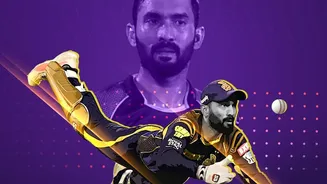
Bengaluru, should have returned home to play county cricket for match practice ahead of a Test series. Cook's stance was clear: “I think it's really important that English cricket is more important than an IPL or a franchise.” This sentiment, prioritizing national duty above all, is a classic position from the English establishment. Dinesh Karthik, now a mentor for RCB, fired back with a passionate defence of a player’s right to honour their contract. “How do you dishonour the contract which he has chosen to be part of?” Karthik questioned. He argued that a player commits to a franchise for the entire season, and leaving mid-way just because they aren't in the playing XI sets a chaotic precedent.
A 'Tired Narrative' of Resentment
Karthik didn’t stop at defending contracts. He went for the jugular, accusing the English cricket ecosystem of harbouring a deep-seated resentment for the world’s most lucrative T20 league. “In England it is getting to a point for some reason where they hate the IPL,” Karthik stated, calling it unfair. This wasn't a random outburst but a sentiment echoed by others, like Kevin Pietersen, who have long claimed their careers were hampered by the English board's jealousy of the IPL. Cook's argument, to many Indian fans and players, feels like a “tired narrative.” It’s a perspective that seems to wilfully ignore the immense benefits of the IPL, such as the opportunity for a young player like Bethell to train alongside global superstars like Virat Kohli. The view from India is that time spent in an IPL dressing room, even on the bench, offers invaluable experience that county cricket simply cannot replicate.
The Unspoken Fear: A Shift in Power
The core of this friction isn't just about a player's development; it's about control and relevance. For centuries, English cricket set the rhythm of the global game. The English summer was sacrosanct. The IPL has shattered that calendar. It created a two-month window where the world's best players, including England's own, flock to India. This represents a monumental shift in power. The financial muscle of the IPL means it can dictate terms in a way that makes traditional boards uncomfortable. Cook himself hinted at this financial influence, suggesting players won’t publicly criticise the league because they “don't want to upset their bosses” and risk lucrative contracts. This underlying resentment isn’t just about player availability; it's a response to a world where Lord’s is no longer the undisputed centre of the cricketing universe.
Hypocrisy and The Hundred
What truly fuels the frustration for many IPL supporters is the perceived hypocrisy. While English pundits criticize players for choosing the IPL, the England and Wales Cricket Board (ECB) has its own franchise-style tournament, The Hundred. This tournament also pulls players away from traditional formats and demands a dedicated window in the calendar. Karthik and RCB’s Director of Cricket, Mo Bobat, are themselves involved with The Hundred's London Spirit franchise, highlighting the interconnectedness of the modern game. When English players participate in The Hundred or Australia’s Big Bash, it’s seen as a pragmatic career choice. Yet, when the league is the IPL, the narrative often shifts to one of greed and a supposed lack of commitment to the national team. This double standard is at the heart of why comments like Cook’s are met with such a forceful response from Indian counterparts.
The New World Order
The debate between Cook and Karthik is a microcosm of cricket’s evolution. Cook represents a purist’s love for Test cricket and the primacy of the national team—a view that holds immense romantic appeal. Karthik represents the modern professional’s reality: a world of franchise leagues, life-changing contracts, and a globalized game where power and opportunity are no longer concentrated in one or two countries. While Cook worries about one player's red-ball form, the broader reality is that the IPL is producing a generation of cricketers who are more skilled, tactically astute, and mentally prepared for high-pressure situations. The league is not a threat to cricket; it is the engine driving its global growth and popularity. The resistance from parts of the English establishment feels less like a principled stand and more like a refusal to accept that the game has moved on.