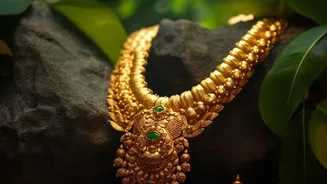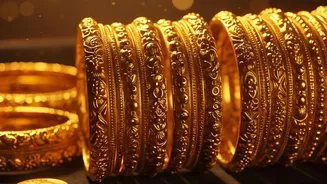






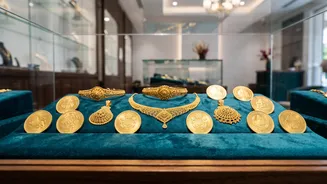
As Dhanteras 2026 approaches, the tradition of buying gold to welcome prosperity is top of mind. But this brings a common dilemma for shoppers: should you invest in ornate jewellery to be worn and cherished, or pure gold bullion coins?
Purity and Purpose: Adornment vs. Asset
The most fundamental
difference lies in purity and intended use. Gold jewellery is designed for adornment. To make it durable enough for intricate designs, pure 24-karat gold is mixed with other metals like silver or copper. This results in 22-karat (91.6% pure gold) or 18-karat (75% pure gold) ornaments. Gold bullion coins, on the other hand, are created primarily for investment. They are typically minted in 24-karat (99.9% pure) gold, making them a direct way to own the precious metal in its purest physical form. The choice begins here: are you buying a wearable piece of art or a straightforward financial asset?
The Cost of Craftsmanship: Making Charges
This is where the costs diverge significantly. Gold jewellery involves skilled craftsmanship, and jewellers levy 'making charges' to cover the labour and design. These charges can range from 8% to over 25% of the gold's value, depending on the complexity of the design. These costs are not recoverable upon sale. In contrast, gold coins have minimal design work and are machine-stamped. Their 'minting' or making charges are much lower, often between 1% and 4%. From a cost-efficiency perspective, more of your money goes into the actual gold when you buy a coin.
Assurance of Quality: Hallmarking Explained
In India, the Bureau of Indian Standards (BIS) provides a hallmarking system to certify the purity of gold. It's crucial for both jewellery and coins. A BIS hallmark confirms that the item meets set standards of fineness. For jewellery, you'll see marks like '916' for 22K or '750' for 18K. For 24K coins, the mark is often '999' or '995', indicating 99.9% or 99.5% purity. Since July 2021, the hallmark includes a six-digit alphanumeric Hallmark Unique Identification (HUID) number, which offers even greater transparency and traceability. Always look for the BIS hallmark to ensure you're getting what you paid for.
Resale Value and Liquidity
When it's time to sell, the differences become stark. With gold jewellery, you typically only get back the value of the gold content at the prevailing rate. The significant making charges you paid are lost. Furthermore, if the jewellery contains stones, their weight is deducted. This means the resale value is considerably lower than the purchase price. Gold coins, due to their high purity and low initial charges, offer much better returns. Their value is tied directly to the gold market price, and you recover a much larger portion of your initial investment, making them a more liquid asset.
Taxation: A Uniform Application
The Goods and Services Tax (GST) applies to both forms of gold. A 3% GST is levied on the value of the gold itself, whether it's a coin or jewellery. However, there's an additional GST component for jewellery. The making charges associated with jewellery are considered a service and attract a separate GST of 5%. While this might seem like a small difference, it adds to the overall higher initial cost of buying jewellery compared to a coin of the same weight.