

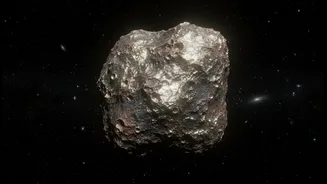


A Journey to a Metal World
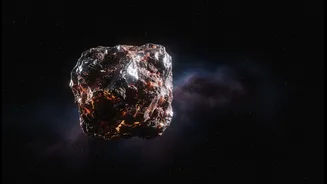
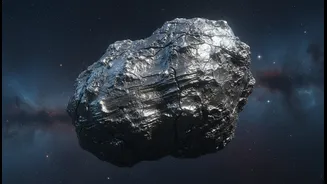
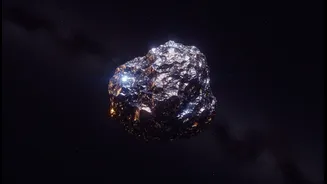
Launched in October 2023, NASA's Psyche spacecraft is on a multi-year voyage to the main asteroid belt between Mars and Jupiter. Its destination is a 280-kilometer-wide object also named Psyche, which scientists believe is no ordinary asteroid. Data from
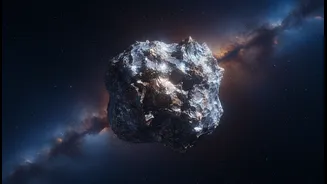
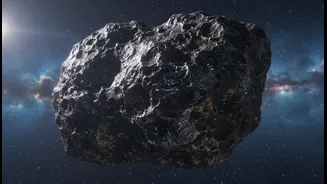
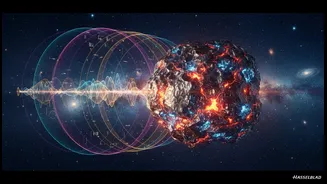
Earth-based telescopes suggest it is overwhelmingly composed of metal. The leading theory is that Psyche is the exposed nickel-iron core of a protoplanet—a small, early world that was smashed apart by violent collisions billions of years ago. By studying it, we get a direct look at the kind of planetary building block that is otherwise inaccessible, buried deep within planets like our own.
The Old Theories and Burning Questions
Our understanding of planetary cores is almost entirely indirect. For Earth, we rely on seismology—studying how earthquake waves travel through the planet—to deduce the properties of its core. For other worlds, it's a mix of gravity measurements and computer modeling. These methods have built a solid foundation, suggesting terrestrial planets form through a process called core accretion, where small bodies clump together, and heavier elements like iron and nickel sink to the center to form a dense core. But this is all theoretical. Psyche offers the first chance to test these ideas against a real-world example. Is it really a stripped core? If so, does its chemistry match what we expect to find in Earth's core? Or is it something else entirely, like a chunk of primordial material that never fully melted?
A Toolkit for Scientific Revolution
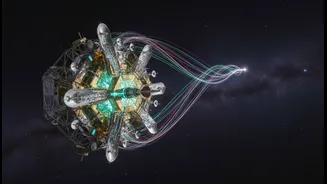
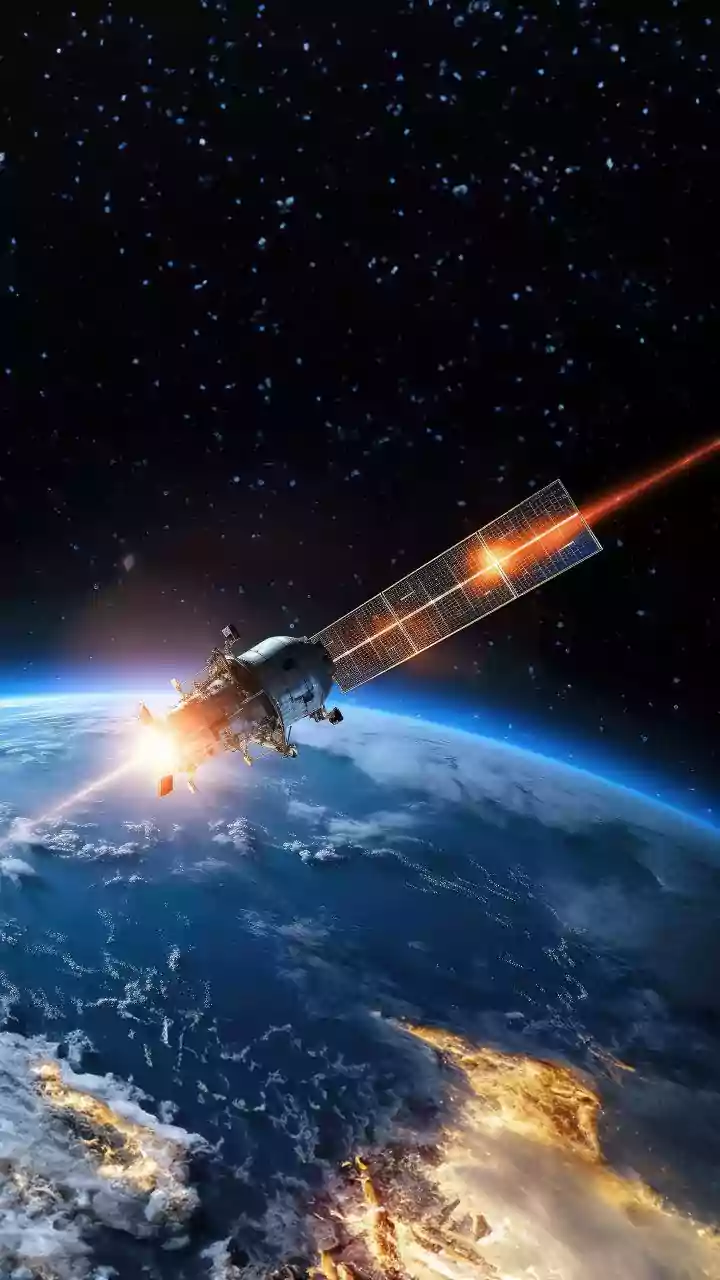
The probe won't arrive at the asteroid until August 2029, but it is packed with instruments ready to analyze this alien world. A multispectral imager will map the surface, a gamma-ray and neutron spectrometer will determine its elemental composition, and a magnetometer will search for the remnants of an ancient magnetic field. A key part of the mission is its ability to send back high-resolution telemetry. In fact, Psyche is equipped with a technology demonstration called Deep Space Optical Communications (DSOC), which uses lasers to transmit data at rates 10 to 100 times higher than conventional radio systems. This experiment, which successfully concluded its primary tests, has already streamed high-definition video from millions of kilometers away, proving its ability to handle the massive data volumes Psyche's science will generate.
How the Data Will Rewrite Textbooks
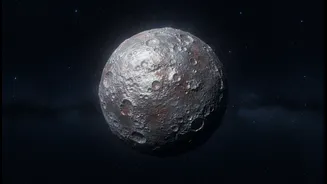
Once Psyche begins orbiting the asteroid, every piece of data could challenge our assumptions. The spectrometer’s findings on the elements present could confirm whether Psyche formed under conditions similar to Earth's core. If the magnetometer detects a lingering magnetic field, it would be strong evidence that Psyche was once the molten, churning core of a small planet. Even its physical appearance matters. High-resolution images will reveal if the surface is smooth, cratered, or crystalline, while gravity science measurements—taken by precisely tracking the spacecraft's radio signals—will unveil its internal structure and how mass is distributed. If Psyche is not a uniform block of metal but a porous, sponge-like body, it could completely change our models of how planetary cores form and solidify.
Why an Asteroid Core Matters for Earth
Understanding Psyche is about more than just one asteroid; it's about understanding the violent history of our own solar system and the origins of all terrestrial planets, including Earth. Because our own core is unreachable, Psyche is our only accessible proxy. Confirming that it is an ancient core would validate decades of scientific theory. But if it turns out to be something unexpected—for instance, a body that formed from metal-rich material without ever being part of a larger planet—it would force a fundamental rethink of planetary science. The mission already provided a taste of its capabilities during a May 2026 gravity-assist flyby of Mars, where it tested its instruments and sent back stunning, detailed images of the Red Planet. This dress rehearsal proved the hardware is ready for the main event in 2029.