




Indoor walking is a fantastic, low-impact way to stay active, but pacing around your living room or on a treadmill can quickly become monotonous. Adding variety not only beats boredom but also boosts the effectiveness of your workout.
Why Variety is Your Best Friend
Walking the same
route at the same pace every day can lead to a fitness plateau. Your body is smart and adapts to repetitive movements, meaning you burn fewer calories and see diminishing returns over time. By introducing new exercises, you challenge different muscle groups, improve cardiovascular health more effectively, and keep your mind engaged. This 'muscle confusion' helps enhance overall fitness, strength, and endurance. Whether you have a treadmill or are just using the space in your home, a few simple tweaks can transform a dull walk into a dynamic, full-body workout.
1. Marching and High Knees
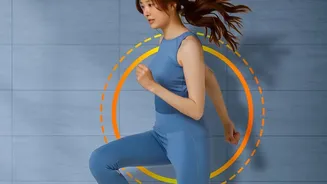
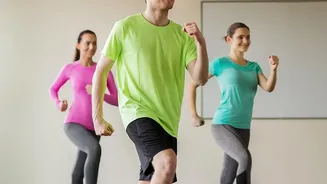
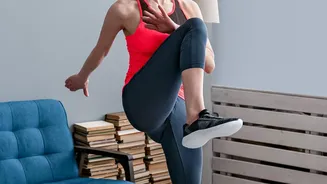
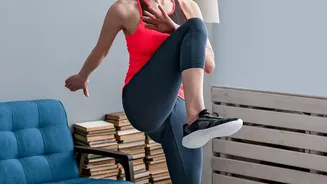
The simplest way to start is by marching in place. Stand tall with your feet hip-width apart and lift your knees alternately as if marching, swinging your arms to build momentum. To increase the intensity, transition into high knees. Focus on lifting your knees as high as you can, aiming for your hips. This movement is more demanding than a standard march, significantly increasing your heart rate and engaging your core and hip flexors. Try doing this for 40-60 seconds, followed by a short rest or a slower-paced march.
2. Integrate Butt Kicks
Another excellent move to add to your indoor routine is butt kicks. While marching or walking in place, alternate kicking the heel of one foot back toward your glutes. Try to get as close as you can to making contact. This exercise specifically targets your hamstrings and glutes, muscles that aren't as heavily engaged during a standard walk. It also helps improve flexibility in your quadriceps. You can hold onto a wall or chair for balance if needed.
3. Add Side_to_Side Steps
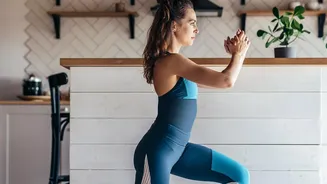
We spend most of our walking time moving forward, but lateral movements are crucial for stability and strengthening the inner and outer thighs. Incorporate side steps by taking a wide step to your right, then bringing your left foot to meet it. Continue for several steps in one direction before switching to the other. To make it more challenging, add a squat each time your feet come together or stay in a low_squat position as you shuffle. This change in direction not only works different muscles but also improves coordination.
4. Try Backward Walking
It may feel strange at first, but walking backward is a powerful tool for your fitness arsenal. It challenges your balance and coordination, forcing your brain to work harder and stay more focused. This simple change in direction also works your leg muscles, particularly your quads and calves, in a new way. Make sure you have a clear, straight path behind you and start slowly, looking over your shoulder as needed. If you're on a treadmill, hold the handrails and set the speed very low until you feel comfortable.
5. Play with Intervals and Incline
Interval training is one of the most effective ways to boost your fitness and burn more calories. This involves alternating between periods of high intensity effort and recovery. Try walking at a brisk pace for two to three minutes, then slowing down for one to two minutes to recover. Repeat this cycle throughout your workout. If you're on a treadmill, playing with the incline is another fantastic way to increase intensity. Walking uphill engages your glutes and hamstrings more and significantly raises your heart rate, even at a slower speed.