




The Heart of the Galaxy
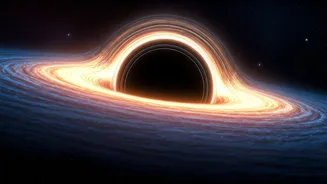
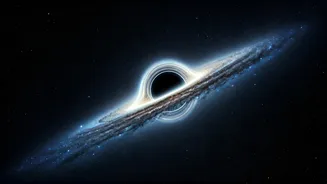
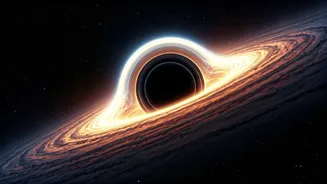
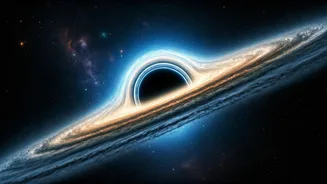
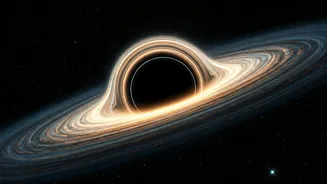
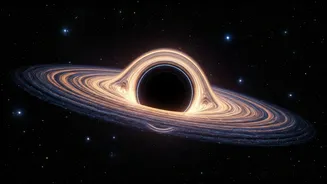
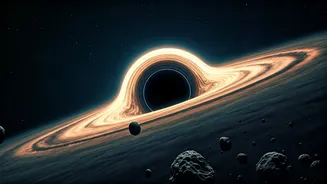
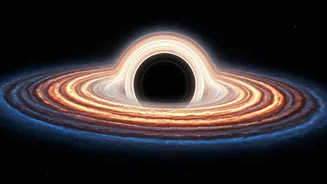
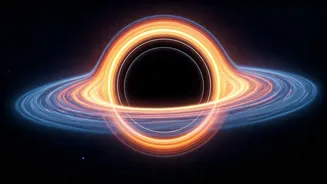
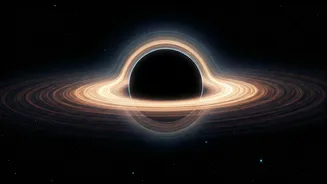
At the center of almost every large galaxy, including our own Milky Way, lurks a supermassive black hole—an object with a gravitational pull so strong that nothing, not even light, can escape. These behemoths can be millions or even billions of times
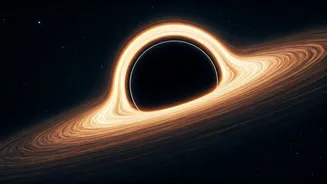
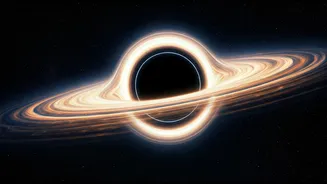
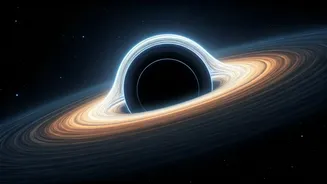
more massive than our sun. They are surrounded by a swirling vortex of gas, dust, and stars called an accretion disk. This region is a violent, chaotic place where matter is superheated to extreme temperatures as it spirals towards the point of no return, often glowing brightly and making the galactic core one of the most luminous places in the universe.
A Mysterious, Repeating Signal
While black holes are known for their destructive power, they aren't typically known for their predictability. That's why astronomers were stunned when they first detected a new type of signal: a rapid, repeating burst of X-rays coming from the core of a distant galaxy. One of the first and most notable examples was found in a galaxy named GSN 069, located about 250 million light-years from Earth. In late 2018, its central black hole was seen to suddenly increase in brightness by a factor of 100, only to dim back down within an hour, and then flare up again just nine hours later. This surprisingly regular behaviour was unlike the typical, random flickering seen from active black holes. Scientists had found a cosmic clock, ticking with astonishing regularity.
Introducing Quasi-Periodic Eruptions
Researchers have dubbed this new phenomenon 'Quasi-Periodic Eruptions' or QPEs. The name reflects the fact that the signals are almost, but not perfectly, periodic. Since the initial discovery in GSN 069, searches using powerful X-ray telescopes like the European Space Agency’s XMM-Newton and Germany's eROSITA have uncovered a growing number of these systems. While there are several competing theories, the leading hypothesis suggests that QPEs are caused by an interaction between the supermassive black hole and a smaller object orbiting it, such as a star or another, smaller black hole. In this model, every time the smaller object makes its closest approach, the black hole’s immense gravity strips material away from it, causing the stolen gas to heat up and release a brilliant flash of X-rays before the object continues on its orbit, ready for the next encounter.
A New Window into the Universe
The discovery of QPEs is more than just a cosmic curiosity; it provides a revolutionary new tool for studying the extreme physics near a black hole's event horizon. These repeating flashes act like a strobe light, illuminating the innermost regions of the accretion disk in ways that were previously impossible. By studying the timing and characteristics of the eruptions, astronomers can map the orbits of objects circling a black hole and test the limits of Einstein's theory of general relativity in the most extreme gravitational environments. Furthermore, some QPEs appear to be linked to a previous event known as a tidal disruption event (TDE), where a star gets completely torn apart by a black hole. This suggests QPEs might be a common, if short-lived, phase in the life of an active galactic nucleus.