




Revisiting the Pink Puzzle
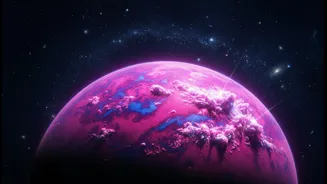
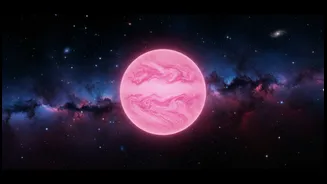
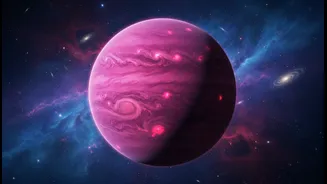
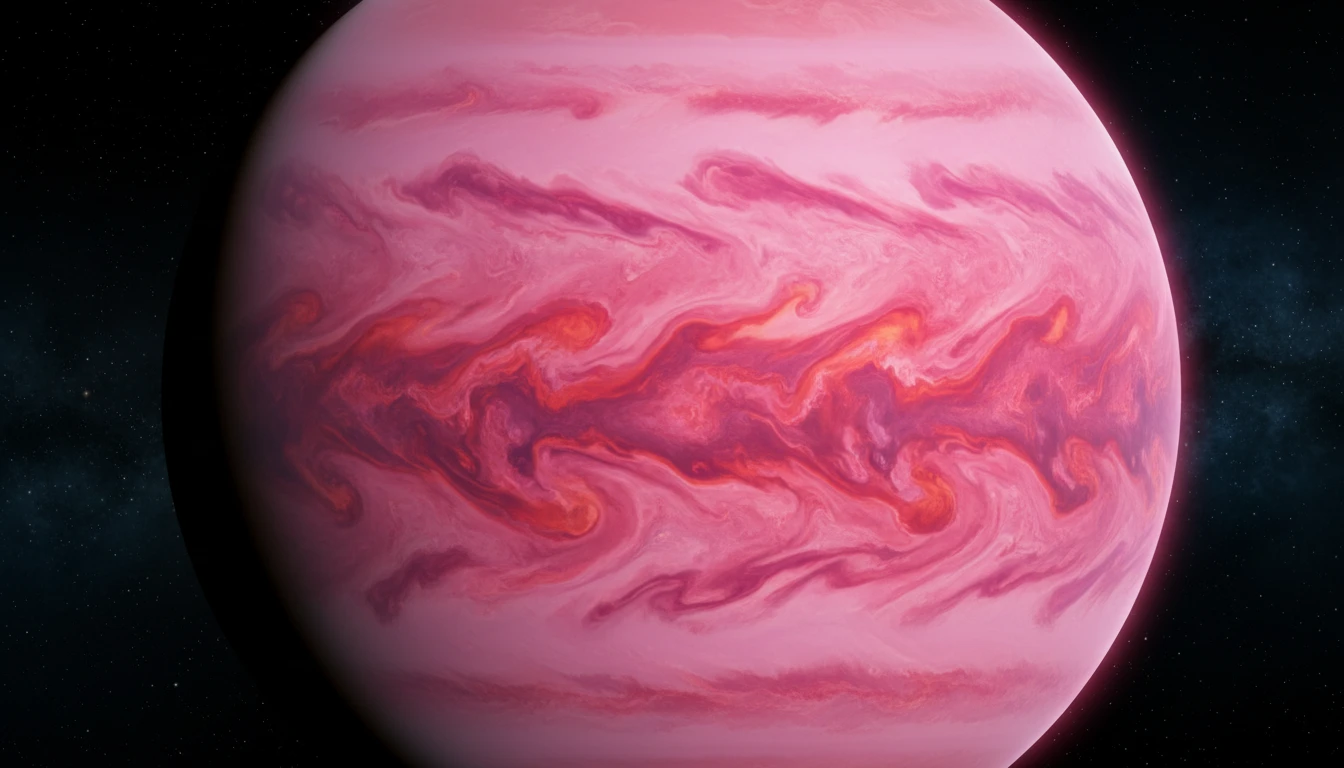
First discovered in 2013, the exoplanet GJ 504 b quickly captured the public imagination. Dubbed the 'Pink Planet', its dull magenta glow, reminiscent of a dark cherry blossom, made it a celestial celebrity. But for astronomers, its beauty was matched
by its strangeness. GJ 504 b is a gas giant, but it orbits its star at a distance that defies easy explanation. It sits nearly nine times farther from its star than Jupiter does from our Sun, a position so remote that our leading theories of planet formation struggle to account for its existence. How could such a large planet form so far out in the cosmic cold? For over a decade, this question has made GJ 504 b a fascinating puzzle.
A Salty Surprise from the Webb Telescope
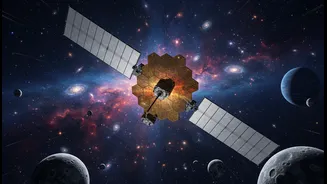
The headlines just got a major update, thanks to the powerful gaze of the James Webb Space Telescope (JWST). In observations that were impossible with ground-based telescopes, which struggled with the planet's faintness, JWST managed to analyse the light from GJ 504 b's atmosphere. The data revealed the expected presence of molecules like water vapor, methane, and carbon dioxide. But there was a twist: the data didn't quite add up. The models only matched the observations perfectly when scientists added a surprising new ingredient: clouds made of inorganic salts. It was the first direct evidence for a theory that such clouds could exist on cold, distant worlds.
Planet or Failed Star?
This discovery of salty clouds adds another layer of complexity to GJ 504 b. The debate has long raged about what this object truly is. With a mass estimated to be somewhere between that of a giant planet and a 'brown dwarf'—a kind of failed star—its identity is uncertain. Astronomers often refer to it as a 'planetary-mass companion' to avoid taking sides. This new atmospheric data is crucial. The chemical makeup of a world provides clues to its origin. While the debate isn’t settled, the detailed analysis made possible by JWST is giving scientists the tools they need to eventually determine whether GJ 504 b formed like a planet, from a disk of material around its star, or more like a star itself.
Why This Discovery Matters
Finding salt clouds is more than just a quirky weather report from 57 light-years away. It represents a significant step forward in our ability to study cold, faint objects in the galaxy. For years, these worlds were too difficult to observe in detail. Now, with the JWST, a new window has opened. According to researchers, the observations took only a couple of hours with the new telescope, succeeding where years of effort with other instruments had failed. This breakthrough means we can start to build a more complete picture of the kinds of atmospheres that exist beyond our solar system, especially on worlds that are much colder than the fiery hot gas giants we've typically been able to study. Each discovery, like the one at GJ 504 b, helps refine our understanding of the universe and our place within it.