







Decoding the Liquid Rules
The most common reason for delays at security checkpoints is non-compliant liquids. Indian airports, following global standards, enforce a strict rule for carry-on luggage: all liquids, aerosols, and gels (LAGs) must be in containers of 100ml or less.
It is the size of the container that matters, not how much liquid is inside; a half-used 200ml shampoo bottle will be confiscated. All these small containers must fit comfortably within a single, transparent, re-sealable plastic bag with a capacity of no more than one litre. This bag should be placed at the top of your carry-on for easy access, as you may be required to present it separately for screening. To simplify things further, consider switching to solid toiletries. Shampoo bars, solid perfumes, and bar soaps don't fall under liquid restrictions, saving you space and hassle. Remember to empty any personal water bottles before joining the security queue; you can refill them at drinking water stations once you are past security.
Mastering Your Electronics
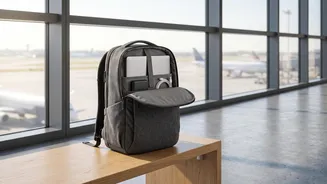
In today's connected world, travelling with multiple electronic devices is the norm. While there is generally no limit on the number of personal electronic devices like phones and laptops you can carry, organizing them is key to a swift security check. Laptops, tablets, and large cameras typically need to be removed from your bag and placed in a separate tray for X-ray screening. To avoid a frantic search, pack these items in an easily accessible compartment of your carry-on bag, like a dedicated laptop sleeve or a front pocket. Using a carry-on with multiple compartments can be a game-changer, allowing you to keep electronics separate from clothes and other items. For smaller gadgets and their accompanying chargers, a dedicated electronics organizer or even a clear pouch can prevent a tangled mess and make them easy to find.
Power Banks: Carry-On Only
Power banks are essential for keeping devices charged on the go, but they come with specific safety rules. Due to their lithium-ion batteries, power banks are strictly prohibited in checked-in luggage and must be carried in your cabin baggage. This allows cabin crew to access them quickly in the rare event of an emergency. Most airlines in India and internationally permit power banks with a capacity up to 100 Watt-hours (Wh) without special approval. A standard 20,000mAh power bank is typically around 74Wh, which is well within this limit. Power banks between 100Wh and 160Wh may require prior airline approval. To prevent any issues, ensure the capacity is clearly marked on the device itself. Some airlines also have newer rules requiring you to keep power banks in your personal item (like a handbag or small backpack) rather than the overhead bin, and prohibit charging devices with them during the flight.
The Art of Tangle-Free Cables
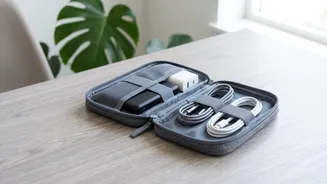
A tangled web of chargers and cables at the bottom of your bag is a common travel frustration. A few simple tricks can solve this permanently. The easiest method is to use reusable ties, like rubber twist ties or simple Velcro straps, to neatly coil each cable before packing. Grouping them together in a small pouch, a transparent zip-top bag, or a dedicated electronics organizer keeps everything in one place. This not only protects your cables but also makes it effortless to grab the one you need without pulling out a dozen others. For ultimate organization, consider a tech case with elastic loops and mesh pockets designed specifically to hold chargers, adapters, and cables securely. Packing a small power strip can also be a lifesaver at airports with limited sockets or in hotel rooms, allowing you to charge multiple devices from a single outlet.