





The Golden Age of the Artist
Picture the player. He is the team’s creative nucleus, drifting in the space between the opposition’s midfield and defence. He doesn’t run; he glides. The ball is his instrument, and the final third is his canvas. This is the archetypal No. 10, the *trequartista*,
the *enganche*—the artist. Think of Diego Maradona weaving through England’s defence, Zinedine Zidane’s balletic control in a chaotic midfield, or Francesco Totti’s visionary passes for Roma. These players were the focal point of their teams, granted a license to roam and create, often with minimal defensive duties. The game flowed through them. Their job was to provide the one moment of magic—the killer pass, the stunning goal—that would unlock a stubborn defence. For decades, building a team around such a singular talent was not just a viable strategy; it was the blueprint for success.
The Tactical Squeeze
So, what changed? In a word: space. Modern football became obsessed with compressing it. The revolution began with coaches like Arrigo Sacchi, whose AC Milan side of the late 1980s pressed relentlessly in a compact 4-4-2 formation. There was simply no room for a player to leisurely stroll “in the hole.” The rise of athletic, box-to-box midfielders in three-man midfields (the 4-3-3 and its variants) further crowded the centre of the pitch. The game became faster, more physical, and more systematic. High-pressing philosophies like *gegenpressing*, popularized by Jürgen Klopp, turned football into a 90-minute exercise in coordinated chasing. In this new world, a player who didn't contribute defensively was no longer a luxury; he was a liability. The classic No. 10, the static playmaker, became a tactical fossil, a ghost from a slower, more romantic era.
Evolution, Not Extinction
Reports of the No. 10’s death, however, were greatly exaggerated. The role didn't disappear; it was forced to adapt or die. The modern game still desperately needs a player who can break lines, create chances, and operate in tight spaces. But now, that player must do so much more. The modern incarnation of the No. 10 is a hybrid genius, blending the creativity of the old masters with the athleticism and work rate of a modern midfielder. They can no longer be a passenger when the team loses possession. They are often the first line of the press, tasked with forcing turnovers high up the pitch, which can be just as valuable as a defence-splitting pass. The responsibility has shifted from pure creation to a blend of creation, tactical intelligence, and relentless industry.
Meet the Modern Playmaker
Look across Europe’s top leagues, and you’ll find them. Manchester City’s Kevin De Bruyne is perhaps the ultimate example. While often starting as a 'free 8' in a midfield three, he occupies the No. 10 zones, delivering impossible passes while also covering enormous ground and pressing with intensity. At Arsenal, Martin Ødegaard is the team’s creative and spiritual leader. He is a metronomic passer and the trigger for their high press, a captain who leads by example with his tireless work rate. In Germany, Bayern Munich’s Jamal Musiala is a different flavour—a wiry, elusive dribbler who finds pockets of space others can't see, combining flair with a surprising defensive tenacity. These players are their teams' chief creators, but they are also engines, athletes, and tactical linchpins. They prove that the brain of the team is still there, it just has to work a lot harder.
A Function, Not a Position
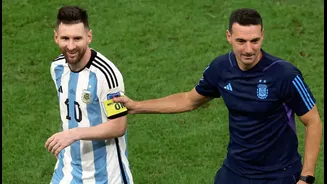
Ultimately, the No. 10 role is no longer about a fixed position on a teamsheet. It is a function. It's about who performs the creative duties between the lines, regardless of their starting position. Lionel Messi, in his later years at Barcelona, often started on the right wing but would drift inside to become the team’s de facto playmaker. Players like Bernardo Silva at Manchester City or even inverted full-backs can be seen occupying these central creative spaces. The key is finding and exploiting the “half-spaces”—the channels between the opposition’s full-back and centre-back. As defences have become more organised and compact, the player who can intelligently find and use this space to disrupt the opposition’s structure is more valuable than ever.