






A Shield for Your Immunity
The damp, humid conditions of the monsoon are a perfect breeding ground for bacteria and viruses, making us more susceptible to colds, flu, and stomach infections. [7, 21] This is where a seasonal diet becomes your first line of defense. According to both
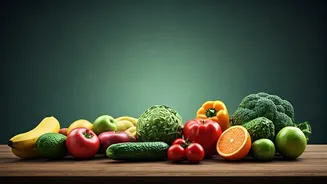
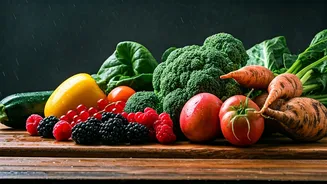
modern nutrition and ancient Ayurvedic wisdom, your digestive fire, or 'agni', is naturally weaker during this season. [2, 5] Eating heavy, out-of-season foods can overburden your system, while light, seasonal produce is easier to digest and packed with the right nutrients. [15] Fruits rich in Vitamin C and antioxidants, like jamun, pomegranate, pears, and plums, are abundant during the monsoon and help strengthen the immune system to fight off pathogens. [13, 16]
Why Warm and Cooked is Wiser
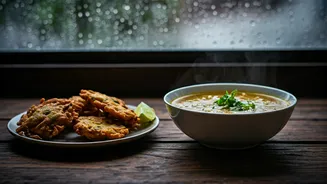
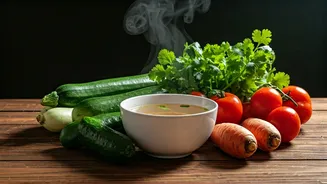
While a crisp salad might seem healthy, nutritionists strongly advise against raw vegetables during the monsoon. [7, 17] The high humidity and risk of water contamination mean that raw foods, especially leafy greens, can harbor harmful microbes that may not be eliminated by simple washing. [17, 19] Cooking kills these germs and also makes food easier for your weakened digestive system to break down and absorb nutrients. [7] Opt for steamed, boiled, or grilled preparations. Warm soups, broths, and freshly cooked meals are not only comforting on a rainy day but also support gut health and prevent common monsoon ailments like diarrhoea and indigestion. [2, 12]
Gourds, Grains, and Goodness
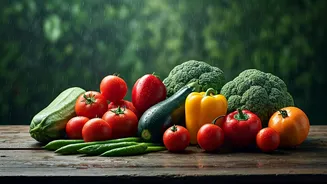
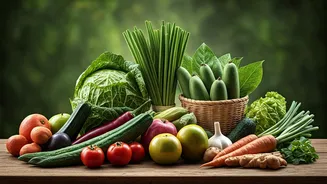
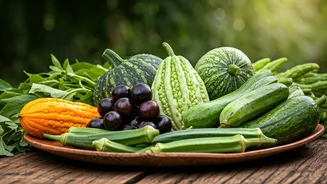
Nature provides the perfect vegetables for the season. Gourds like lauki (bottle gourd), tinda (apple gourd), and parwal (pointed gourd) are light, full of fibre, and easy on the stomach. [4, 13] Bitter vegetables like karela (bitter gourd) are also highly recommended for their antimicrobial properties. [15] When it comes to grains, older, easily digestible options like barley, old rice, and moong dal are preferred. [4, 6] A simple, warm bowl of moong dal khichdi, seasoned with a little ghee and cumin, is considered a perfect monsoon meal—it’s nourishing, comforting, and gives your digestive system a much-needed break. [5, 10]
The Power of Spices and Herbs
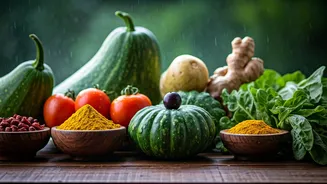
The Indian spice box is a treasure trove of medicinal benefits, especially during the monsoon. Spices like turmeric, ginger, garlic, black pepper, and cinnamon are packed with anti-inflammatory, antibacterial, and antiviral properties. [3, 13, 22] Adding a generous amount of these to your cooking can help boost immunity and aid digestion. [12] A warm cup of herbal tea made with ginger, tulsi (holy basil), and a few drops of honey is an excellent way to soothe a sore throat and keep colds at bay. [3, 13] These spices not only add flavour to your food but act as a natural shield, helping your body defend itself against infections. [22]
Foods to Approach with Caution
Just as important as knowing what to eat is knowing what to avoid. Nutritionists recommend limiting or avoiding street food, which carries a high risk of contamination from unclean water and unhygienic preparation. [14, 20] It’s also wise to reduce the intake of seafood, as the monsoon is the breeding season for many fish, increasing the risk of contamination and food poisoning. [19, 21] While dairy products like curd are generally healthy, some find they can aggravate coughs and colds during this season; it's best to consume them fresh and during the day. [5, 19] Similarly, pre-cut fruits and salads from outside should be avoided as they are often exposed to germs. [19, 20]