





The Record Itself
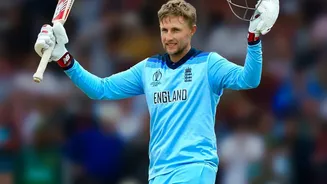
During the ongoing Test series against Pakistan, England's Joe Root has been busy rewriting the history books. In the second Test at Lord's, he surpassed Australian legend Ricky Ponting to become the highest run-scorer in Test history on home soil. Root's
24 runs in the second innings took his tally to 7,594 in England, moving past Ponting's 7,578 runs in Australia. This wasn't the only record, as during the first Test at Headingley, Root also became the all-time leading catcher among non-wicketkeepers in Test history, taking his 219th catch to move past Steve Smith's 218. This dual achievement within a single series speaks volumes about his multifaceted impact on the game.
Surpassing an Icon in Ponting
To understand the weight of the home-runs record, one must appreciate the man he surpassed: Ricky Ponting. For over a decade, Ponting was the heart of a dominant Australian team, a fierce competitor, and one of the most prolific batters the game has seen. His record of 7,578 runs on home turf, amassed over 92 Tests, stood as a monument to consistency and run-scoring appetite. Ponting, himself an exceptional fielder with 196 catches, was a complete cricketer who defined an era. For Root to eclipse such a figure is a significant statement. It places him at the pinnacle of run-scorers in home conditions, a testament to his durability and mastery over the challenges of English pitches for more than a decade.
The Elite Fielding Club
While the run-scoring feat is monumental, the catching record arguably tells a deeper story about Root's value. With his 219th catch, he now stands alone at the top of the list for non-wicketkeepers. The names he leads are a who's who of cricket's greatest all-round players and strategists: Steve Smith (218), India’s Rahul Dravid (210), Sri Lanka’s Mahela Jayawardene (205), and South Africa’s Jacques Kallis (200). These players are celebrated not just for their primary skills but for their unwavering concentration and fitness. Taking over 200 catches is not an accident; it's the product of thousands of hours spent in high-pressure positions like the slips, where a moment's lapse can change a match. This achievement solidifies Root's status as one of the safest pair of hands in the modern era.
More Than Just Runs and Catches
So, how big is this achievement? It's immense because it diversifies his legacy. Root has long been hailed as one of the premier batsmen of his generation, a member of the 'Fab Four' alongside Virat Kohli, Steve Smith, and Kane Williamson. His pursuit of Sachin Tendulkar's all-time Test run record is a well-documented saga. However, these new records, particularly the one for catches, round out the picture of Joe Root. He is not just a run-machine but a complete Test cricketer. It highlights his longevity, his supreme physical conditioning, and his unceasing commitment to every facet of the game. In an era of specialization, being at the top of the charts for both batting and fielding is a rare and remarkable feat.
A Testament to Enduring Class
Fielding, especially in the slips, is an art form that often goes underappreciated in statistical discussions. It requires sharp reflexes, immense concentration, and an intuitive understanding of the game's flow. Root's ability to maintain this high standard over 169 Test matches, all while shouldering the burden of captaincy and being his team's primary batsman, is extraordinary. The record-breaking catch against Pakistan was reportedly the result of a field placement he helped orchestrate with the bowler, Jofra Archer, moments before the delivery. This illustrates that he is not just a passive fielder but an active, thinking cricketer whose contributions go far beyond the scorecard.