







The Tale of Two Trade Ledgers
On paper, the economic relationship looks bleak. Following the 2019 Pulwama attack, India revoked Pakistan's Most Favoured Nation (MFN) status, and Pakistan responded by suspending bilateral trade. Consequently, official direct trade volumes plummeted
from over $2 billion annually before 2019 to negligible amounts. For instance, Pakistan recorded no official exports to India in the first quarter of the 2026-27 fiscal year. However, data from the State Bank of Pakistan shows a surprising surge in imports from India during the same period, which grew by 69% year-on-year to $61.7 million. This apparent contradiction points to a flourishing, if unofficial, economic corridor.
The Dubai Detour
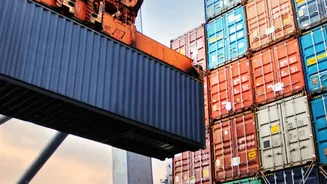
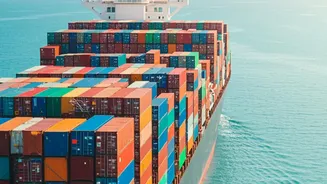
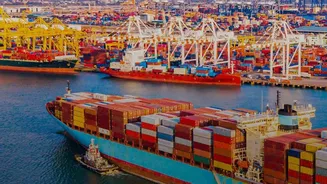
So, how are Indian goods reaching Pakistan despite a ban? The answer lies in indirect trade, a long-standing practice that has surged since the official suspension. Businesses on both sides are utilising third countries as intermediaries, with the United Arab Emirates serving as the primary hub. Indian products are shipped to Dubai, where their country-of-origin labels are often changed before they are re-exported to Pakistan. Singapore and other regional ports also play a role in this complex supply chain. This roundabout route allows businesses to meet persistent market demand, even if it comes at a higher cost.
What's in the Shopping Cart?
The goods moving through these indirect channels are not niche products; they are often essential items and industrial inputs. Pharmaceuticals and organic chemicals are a dominant category, accounting for a huge share of Pakistan's imports from India. In the 2025-26 fiscal year, these items made up 96.2% of such imports, with crucial products like vaccines and medical raw materials leading the way. Other key goods include textiles, plastics, petroleum products, dyes, and various food items like tea and spices. This reliance is driven by price competitiveness, quality, and geographical proximity, which even the added costs of indirect shipping cannot entirely negate.
The Economic Rationale
The persistence of this trade underscores a simple truth: business logic often overrides political barriers. For Pakistani industries, particularly pharmaceuticals and textiles, sourcing raw materials from India is significantly cheaper and faster than from markets like China or Europe. The Pak-India Business Council estimates that resuming direct pharmaceutical trade alone could save Pakistani industries between $2 billion and $3 billion annually. Similarly, the textile sector has faced an estimated $5 billion in additional costs by having to source cotton from distant countries like Brazil and Egypt instead of from India.
The Price of Politics
While businesses find a way, this indirect system carries significant economic penalties. The complex logistics and re-routing can add 15-25% to the final cost of goods, a burden ultimately borne by consumers and businesses. One business advocacy group has estimated that the suspension of direct trade has resulted in economic losses of around $40 billion for Pakistan since 2019. A World Bank study had previously estimated the untapped direct trade potential between the two nations at a massive $37 billion annually. This highlights the substantial economic cost of the political standoff, as both governments lose out on customs revenue while their economies miss out on the efficiencies of direct commerce.