
First, What Are Super-Earths?
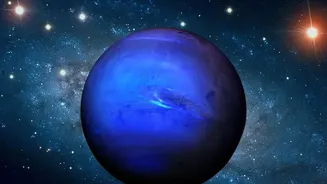
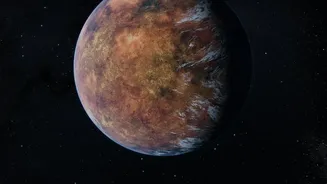
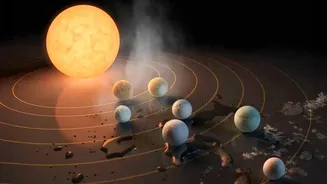
Before we dive into the 'how', let's cover the 'what'. Super-Earths are a class of exoplanets unlike any found in our solar system. They are more massive than Earth but lighter than ice giants like Neptune. They can be made of rock, gas, or a combination,
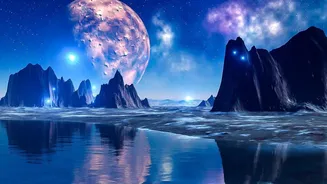
and are incredibly common in our galaxy, making up about a third of all known exoplanets. This category of planet, ranging from about two to ten times the mass of our own world, has become a prime target in the search for potentially habitable planets. Their size and potential for varied compositions make them fascinating laboratories for understanding planetary formation and the conditions that might support life.
The Telescope's Secret Weapon: Infrared Light
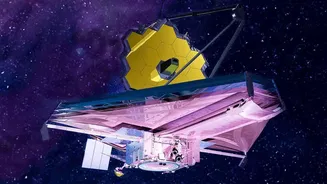
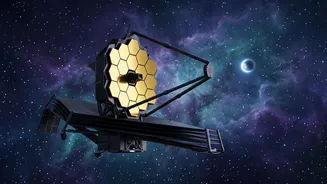
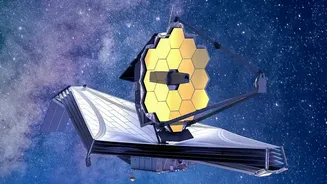
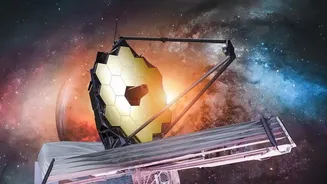
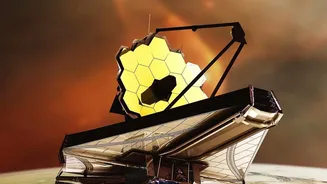
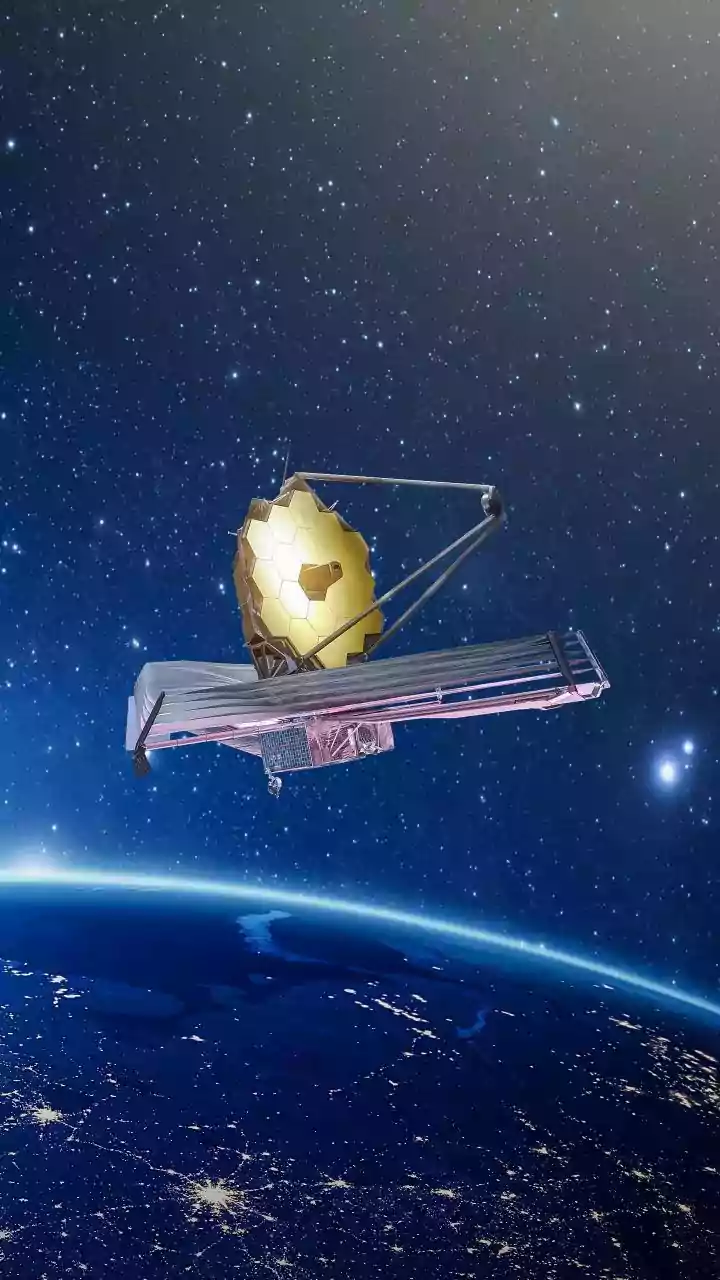
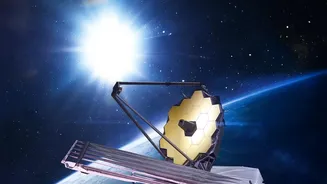
The James Webb Space Telescope is the world's premier space science observatory, and its power lies in its ability to see the universe in infrared light. This is crucial because the chemical building blocks of life, including water, methane, and carbon dioxide, have unique 'fingerprints' that appear in the infrared spectrum. While visible light gets scattered by thick dust clouds in space, infrared light can pass through them, allowing Webb to study regions that are otherwise obscured. For studying planets, this infrared sensitivity is perfectly suited to picking up the faint signals from their atmospheres.
Starlight, Interrupted: The Transit Method
So, how does Webb actually 'see' an atmosphere hundreds of light-years away? The primary technique is called transmission spectroscopy. It relies on a precise alignment where a planet passes, or 'transits', in front of its host star from our point of view. As the planet makes this journey, a tiny fraction of the starlight filters through the edge of the planet's atmosphere before it reaches Webb's mirrors. The gases in the atmosphere absorb some of this light at very specific wavelengths. By measuring the dip in starlight at these specific frequencies, astronomers can deduce which chemicals are present. It's like analyzing a shadow to understand the object casting it.
Decoding the Chemical Fingerprints
Once Webb captures this filtered starlight, its advanced instruments, like the Near-Infrared Spectrograph (NIRSpec) and Mid-Infrared Instrument (MIRI), get to work. They act like cosmic prisms, breaking the light down into its constituent wavelengths to create a transmission spectrum—a graph showing how much light was absorbed at each frequency. Different molecules create unique absorption patterns. Water (H2O), for instance, creates a very distinct dip on this graph. By analyzing the spectrum, scientists can identify the presence and even the relative abundance of molecules like water vapor, methane, and carbon dioxide in the alien atmosphere.
From Data to Discovery: A Case Study
A prime example of this technique in action is the study of K2-18 b, a super-Earth located about 124 light-years away. Observations with JWST revealed a wealth of carbon-bearing molecules, including methane and carbon dioxide, in its atmosphere. The data strongly supports the hypothesis that K2-18 b could be a 'Hycean' world—a hot planet with a hydrogen-rich atmosphere covering a liquid water ocean. While initial observations by the Hubble telescope first hinted at water, Webb's superior precision has provided a much clearer picture, turning this distant world into one of the most intriguing targets in the ongoing search for habitable environments.
Why Finding Water Vapour is a Big Deal
Detecting water vapor is a critical step, but it is not, by itself, proof of life. However, water is essential for life as we know it, so finding it in the atmosphere of a rocky or ocean world is a monumental milestone. It confirms that one of the key ingredients for life can exist on planets outside our solar system. On worlds like K2-18 b, the presence of water alongside other molecules like methane, and a lack of others like ammonia, helps scientists build a more complete model of the planet's environment and assess its potential for habitability. It's a promising step towards the ultimate goal: identifying life on a foreign world.