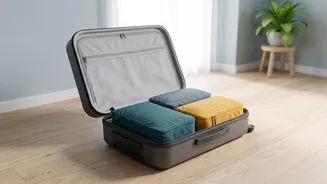






What Exactly Are Compression Cubes?
You may have heard of packing cubes, the small, zip-up fabric containers that help organise your suitcase. Compression cubes are their more powerful cousins. They look similar, but they feature an additional, crucial element: a second compression zipper.
After you fill the cube with clothes and close the main zipper, you then zip the second one, which runs around the outside. This secondary zipper system works to squeeze the cube, forcing out excess air and reducing the overall volume of the contents. Unlike vacuum bags, which require a separate pump and can leave clothes severely wrinkled, compression cubes use this simple mechanical zipper to make bulky items more compact.
The Magic of Saving Space
The primary benefit is right there in the name: compression. By expelling trapped air from soft, pliable clothing, these cubes can significantly reduce the amount of space your garments occupy. Think about bulky items like sweaters, fleece jackets, or even a stack of t-shirts. Normally, they take up a lot of room. A compression cube can shrink their volume by 30-50%, turning a puffy pile of clothes into a dense, manageable brick. This newfound space is invaluable when you're trying to pack for a multi-day trip using only a single cabin bag, which on most Indian budget carriers like IndiGo, SpiceJet, and Akasa Air, is all you’re allowed for free.
Beating the Baggage Sizer, Not the Scale
For Indian travellers, the cabin baggage allowance is notoriously strict. Most domestic airlines like IndiGo and SpiceJet limit you to a single carry-on bag of up to 7 kg, with dimensions around 55cm x 35cm x 25cm. Gate agents frequently use metal sizers to enforce these limits, and an overstuffed bag can lead to hefty last-minute fees. This is where compression cubes shine. By compacting your clothes, they make it physically easier to fit everything into a compliant-sized backpack or trolley without a struggle. Your bag will look neater, feel less bloated, and slide easily into the overhead bin, saving you from the dreaded gate-check.
A Critical Warning: The Weight Limit
Here is the most important thing to remember: compression cubes reduce volume, not weight. It’s a common mistake for first-time users. Because you can suddenly fit so much more into your bag, it is incredibly easy to overpack and sail past the 7 kg cabin baggage limit imposed by most Indian carriers. Packing three pairs of jeans instead of two might seem possible with the extra space, but the additional weight could get you into trouble at the check-in counter or the gate. The goal is to pack the same amount of clothing into a smaller space, not to pack more clothing. A portable luggage scale is an essential companion for any compression cube user.
Best Practices for Smart Compression
To get the most out of your cubes, follow a few simple tips. First, roll your clothes tightly before placing them in the cube. This minimises wrinkles and maximises space from the start. Don’t overfill any single cube; it should close without a major struggle, as forcing the zipper can damage it. Pack by category: one cube for tops, one for bottoms, one for undergarments. This keeps you organised. Finally, remember that these cubes work best for soft, bulky items. Stiff materials like heavy denim or formal blazers won't compress as much and are more prone to wrinkling.