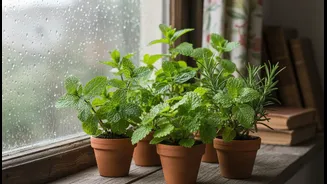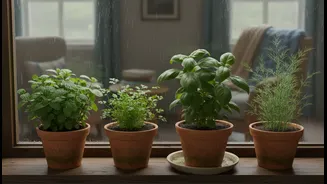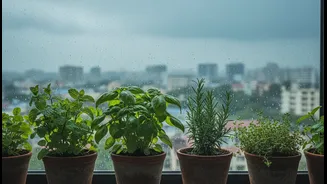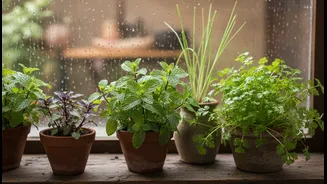




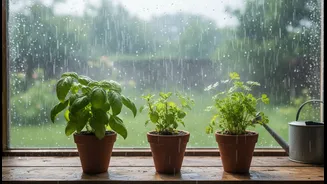


Mint (Pudina): The Refreshing All-Rounder
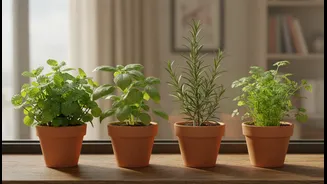
There's a reason pudina is a staple in Indian households. This incredibly resilient herb loves the moist, cool conditions of the monsoon, making it the perfect starting point for any beginner gardener. Its refreshing aroma is an instant mood-lifter, and
having fresh leaves on hand for chai, chutneys, or a cooling drink is a game-changer. Mint grows vigorously, so it’s best to give it its own pot to prevent it from taking over. You don’t even need seeds; simply plant a few healthy stems with roots from a store-bought bunch into a pot with well-draining soil. Place it on a windowsill that gets some morning sun, keep the soil consistently moist but not waterlogged, and you'll be snipping fresh leaves in no time.
Holy Basil (Tulsi): The Sacred Stress-Buster
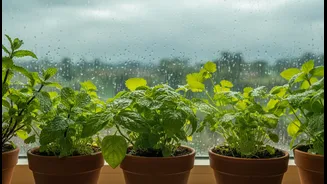
No Indian herb garden feels complete without Tulsi. Revered for its medicinal and spiritual properties, Holy Basil flourishes during the warm, humid monsoon season. Its distinct, pleasant fragrance purifies the air, and a few leaves a day can help boost immunity, which is especially useful during a season known for colds and flu. Tulsi can be grown from seeds or cuttings in a medium-sized pot filled with a mix of garden soil and compost. It prefers a sunny spot but should be protected from heavy, direct downpours that can damage its leaves. Water only when the top layer of soil feels dry to the touch, and remember to pinch off the flower buds (manjiri) to encourage lusher, leafier growth.
Coriander (Dhania): The Essential Garnish
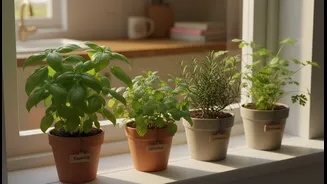
Fresh dhania is the soul of so many Indian dishes, but it can be tricky to grow, especially in the summer heat. The good news is that the cooler, humid monsoon climate is just what coriander loves. Growing it on your windowsill means you have a constant supply for garnishing dals, curries, and salads. To start, gently crush whole coriander seeds to split them, then sow them in a wide, shallow pot with good drainage. This herb prefers moderate sunlight, so an east-facing window is often ideal. Keep the soil moist, and you should see sprouts within a couple of weeks. Harvest the outer leaves first to allow the plant to continue producing from the centre.
Lemongrass: The Fragrant De-Stressor
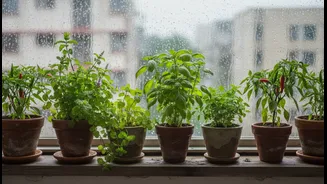
Imagine the scent of fresh lemongrass tea wafting through your home on a rainy day. This herb is not only wonderfully aromatic but also surprisingly easy to grow in a pot. It enjoys the moisture of the monsoon and its grassy stalks add a unique visual texture to your windowsill garden. Beyond its use in teas and soups, lemongrass is a natural mosquito repellent—a significant bonus during the rainy season. You can grow it from a stalk purchased at the market; just place the root end in a glass of water until roots appear, then plant it in a large, deep pot. It needs a few hours of sunlight and regular watering to thrive, rewarding you with fragrant stalks you can harvest all season long.