






Prep Your Vehicle Before the First Downpour
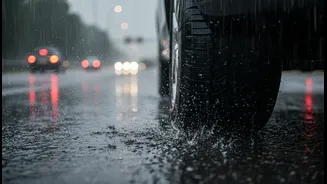
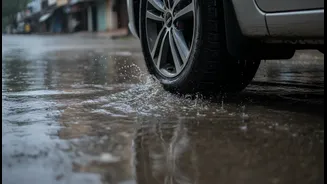
The single best thing you can do for monsoon safety happens before you even start the engine. A car that was fine in the summer can fail spectacularly in the rain if unprepared. First, check your tyres. Ensure they have a tread depth of at least 3mm;
anything less is risky on wet roads. Old rubber gets hard and loses its grip, so consider replacing tyres that are over five years old. Next, inspect your wiper blades. The summer heat often cracks the rubber, leading to streaks and squeaks. If they aren't clearing your windshield perfectly, replace them. Finally, test all your lights: headlights, tail-lights, brake lights, and indicators. In a downpour, being visible to others is as important as being able to see. A pre-monsoon service to check brakes, wiring, and the battery is a wise investment.
The Golden Rule of Waterlogged Roads: Turn Around
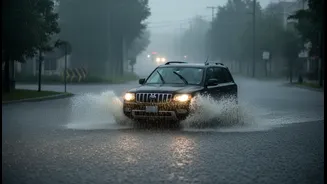
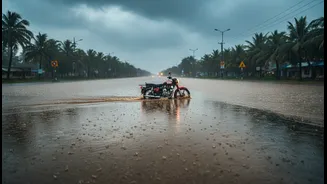
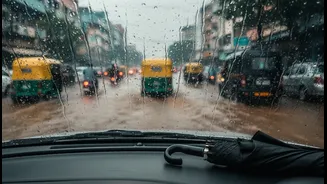
The safest way to deal with a flooded road is to avoid it entirely. It’s incredibly difficult to judge the depth of water, and just six inches is enough to cause a loss of control or stall your engine. A foot of water can make many vehicles float, and two feet can sweep away even heavy SUVs and pickups. Water can also hide dangerous potholes or wash away the road surface underneath. If you see a flooded street, the best and only advice is to turn around and find an alternate route. Don't follow other cars in, assuming it's safe. Your vehicle's capabilities might be different, and conditions can change in seconds.
If You Absolutely Must Cross Water
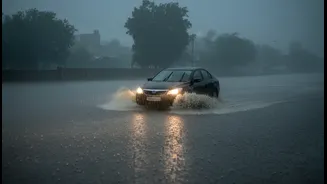
If turning back isn't an option and the water is shallow (never cross water that is higher than the center of your wheels), there is a specific way to proceed. Engage a low gear (first gear in a manual or the 'L' or '1' setting in an automatic) and keep your engine RPMs high but your speed very low—around 3-5 km/h. This helps prevent water from entering your exhaust pipe. Drive slowly and steadily down the center of the road, where the water is usually shallowest, creating a 'bow wave' in front of your car. Do not stop. Once you are through, gently tap your brakes a few times to dry them out and ensure they are working correctly.
Mastering Low Visibility Driving
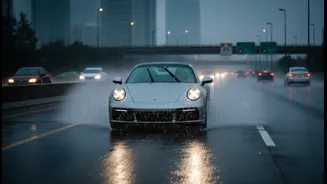
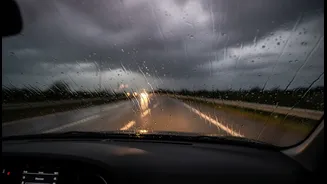
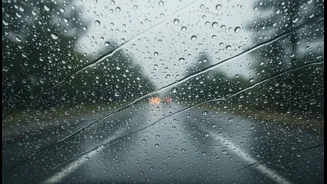
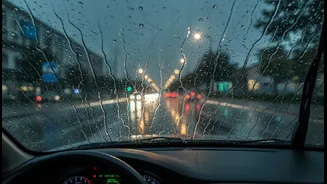
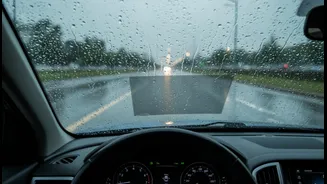
Heavy rain drastically reduces how far you can see. The first step is to slow down, reducing your speed by at least a third of the posted limit. Turn on your low-beam headlights to make yourself visible to others. Never use high beams, as the light will reflect off the raindrops and create glare, worsening your vision. It's also a common mistake to turn on hazard lights while moving; they are only for when your vehicle is stopped and creating a hazard. Double your following distance to at least five seconds to give yourself more time to react and brake safely on slick surfaces. To prevent your windscreen from fogging up on the inside, use the defogger setting or your air conditioning to remove humidity from the cabin.
What to Do If Your Car Stalls in Water
If your car stalls in a waterlogged area, do not try to restart the engine. This is the most critical rule. Attempting to restart can force water into the engine, leading to a catastrophic failure known as hydrostatic lock. This can damage your engine beyond repair. Your first priority is safety. If the water is rising, abandon the vehicle and move to higher ground. A car can be replaced, but your life cannot. Turn on your hazard lights, and if it's safe to exit, do so. Call for roadside assistance or a towing service to move the vehicle. Only after a qualified mechanic has inspected the car should you attempt to start it again.
Pack a Monsoon Emergency Kit
Being stranded in the rain is much more manageable if you're prepared. Keep an emergency kit in your car during the monsoon months. This should include essentials like a tow rope, jumper cables, and a basic tool kit. A high-visibility vest and a reflective warning triangle are crucial if you break down. For personal comfort and safety, pack a strong flashlight with extra batteries, a raincoat, an umbrella, and a change of clothes or at least a dry towel. A power bank for your phone is essential for communication, and having some non-perishable snacks and drinking water can make a long wait in a traffic jam far more bearable.