





What Exactly Are Making Charges?
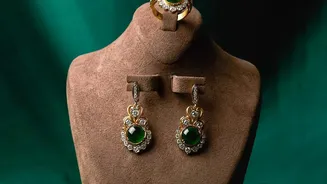
Making charges are essentially the labour and craftsmanship costs involved in transforming raw gold into the beautiful piece of jewellery you buy. This fee covers the entire process, from designing and conceptualising the piece to the skilled work of the artisans
who craft it. Think of it as the 'value-add' for turning a simple block of metal into a wearable work of art. These charges can vary dramatically, typically ranging from 5% to as high as 25% of the gold's value, and sometimes even more for exceptionally intricate designs.
How Are These Charges Calculated?
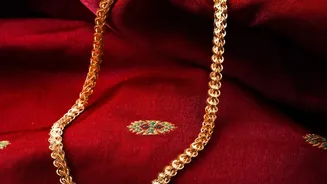
Jewellers use two primary methods to calculate making charges. The first is a percentage of the total gold value. For instance, if you're buying a 10-gram chain when gold is ₹6,000 per gram (total gold value ₹60,000), and the making charge is 12%, you’ll pay an additional ₹7,200. The second method is a flat rate per gram of gold. This rate, which could be anywhere from ₹300 to ₹1,000 per gram, is multiplied by the ornament's weight. So, for the same 10-gram chain, a ₹500 per gram making charge would add ₹5,000 to your bill. Machine-made jewellery, like simple chains, often has lower making charges (3-25%) compared to handmade pieces that require specialised artisans, where charges can exceed 25%.
The Other Cost: Understanding Wastage
Often appearing alongside making charges is another line item: 'wastage'. This charge compensates the jeweller for the small amount of gold that is inevitably lost during the manufacturing process. When gold is cut, soldered, and polished, tiny particles are lost as dust or shavings. Wastage charges account for this loss and are usually calculated as a percentage of the gold's weight, typically ranging from 3% to 7%, though it can be higher for very complex designs. It's crucial to ask your jeweller to clarify if wastage is included within the making charge or billed separately to understand the true cost.
Factors That Push the Price Up
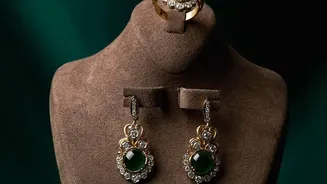
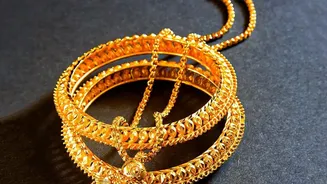
Several factors influence how high the making charges are. The most significant is design complexity; an intricate, hand-carved necklace with detailed filigree work will naturally have higher charges than a simple, machine-made gold band. Brand value also plays a role, as well-known national brands may have higher fixed charges than smaller, local jewellers. Finally, whether the piece is machine-made or handcrafted is a major determinant. Mass-produced items are cheaper to make, while unique, artisanal pieces command a premium for the skill and time involved.
Don't Forget GST and Hallmarking Fees
On top of making charges and the gold value, you also have to pay Goods and Services Tax (GST). A 3% GST is applied to the value of the gold, and a separate 5% GST is levied on the making charges. This two-part tax structure adds to the final price. Additionally, there's a nominal fee for hallmarking, which is a mandatory certification of purity from the Bureau of Indian Standards (BIS). This charge is applied per piece of jewellery, not by weight, and is currently ₹45 per gold item. While small, it’s another component of the final bill.
Can You Negotiate These Charges?
Yes, in many cases, you can negotiate making charges. While large, branded stores often have fixed prices, many independent and local jewellers are open to negotiation, especially during off-peak seasons or for large purchases like wedding jewellery. The key is to be informed. Before buying, compare the making charges at a few different stores for similar items. Always ask for a per-gram making charge, as it’s easier to compare than a percentage. A little research and polite negotiation can often lead to significant savings on your final bill.