



The Solar System's Building Blocks
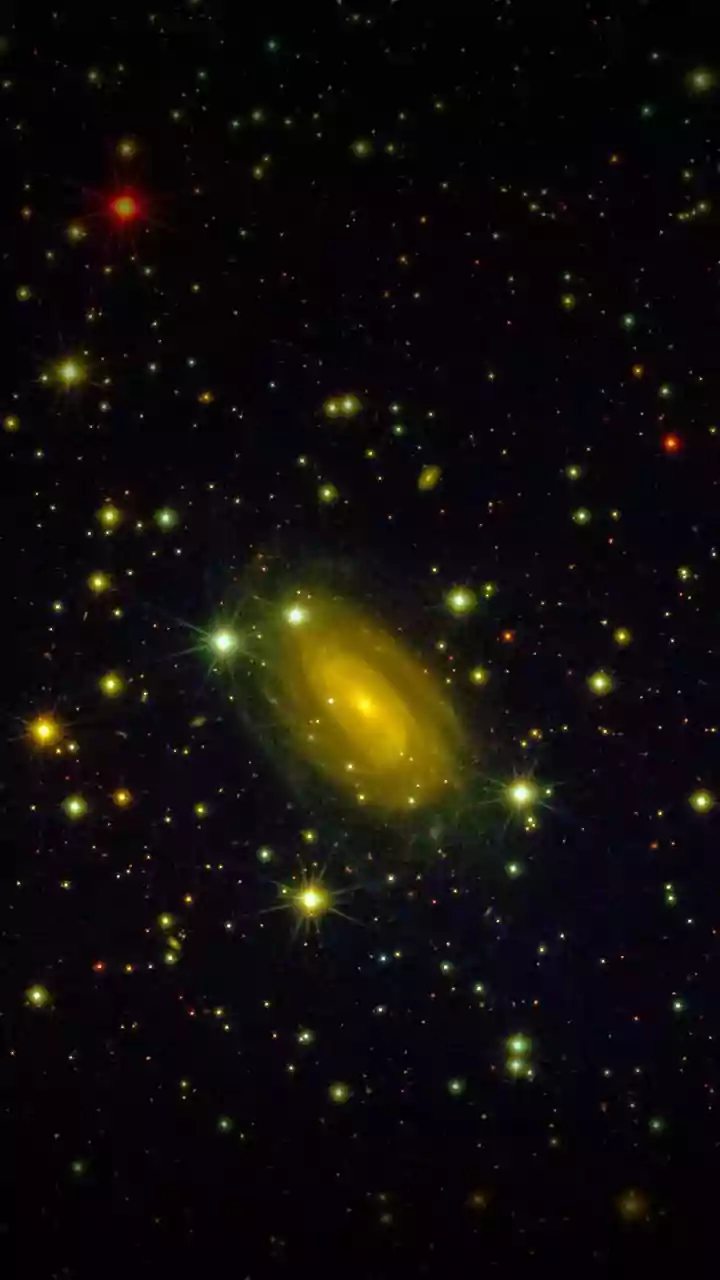
Billions of years ago, before there were planets, the solar system was a swirling disc of gas and dust. Within this cloud, tiny grains of material began to collide and stick together, a process called accretion. Over millions of years, these clumps grew
from pebbles into larger bodies hundreds of kilometers across, known as planetesimals. These are the fundamental building blocks of planets. As they grew, many of these planetesimals underwent differentiation, where heavier materials like iron and nickel sank to the center to form a metallic core, while lighter silicate rock formed a mantle and crust. Most of these early planetary bodies were either smashed apart in violent collisions or incorporated into the larger planets we see today, their cores hidden deep inside. This makes studying them directly impossible. That’s where the asteroid Psyche comes in.
A Unique Target: 16 Psyche
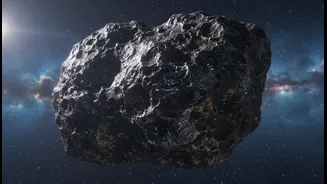
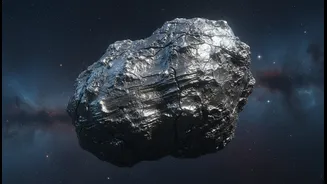
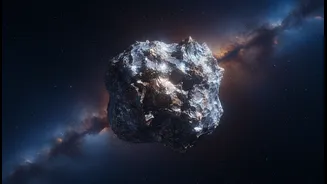
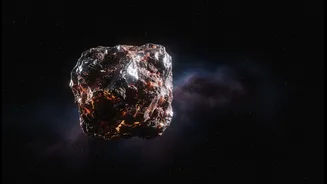
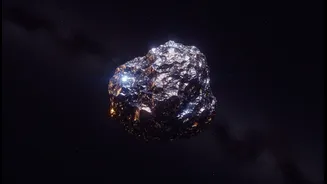
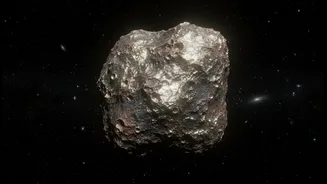
Located in the main asteroid belt between Mars and Jupiter, 16 Psyche is an object unlike any other visited by a spacecraft. It is a giant, metal-rich body that scientists believe may be the exposed nickel-iron core of a planetesimal whose rocky outer layers were stripped away by ancient, hit-and-run collisions. While radar observations suggest a composition rich in metal, its density is lower than a solid iron-nickel chunk should be, leading to competing theories. It could be a porous 'rubble pile' or perhaps have a more mixed rock-and-metal composition. By visiting Psyche, scientists hope to solve this mystery and, for the first time, get a direct look at the interior of a differentiated world, offering an unprecedented window into the violent history that created planets like Earth.
A Toolkit for a Metal World
To investigate Psyche's true nature, NASA equipped its spacecraft with a suite of specialized scientific instruments. A Multispectral Imager will capture high-resolution photos, using different filters to distinguish between metallic and rocky silicate materials on the surface. The Gamma-Ray and Neutron Spectrometer (GRNS) will map the asteroid's elemental composition by detecting the unique signatures of gamma rays and neutrons emitted from the surface when struck by cosmic rays; this will help determine the presence of elements like iron, nickel, and even traces of gold or platinum. A Magnetometer will search for any evidence of a remnant magnetic field, which would be a strong clue that Psyche once had a molten, rotating core like Earth's. Finally, by precisely tracking the spacecraft's orbit around the asteroid using its radio system, the science team can measure Psyche's gravity field, revealing its mass, rotation, and internal structure.
Decoding the Metallic Fingerprints
The data from these instruments will function like a set of metallic fingerprints, allowing scientists to piece together Psyche’s story. The information on elemental makeup from the GRNS will test the hypothesis that Psyche is a planetary core. If its composition matches predictions for Earth's own inaccessible core—primarily iron and nickel, with other elements that favor metal—it would support this theory. The Magnetometer's findings are crucial; a confirmed ancient magnetic field would be powerful evidence of a once-active dynamo, a key feature of a planetary core. Meanwhile, the imagers and gravity science will paint a picture of its topography and internal mass distribution, helping to determine if it is a solid object or a loosely consolidated pile of debris. These details will help answer key questions about whether it was formed under conditions similar to our own planet's core.
A Journey Through Time to 2029
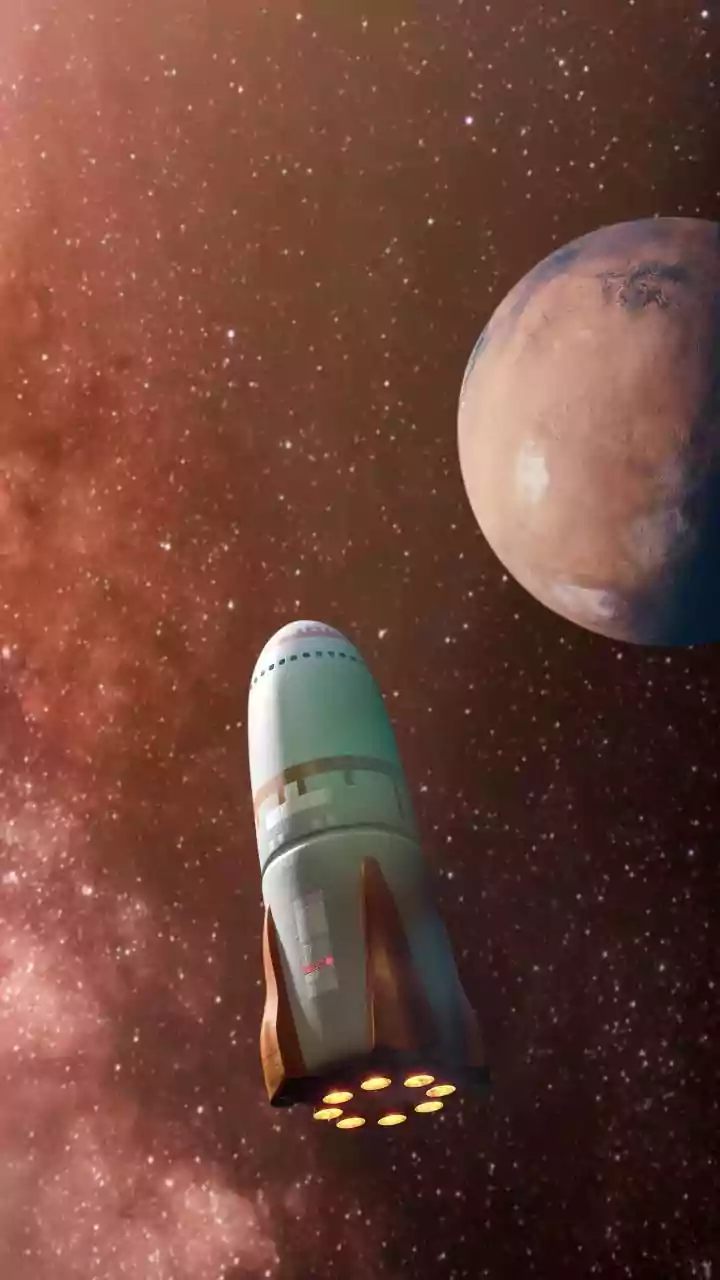
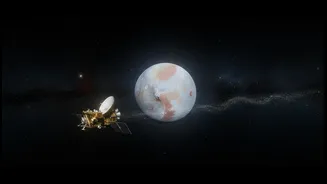
Launched in October 2023, the Psyche spacecraft is currently on a long journey powered by solar-electric propulsion. It successfully performed a crucial gravity-assist maneuver as it flew by Mars on May 15, 2026, which set it on the correct trajectory for its final destination. This flyby also provided an opportunity to calibrate its instruments by observing Mars. The spacecraft is scheduled to arrive at the asteroid Psyche in the summer of 2029, where it will spend nearly two years in orbit, meticulously mapping and studying this mysterious world from four different altitudes. By studying this remnant from the dawn of the solar system, we are essentially looking back in time. The metallic data returned by Psyche promises not just to reveal the secrets of one asteroid, but to illuminate the very process of planet formation across the cosmos.