





If your daily dal has started feeling more expensive, you’re not imagining it. A weak and erratic 2026 monsoon has cast a long shadow over India's domestic pulse production, creating a supply crunch that is pushing prices upwards.
A Monsoon Deficit Hits the Harvest
The performance of the
southwest monsoon is critical for India's Kharif crops, which are largely rain-fed. In 2026, the monsoon was patchy and uneven, with many key pulse-growing regions receiving significantly less rainfall than average. States crucial for the cultivation of tur (pigeon pea) and urad (black gram), such as Maharashtra and Karnataka, faced rainfall deficits of up to 30%. This lack of rain, particularly during critical growth stages, has led to projections of a sharp drop in output. The impact is especially severe for tur, with a significant portion of the projected national shortfall attributed to this single crop. Initial government targets for Kharif pulse production now appear unlikely to be met, creating a pressing need to find supplies elsewhere.
Gauging the Supply-Demand Gap
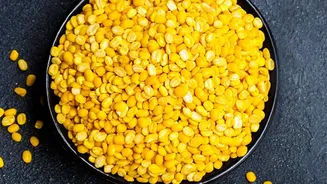
India is the world's largest producer, consumer, and importer of pulses, a delicate balance that is easily upset by a poor harvest. Even in a normal year, the country relies on imports to meet domestic demand. In the 2024-25 fiscal year, for instance, imports accounted for nearly a quarter of the country's total consumption. With the 2026 Kharif harvest expected to be significantly lower, this gap between domestic supply and demand is set to widen considerably. Projections suggest a potential yield contraction of 10-20% for key pulses like tur and urad. This shortfall is already being reflected in the market, with year-on-year price increases for both tur and urad dal. With the festive season approaching, a time when demand typically surges, the pressure on prices is expected to intensify.
Opening the Doors for Imports
To prevent a runaway price spiral, the government is turning to its most direct tool: import policy. Officials are actively considering lowering import duties on several pulses to make them cheaper to bring into the country. The focus is reportedly on lentils (masur) and yellow peas, which currently face import taxes of 10% and 30%, respectively. This is in addition to a pre-existing policy that already allows for duty-free imports of tur and urad until March 2027. By reducing these tariffs, the government hopes to encourage traders to source more from major international suppliers like Canada, Australia, Russia, and Myanmar, thereby increasing domestic availability and cooling down inflation.
A Balancing Act for Farmers and Consumers
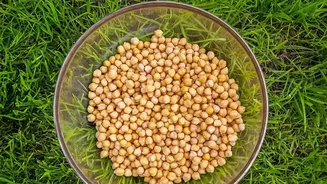
While easing import rules can bring relief to consumers, the government faces a delicate balancing act. The decision on which pulses to allow in, and at what duty, must also consider the interests of Indian farmers. For example, the government may choose to retain the import duty on chana (chickpeas). This is because farmers will soon begin planting the Rabi (winter) crop, and keeping chana imports taxed could encourage them to plant more of it, helping to secure the next harvest. This strategy highlights the constant challenge of managing food inflation for a population of over a billion people while ensuring that the nation's farmers receive fair prices for their produce and are not undercut by a sudden flood of cheap imports. The aim is to use imports as a temporary bridge, not as a replacement for domestic production.