

The Challenge: A Needle in a Cosmic Haystack
For astronomers tasked with planetary defense, the challenge is immense. They are searching for relatively small, often dark objects moving at incredible speeds against the vast, black backdrop of space. Many potentially hazardous asteroids are less than
a kilometer in diameter and reflect very little sunlight, making them incredibly faint and difficult to spot. Furthermore, some approach from directions obscured by the Sun's glare, rendering them invisible to ground-based telescopes that operate at night. The goal isn't just to find these objects, but to do so with enough warning time to act if one is on a collision course with Earth. This requires a different kind of tool than a traditional telescope, which is designed to stare deeply into one small patch of sky for a long time.
A Wider, Faster Gaze
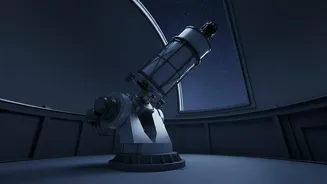
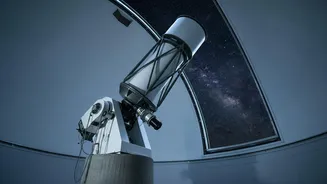
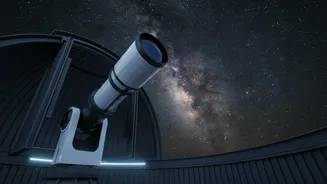
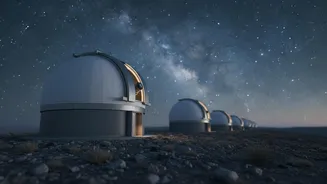
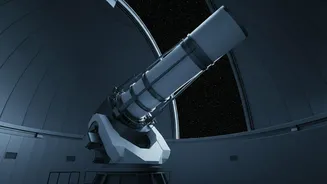
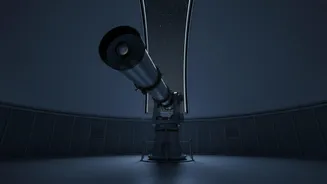
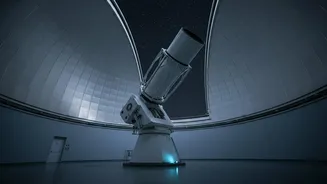
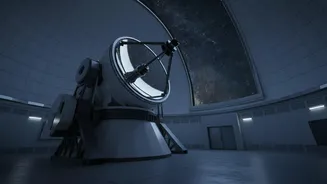
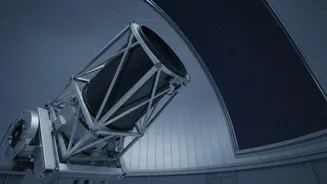
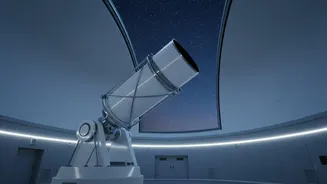
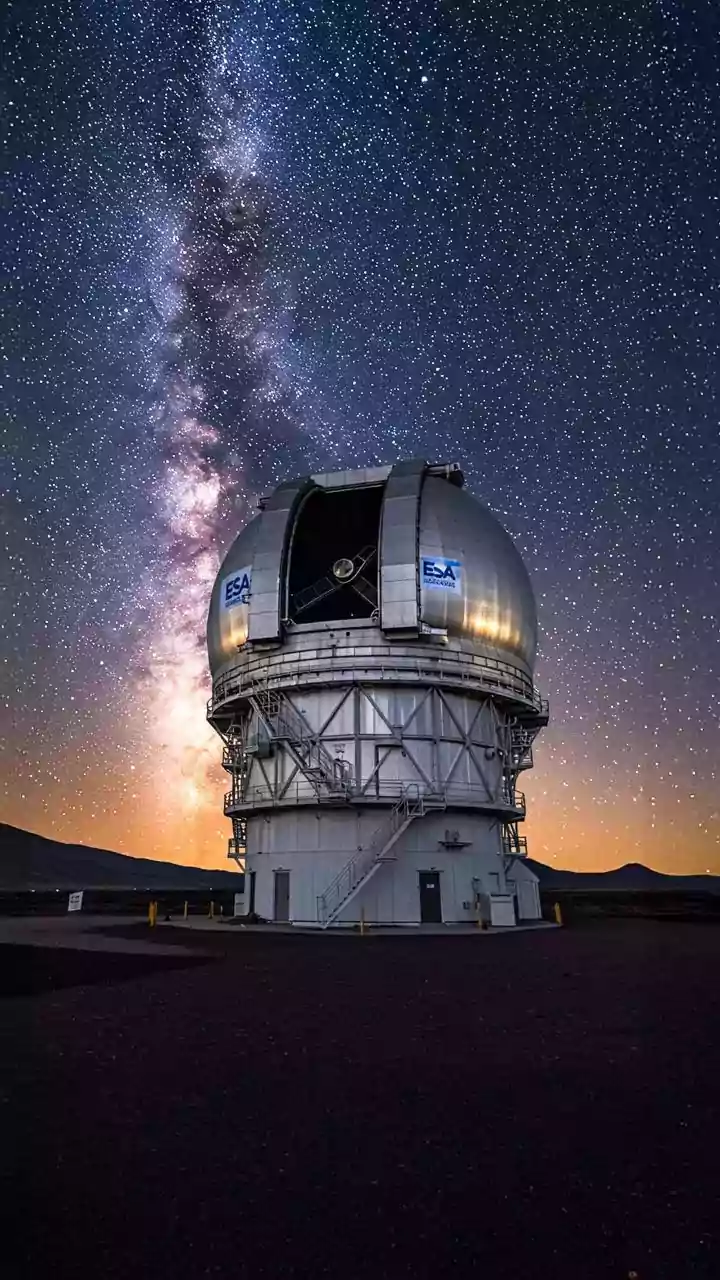
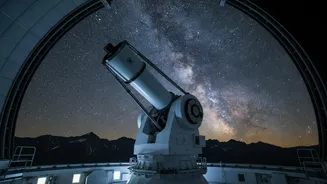
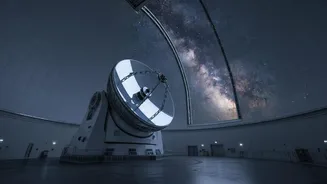
The key to modern asteroid hunting is the survey telescope. Unlike their deep-space-gazing cousins, survey telescopes are designed for breadth, not just depth. Systems like the Panoramic Survey Telescope and Rapid Response System (Pan-STARRS) in Hawaii and the Asteroid Terrestrial-impact Last Alert System (ATLAS) are built to scan huge swathes of the sky rapidly. They do this by combining a wide field of view with powerful cameras. The basic method involves taking multiple pictures of the same region of the sky several minutes apart. Sophisticated software then compares these images. While the stars and galaxies remain fixed, a moving asteroid will appear as a point of light that has shifted its position. This process generates a massive amount of data every night, which must be automatically analyzed to flag potential new objects for follow-up observations.
The Technology Behind the Lens
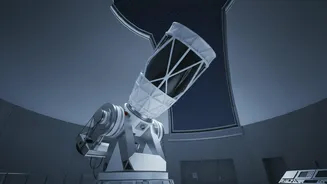
The "advanced optics" in the headline refers to specialized designs that enable this wide, fast scanning. The forthcoming Vera C. Rubin Observatory in Chile, for instance, will use a massive 8.4-meter mirror and a unique three-mirror design to achieve an enormous field of view. It will be paired with the largest digital camera ever built for astronomy, boasting 3,200 megapixels. This combination will allow it to image the entire southern sky every few nights. These systems require extremely sensitive detectors, like charge-coupled devices (CCDs), that can capture faint light with high efficiency. The speed at which these cameras can be read out is also critical. The faster the data can be processed, the faster the telescope can move to the next patch of sky, maximizing the area surveyed each night.
From Pixels to Planetary Defense Alerts
Once a candidate object is detected, the work has just begun. The initial observations are sent to the Minor Planet Center (MPC), a global clearinghouse for asteroid data. The MPC posts the findings, allowing other observatories around the world to conduct follow-up observations. These additional data points are crucial for refining the object's orbit. Using this new information, organizations like NASA's Center for Near-Earth Object Studies (CNEOS) can calculate the asteroid's trajectory with high precision and determine if it poses any risk of impacting Earth over the next century. New algorithms are also being developed, such as HelioLinc3D for the Rubin Observatory, which can find asteroids even with fewer observations than previously required, boosting the discovery rate.
The Future is Infrared
While ground-based optical telescopes are the current workhorses, the next generation of asteroid hunters will be in space and will look at the sky in infrared light. Missions like NASA's upcoming NEO Surveyor are designed to overcome the limitations of visible-light telescopes. Dark asteroids, which reflect little sunlight, are hard to see with optical instruments but they still absorb heat from the Sun and glow in infrared wavelengths. By operating from a vantage point in space, NEO Surveyor will also be able to spot asteroids that approach Earth from the direction of the Sun. Scheduled to launch no earlier than September 2027, this infrared space telescope will be a powerful new tool in the quest to find 90 percent of all potentially hazardous objects larger than 140 meters.