
India's Ambitious Voyage to Venus
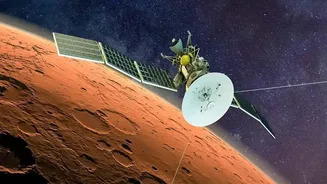
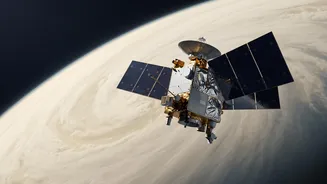
Following the monumental successes of its Mars Orbiter Mission (Mangalyaan) and lunar Chandrayaan missions, the Indian Space Research Organisation (ISRO) is setting its sights on the most inhospitable planet in our solar system. The Shukrayaan-1 mission,
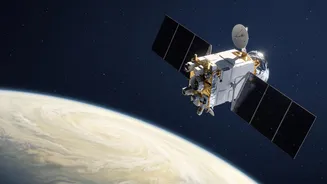
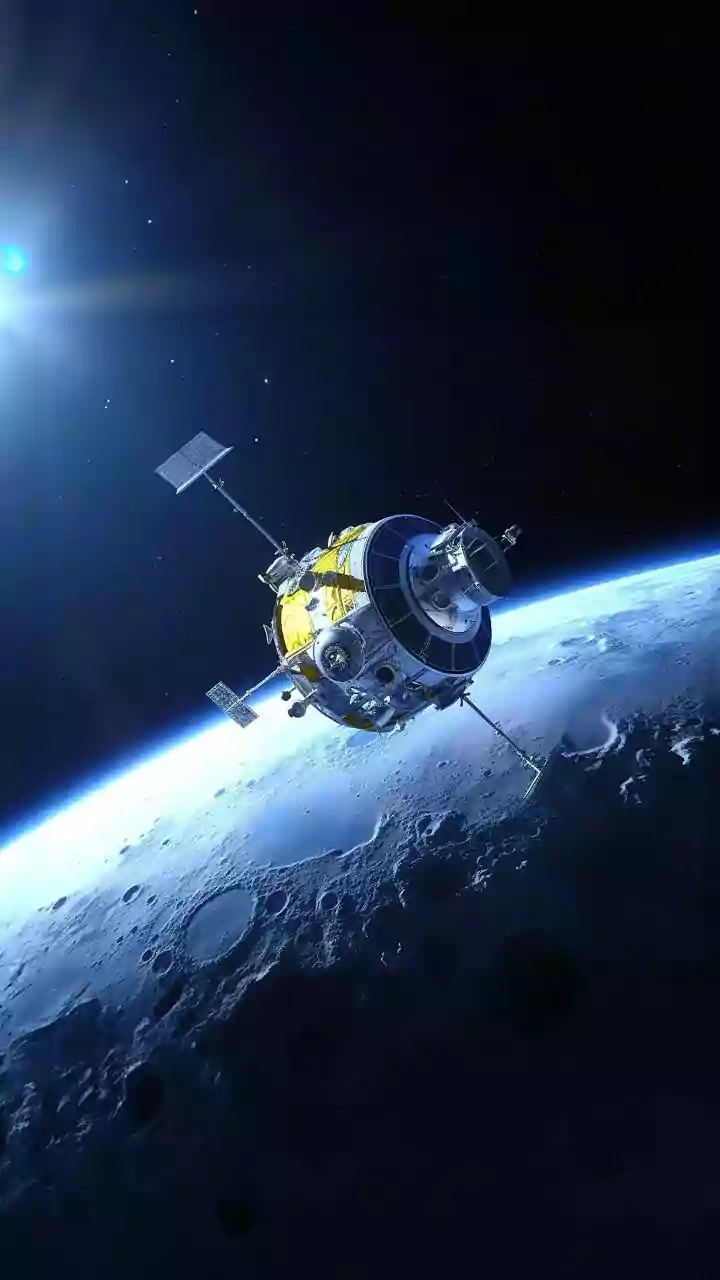
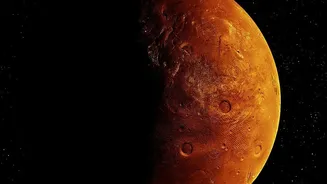
officially the Venus Orbiter Mission (VOM), represents India's first foray to our closest planetary neighbour. Approved by the Union Cabinet, the mission is planned for a 2028 launch and is designed to conduct a comprehensive global survey of Venus. It will investigate everything from its mysterious surface, which is obscured by a thick, toxic atmosphere, to the complex dynamics of its weather and its interaction with the sun. This mission places India in a select group of space agencies aiming to unravel the secrets of why a planet so similar to Earth became a scorching greenhouse world.
The Enigma of the Venusian Clouds
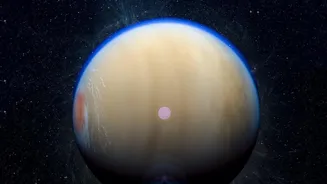
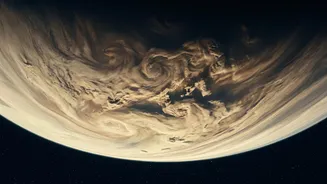
The primary challenge and greatest scientific interest at Venus lie in its atmosphere. The planet is perpetually shrouded in a dense blanket of clouds made not of water, but of corrosive sulphuric acid. This cloud cover traps heat in a runaway greenhouse effect, leading to surface temperatures of around 475 degrees Celsius, hot enough to melt lead. Scientists are fascinated by the structure of these clouds and the extreme weather they generate. One of the most compelling mysteries is the atmospheric 'super-rotation,' where the atmosphere circles the planet in just four Earth days, far faster than the planet's own sluggish 243-day rotation. Understanding the forces driving this phenomenon is a key scientific objective.
A Toolkit for Piercing the Veil
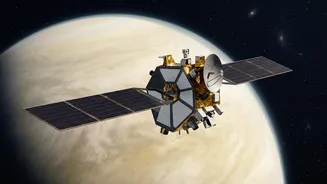
To study these atmospheric formations, Shukrayaan will carry a sophisticated suite of about 19 scientific instruments, or payloads, from both India and international partners. Several of these are specifically designed to analyze the atmosphere. One of the key payloads is the Venus Infrared Atmospheric Gases Linker (VIRAL), an instrument co-developed with French and Russian space agencies. VIRAL is a spectrometer, which means it analyzes the composition of the atmosphere by observing how gases absorb infrared light. This can help identify different chemical compounds and their concentrations. There is also the Venus Thermal Camera (VTC), designed to map thermal emissions to understand atmospheric dynamics and track cloud movements. A Venus Cloud Monitoring Camera (VCMC) will provide visual context for the other measurements.
Searching for Answers in Light and Radio Waves
The orbiter's instruments use different techniques to get a complete picture. Spectrometers like VIRAL will hunt for the chemical fingerprints of various gases. This is particularly relevant given the contested 2020 detection of phosphine gas in the Venusian clouds—a compound that, on Earth, is associated with anaerobic life. Shukrayaan's instruments will be able to perform a more detailed search to confirm or refute these findings. Meanwhile, radar instruments provide a different way to 'see'. The mission's flagship High-Resolution Synthetic Aperture Radar (SAR) is primarily for mapping the surface hidden beneath the clouds, but in doing so, it provides invaluable data about the thickness and properties of the atmospheric layers it must penetrate. The mission will also carry a ground-penetrating radar, a first for Venus, to study the shallow sub-surface.
Understanding an Alien Climate
Beyond composition, Shukrayaan will study how the atmosphere interacts with the solar wind—a stream of charged particles from the Sun. Instruments like the Venusian Neutrals Analyser (VNA), a collaboration with Sweden, will investigate how this interaction strips particles from the upper atmosphere, helping scientists understand the long-term loss of Venus's atmosphere. By combining data from these various sensors, scientists hope to build a complete model of the Venusian climate. This isn't just about understanding another planet; it's about learning fundamental lessons on planetary evolution. The data gathered will serve as a crucial cautionary tale, helping us model Earth's own climate and understand how dramatically a planet's environment can change over time.