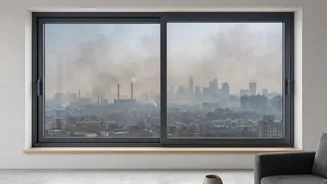



When a thick blanket of smog descends, our first instinct is to retreat indoors and shut the windows. It's a sensible first step, but it’s not a complete shield. Understanding what this does—and what it doesn't—is key to truly protecting your family.
The First Line of Defence
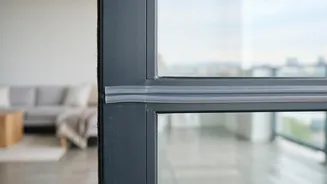
When the Air Quality Index (AQI) spikes into unhealthy territory, shutting all doors and windows is the most immediate and crucial action you can take. This simple barrier is primarily effective at reducing the infiltration of larger pollution particles. Think of it as your home’s first and most basic filter. Smog is a toxic cocktail, but its most infamous component is PM2.5—fine particulate matter so small it can penetrate deep into your lungs and even enter your bloodstream. By sealing your home, you significantly slow the rate at which these outdoor pollutants can enter. Studies suggest that a well-sealed home can reduce indoor PM2.5 levels to roughly half of what they are outside, though this varies greatly depending on how airtight your home is.
The Limits of a Sealed Room
While closing windows helps, it's a temporary fix with two key limitations. First, homes are not airtight. Even with everything shut, fine particles like PM2.5 can still seep in through cracks, vents, and other small openings, with some studies finding that over half of indoor PM2.5 originates from outside. Second, sealing your home traps pollutants that are generated indoors. As you and your family breathe, carbon dioxide (CO2) levels rise. In a poorly ventilated room, CO2 can quickly surpass 1,000 parts per million (ppm), leading to symptoms like headaches, drowsiness, and poor concentration. Cooking, cleaning products, and even new furniture release other chemicals called volatile organic compounds (VOCs) that also get trapped, further degrading your air.
When Good Air Goes Stale
So, how long is it effective? The protective benefit of closed windows diminishes over time. For a few hours, your indoor air will be substantially cleaner than the smog outside. But as outdoor particles continue to infiltrate and indoor CO2 and VOCs accumulate, the air quality inside begins to decline. In a sealed bedroom overnight, two people can raise CO2 levels high enough to disrupt sleep quality, leading to grogginess the next morning. Generally, after several hours to a day, the benefits of sealing the home are outweighed by the buildup of stale, polluted indoor air. This is why you might notice a 'stuffy' feeling even when you're protected from the smog outside.
Upgrading Your Defence: Air Purifiers
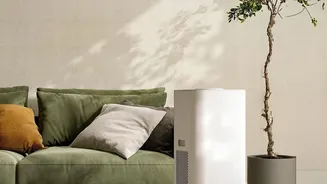
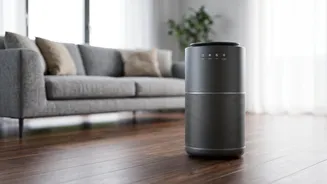
For periods of prolonged or severe smog, simply closing windows isn't enough. The next and most effective step is to actively clean the air that's already inside your home with an air purifier. Look for a model equipped with a High-Efficiency Particulate Air (HEPA) filter. HEPA filters are the gold standard, designed to capture at least 99.97% of particles as small as 0.3 microns. This makes them extremely effective at removing the dangerous PM2.5 particles from smog. Studies show that using a HEPA purifier can reduce indoor PM2.5 levels by over 60% within hours, offering significant relief from respiratory irritation.
Tackling Gases and Odours
A comprehensive strategy also considers the invisible threats. Smog isn't just particles; it also contains harmful gases like nitrogen oxides and ozone, as well as VOCs from both outdoor and indoor sources. A standard HEPA filter won't capture these. For that, you need an air purifier that also includes an activated carbon filter. Activated carbon works through a process called adsorption, where its vast, porous surface traps gas and odour molecules. Combining a HEPA filter for particles with an activated carbon filter for gases provides a robust defence against the full spectrum of pollutants found in smog.