
A Glimpse into Distant Skies
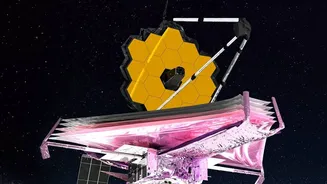
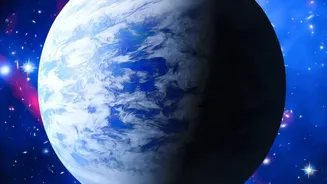
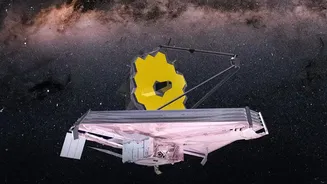
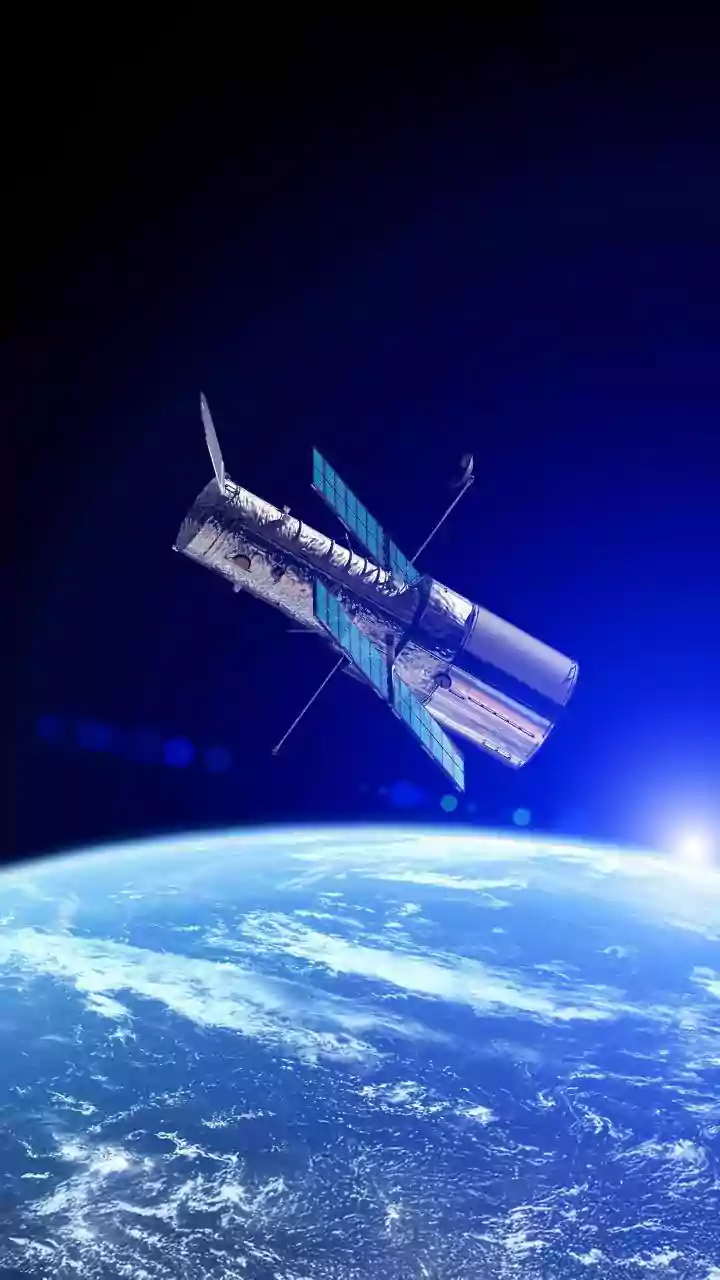
The James Webb Space Telescope (JWST) has been flexing its powerful infrared capabilities, capturing the distinct signature of water in the skies of alien worlds. One of the key methods is analysing the atmosphere of a planet as it passes in front of its host
star. This has allowed astronomers to get an unprecedentedly detailed look at the chemical makeup of planets hundreds of light-years away, such as the hot gas giant WASP-96 b and the smaller, rocky GJ 486 b. While water had been detected before by telescopes like Hubble, Webb's greater sensitivity and access to a wider range of infrared light provide a much clearer and more detailed picture.
How Webb Reads Alien Atmospheres
So, how does a telescope see what's in the air of a planet it can't even directly image? The technique is called transmission spectroscopy. Think of it like analysing the light of a projector lamp after it has passed through a coloured filter. When an exoplanet transits, or passes in front of its star from our perspective, the starlight is filtered through the planet’s atmosphere. Different gases and molecules in that atmosphere absorb specific colours, or wavelengths, of light. This leaves a unique chemical fingerprint on the light that reaches Webb's sensitive instruments. By studying which colours are missing from the star's light, scientists can deduce precisely which molecules are present, including the all-important water vapour.
An Ingredient for Life, Not Proof
Finding water is a monumental step, but it's crucial to understand what it does and doesn't mean. Water is essential for every form of life on Earth, acting as a universal solvent that enables the chemical reactions necessary for biology. Its presence on an exoplanet is therefore incredibly exciting for astrobiologists. However, the presence of water vapour alone is not proof of life. Many of the planets where it's been detected so far are extremely hot gas giants or rocky worlds too close to their star, like GJ 9827d which has a surface temperature of around 430 degrees Celsius. On these worlds, the water exists as scorching steam, not the life-sustaining liquid oceans we know. Finding water is like finding flour in a kitchen; it's a necessary ingredient for a cake, but it doesn't mean a cake has been baked.
The Search for a 'Goldilocks' World
The ultimate goal is to find water on a rocky, Earth-sized planet within its star's habitable zone, often called the 'Goldilocks zone'. This is the region where temperatures are not too hot and not too cold, but just right for liquid water to potentially exist on the surface. Detecting water vapour on planets outside this zone is still vital. It proves the technology works and helps scientists refine their models of planetary atmospheres. It shows that even rocky planets orbiting volatile red dwarf stars might be able to hold onto an atmosphere, a key question in the search for habitable environments. Each detection, even on a 'hellishly hot' world, is a crucial piece of the puzzle, bringing us closer to knowing where to look for a true Earth 2.0.
What Comes After Water?
With the ability to detect water confirmed, scientists are now hunting for a whole menu of other molecules known as 'biosignatures'. These are gases that, especially in combination, could point towards biological processes. On Earth, for instance, the high level of oxygen is a direct result of life, specifically photosynthesis. JWST will be searching for the atmospheric fingerprints of not just oxygen, but also methane, carbon dioxide, and other compounds. The discovery of a specific mix of these gases on a rocky planet in the habitable zone would be a game-changing moment for science. The detection of water is the foundational first step, demonstrating that we finally have the tools to conduct this extraordinary search in earnest.